Commercial Powder Coating Services | Industrial Metal Powder Coating Services
TL;DR:
- Commercial powder coating services and industrial metal powder coating services are not just about color. They combine surface prep, powder chemistry, application control, and curing to create durable finishes for fabricated metal, equipment, enclosures, architectural parts, and production components.
- Media blasting and pretreatment matter because adhesion and corrosion resistance depend heavily on substrate prep, not just the powder itself. PPG describes pretreatment as a way to improve corrosion protection and paint adhesion on metal substrates.
- Not all powder coatings are the same. Common industrial choices include standard polyester, super durable polyester, and fluoropolymer systems, each suited to different environments and performance demands.
- For demanding exterior architectural and commercial applications, super durable polyester and fluoropolymer powders are often chosen for stronger weatherability, color retention, and gloss retention.
- Some projects need specialty compliance, such as NSF-certified powders for food-contact or potable-water related applications.
- Businesses in Salt Lake County, Utah County, Davis County, and Weber County should evaluate a coating partner on prep, chemistry selection, process control, and repeatability, not just price. That last point is an inference from the cited industrial and powder-coating source material.
- Call Full Blown Coatings today for help on your job!
Commercial Powder Coating Services and Industrial Metal Powder Coating Services: What Businesses Should Know
When companies start looking for commercial powder coating services or industrial metal powder coating services, they are usually trying to solve a bigger problem than appearance alone. They need metal parts that last longer, resist corrosion better, hold color more consistently, and perform reliably in commercial or industrial environments. For buyers in Salt Lake County, Utah County, Davis County, and Weber County, that often means comparing powder coating services, media blasting, sand blasting, and broader metal finishing services as part of one complete process rather than as separate line items.
That distinction matters because powder coating is not one generic finish. IFS notes that powder coatings include different thermosetting and thermoplastic chemistries, and the right chemistry depends on the intended end use, required exterior durability, corrosion and chemical resistance, flexibility, and cost. In other words, industrial coating success starts with matching the coating system to the job.
What Are Industrial Metal Powder Coating Services?
How Industrial Powder Coating Works
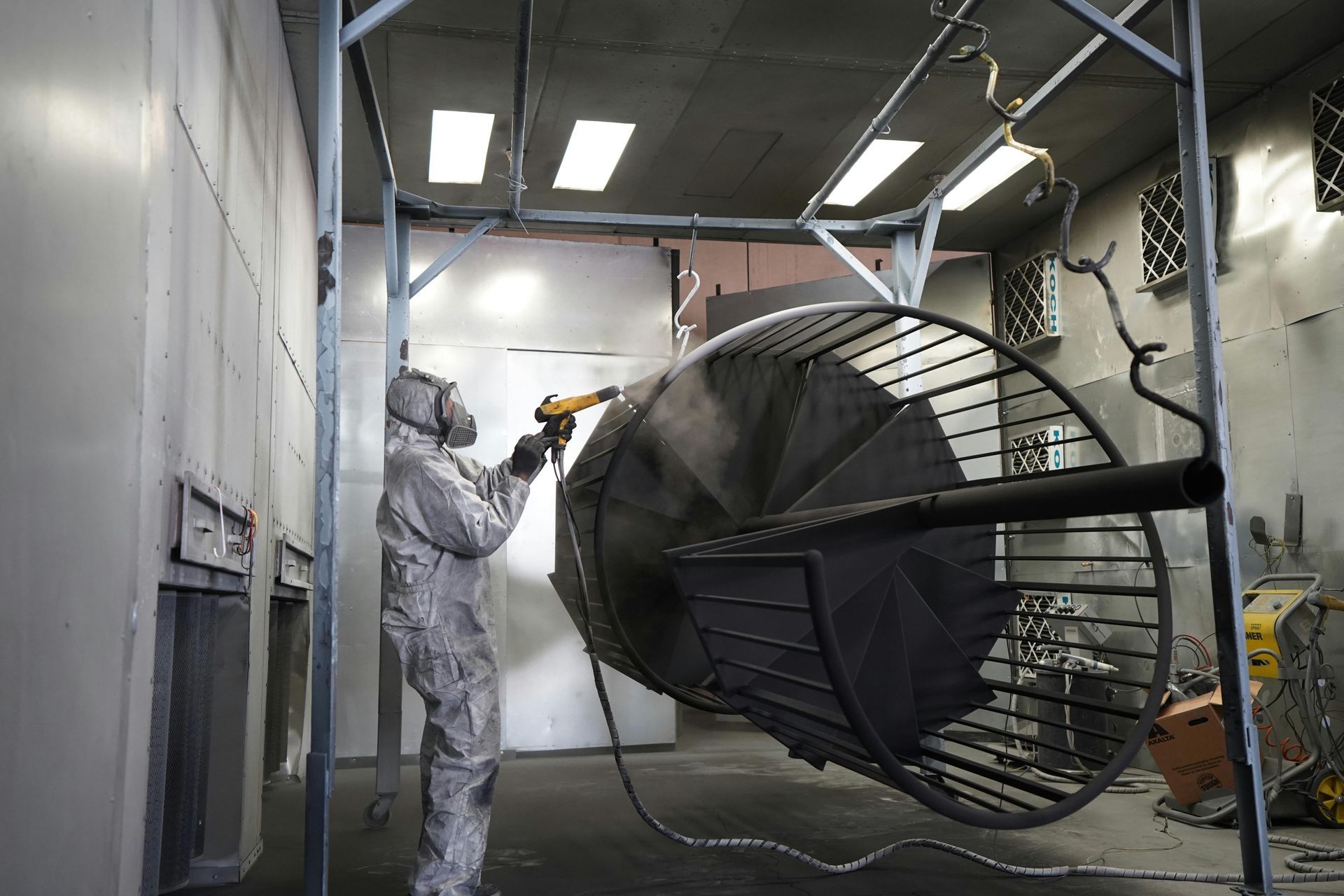
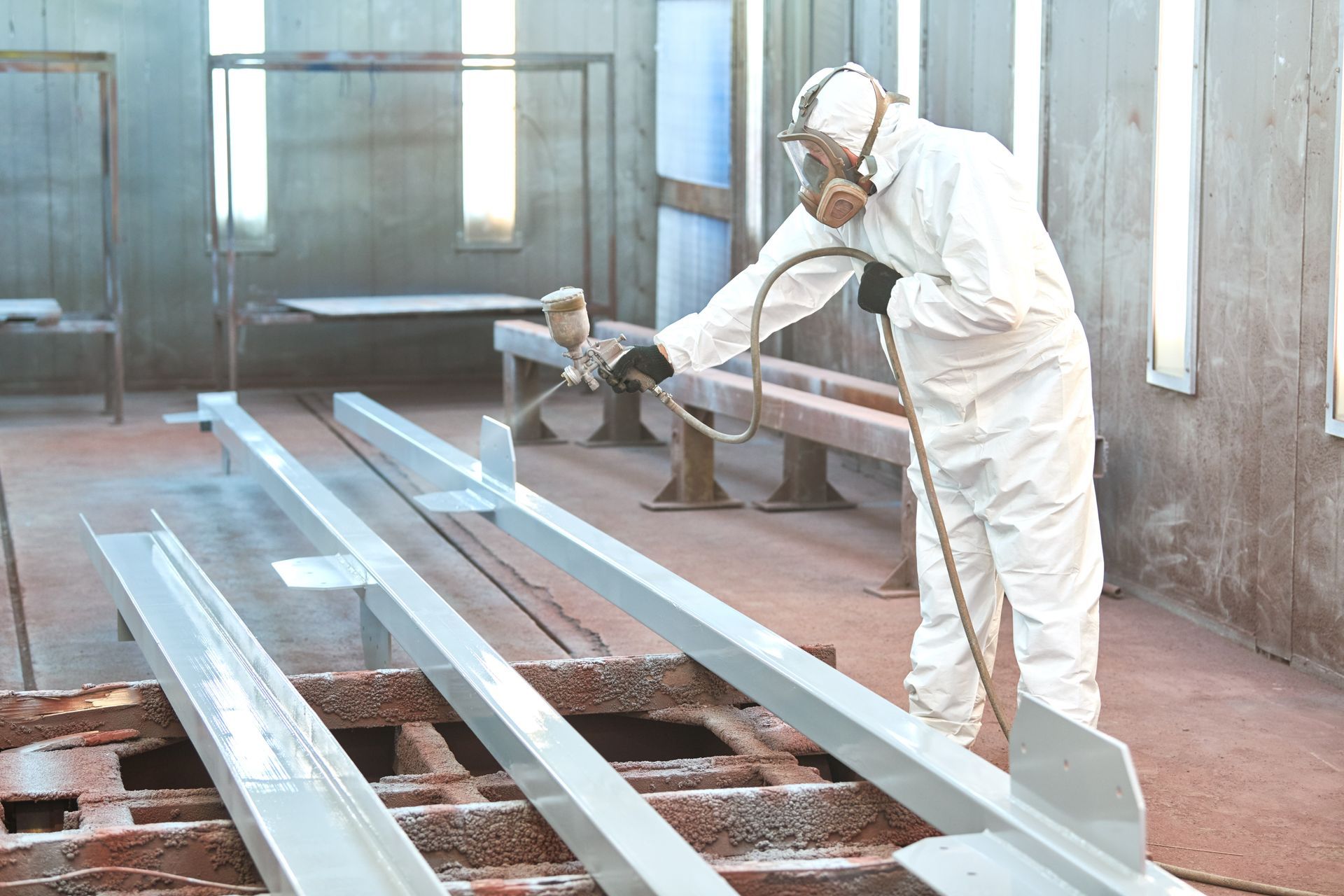
Industrial powder coating is a factory-applied finishing process where dry powder is electrostatically applied to metal parts and then cured to form a durable coating. Industrial coating suppliers position powder as one part of a broader finishing stack that may also include pretreatment, e-coat, or other technologies depending on performance requirements.
In practical terms, industrial powder coating is used on fabricated steel, aluminum components, equipment housings, guards, racks, panels, lighting parts, and architectural metal where durability and consistency matter. It is designed for repeatability and long-term performance, not just short-term cosmetic improvement. That is one reason industrial buyers tend to ask different questions than retail buyers. They care about adhesion, corrosion resistance, UV durability, and process control.
What Makes It Different From Basic Consumer Coating
The industrial side of powder coating puts more weight on substrate prep, performance specifications, coating chemistry, and production consistency. PPG describes itself as offering powder, pretreatment, UV/EB, and e-coat as part of a “total solution,” which reflects how industrial finishing often works in layers rather than as a single spray step.
That means an industrial coating provider is not just choosing a color. They are helping determine which pretreatment system is appropriate, whether the substrate needs extra corrosion protection, whether exterior weatherability matters, and whether the finish must meet a particular end-use requirement.
What Are Commercial Powder Coating Services?
Common Commercial Applications
Commercial powder coating services are often used on visible, high-use metal components such as railings, fencing, storefront metal, lighting fixtures, shelving, panels, and other fabricated metal products. IFS’ architectural materials specifically reference applications like storefronts, low-rise curtain and window wall, windows, panels, louvers, and similar exterior building elements.
Commercial jobs often balance two priorities at once. The finish has to look good, and it has to hold up under real-world use. That is why many businesses care about gloss retention, color retention, scratch resistance, and weatherability all at the same time.
Common Industrial Applications
Industrial applications can include guards, machine housings, racks, fixtures, tanks, fabricated steel parts, and production-related hardware. IFS also highlights powder coating use in markets such as lighting and architecture, showing how broad the industrial and commercial use cases really are.
At Full Blown Coatings, this is often where customers start to realize that “industrial” does not always mean ugly or basic. Many industrial parts still need a clean professional appearance for example medical powder coating applications , while many commercial parts still need serious durability. The best coating system usually sits right at that intersection.
Why Businesses Choose Industrial Metal Powder Coating Services
Durability and Tough Protection
Powder coatings are widely used because they can provide a durable finish for metal components in manufacturing, commercial, and architectural settings. IFS positions its powder systems as suitable for industrial production and manufacturing applications, which reflects powder’s role as a performance finish rather than a decorative afterthought.
For businesses, that usually translates into better resistance to wear, impact, and everyday handling compared with less robust finishing approaches, though the exact performance still depends on chemistry and prep.
Corrosion Resistance and Long-Term Performance
Corrosion protection is one of the biggest reasons businesses invest in professional powder coating. PPG states that its pretreatment technologies are intended to enhance corrosion protection and paint adhesion, while IFS emphasizes that chemistry choice depends on corrosion and weathering requirements.
That matters because a coating system is only as good as its fit for the environment. A part used indoors in a dry warehouse does not need the same system as a part exposed to weather, chemicals, or repeated washdowns.
Color Consistency and Production Scalability
In commercial and industrial environments, consistency is a business issue, not just a cosmetic one. Multi-part assemblies, production runs, architectural packages, and branded components all benefit from repeatable color and finish control. PPG highlights integrated coating solutions and consistent film build in related industrial finishing technologies, which supports the broader point that production consistency is a major industrial priority.
The Role of Media Blasting Before Powder Coating
What Media Blasting Does
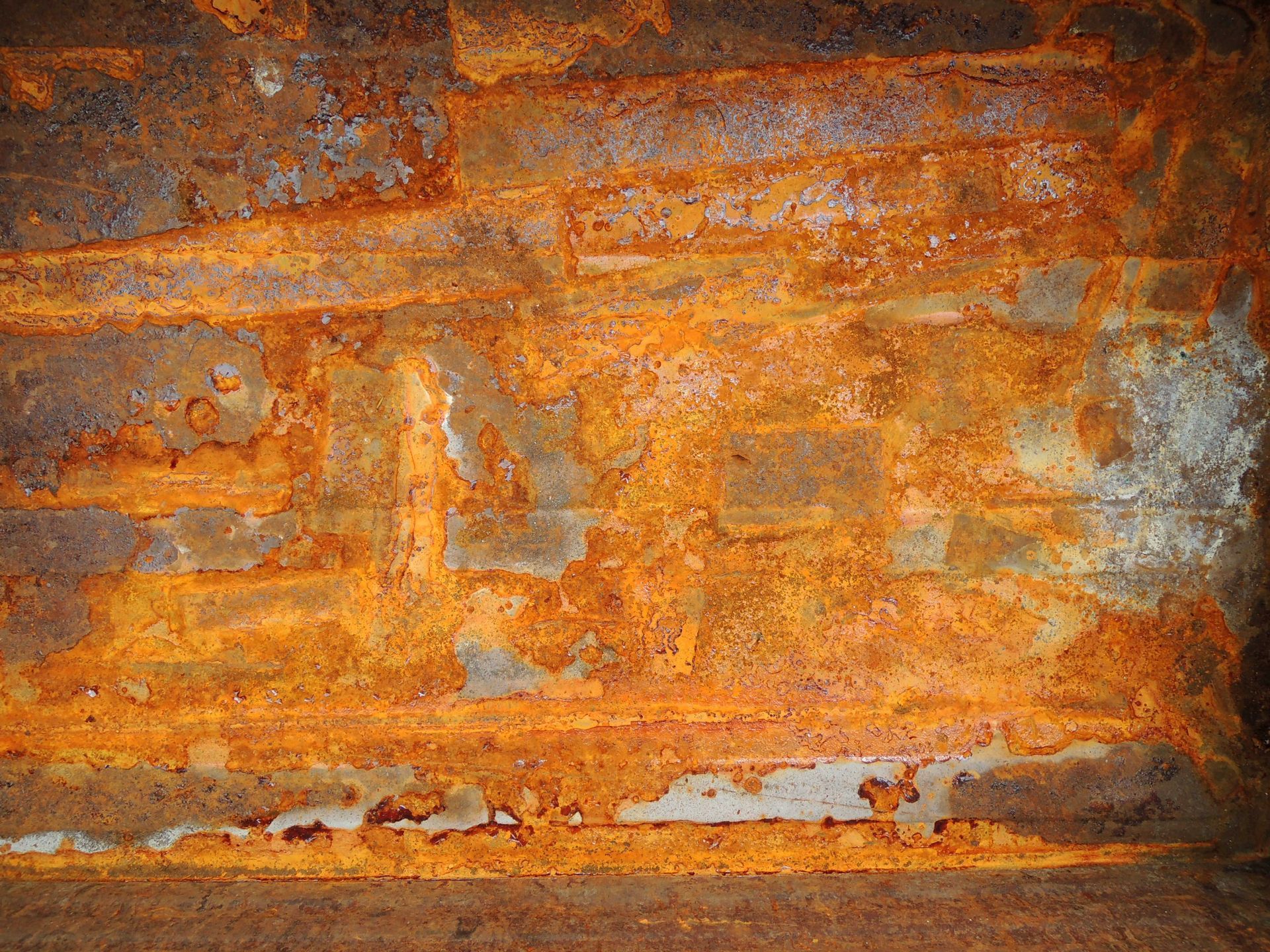
Media blasting removes rust, scale, old coatings, and contamination from the substrate while helping create a better surface profile for coating adhesion. Although the cited manufacturer sources focus more on pretreatment than blasting specifically, their repeated emphasis on substrate prep, adhesion, and corrosion protection strongly supports blasting’s role as a foundational prep method where needed. This is an inference based on those sources.
Why Blasting Matters for Industrial Metal
If a surface is contaminated, scaled, or poorly prepared, even a premium powder chemistry can underperform. PPG’s pretreatment guidance is explicit that metal prep is tied to corrosion protection and adhesion. In the real world, blasting is often one of the first steps that gives that pretreatment and powder system a chance to work properly.
A simple example is old fabricated steel. If it comes in with rust and failed coating still attached, spraying powder over it is not a serious solution. At Full Blown Coatings, that is often where expectations get reset. The finish customers want starts with the condition of the metal they bring in.
Types of Powder Coating Systems Used in Commercial and Industrial Work
Standard Polyester Powders
Standard polyester powders are widely used because they are versatile and available in many colors and effects. IFS describes them as durable options for interior and exterior applications.
For many commercial jobs, standard polyester is the baseline conversation because it gives a strong mix of value, appearance, and practical performance.
Super Durable Polyester Powders
Super durable polyester is designed to provide better exterior weathering, salt resistance, and humidity resistance than standard polyester. IFS says these powders are commonly used for exterior applications and notes that architectural versions can meet and exceed AAMA 2604 performance requirements.
That makes them a strong option for storefront metal, exterior panels, railings, and other visible architectural or commercial components where long-term appearance matters.
Fluoropolymer Powders
Fluoropolymer powders sit at the higher end of exterior performance. IFS says its FEVE fluoropolymer powders are used almost exclusively on exterior applications, especially in ultra-durable architectural settings, and that they meet and exceed AAMA 2605 requirements.
If a project demands strong long-term color retention, gloss retention, and corrosion protection, fluoropolymer systems are often part of the conversation.
NSF-Approved Powder Coatings
Some industrial applications need more than general durability. IFS states that it offers NSF and ANSI-approved powder coatings certified to NSF 51 and NSF 61 for applicable uses.
That is especially relevant for certain food-equipment and potable-water related applications where compliance matters as much as appearance.
How to Match the Coating System to the Application
Interior vs Exterior Exposure
One of the most important questions is whether the coated part will live indoors or outdoors. IFS’ product materials make clear that different chemistries are designed for different end uses, especially when exterior weatherability is involved.
Decorative vs Functional Components
Some parts are primarily visual. Others are primarily structural or functional. Many are both. That is why coating selection should be driven by use conditions rather than by color chip alone.
Chemical, Moisture, and Abrasion Demands
Industrial settings often bring moisture, abrasion, corrosion risk, or chemical exposure. PPG and IFS both emphasize that pretreatment and chemistry selection are tied to those performance demands.
Why Pretreatment and Process Control Matter
Pretreatment Is Part of the Performance System
PPG says pretreatment products are designed to improve corrosion protection and adhesion, and its X-BOND system specifically prepares steel, galvanized steel, and aluminum for optimum paint adhesion while providing corrosion resistance.
That means pretreatment is not an optional extra for serious industrial work. It is part of the coating system itself.
Quality Control and Consistency
IFS provides technical resources on issues like film thickness testing, adhesion testing, and common finish defects, which reflects how important process control is in powder coating.
For commercial buyers, that translates into a simple standard: the right shop should care about consistency, not just coverage.
Industrial Metal Powder Coating Services vs Liquid Paint
Powder coating is one finishing route inside a larger industrial-coatings landscape that can also include liquids and other technologies. PPG presents these as complementary options within industrial finishing, which suggests the right choice depends on part geometry, production environment, and performance requirements.
In many factory-applied metal applications, powder is attractive because it offers durability, repeatability, and a clean finish across production work. That conclusion is an inference from the cited sources’ positioning of powder systems for industrial production and architectural applications.
What to Look for in a Powder Coating Provider
Businesses evaluating commercial powder coating services or industrial metal powder coating services should ask:
- Is blasting or other serious surface prep available?
- What pretreatment process is used?
- Which powder chemistries are recommended for this application?
- Is the job interior, exterior, architectural, industrial, or compliance-sensitive?
- Can the shop support repeat batches and consistent outcomes?
Those are the questions that usually separate a basic coater from a real finishing partner.
Final Thoughts
The best industrial powder coating job is never just about putting powder on metal. It is about matching the right chemistry to the right use case, preparing the substrate correctly, controlling the process, and understanding what the part needs to survive in the field. Standard polyester, super durable polyester, fluoropolymer, and specialty NSF-certified systems all have their place, but only when they are used deliberately and backed by proper prep.
For businesses in Salt Lake County, Utah County, Davis County, and Weber County, strong commercial powder coating services and industrial metal powder coating services should feel like a technical solution, not just a paint job. That is where better media blasting, better prep, and better metal finishing start paying off.
Share This Post!