Powder Coating for the Medical Field (AS9001)
TL;DR — Powder Coating for the Medical Field (AS9001)
- Medical-grade powder coating prioritizes cleanability, chemical resistance, durability, and documented quality suitable for hospitals and device makers.
- Buyers often expect AS9001-style rigor with ISO-style documentation, including travelers, lot traceability, cure logs, inspections, and retained panels.
- Proper prep drives longevity: degreasing, targeted media blasting, conversion coating, and outgassing for castings, plus precise masking of functional interfaces.
- Cure must be verified at part temperature with time-at-temp logs, calibrated film-build checks, and controlled color and gloss against masters.
- Validation uses adhesion, impact, bend, chemical rubs with alcohols and quats, corrosion testing when needed, and cleanability trials that mirror real SOPs.
- Common applications include carts, IV stands, rails, cabinets, monitor arms, housings, and bed components, with neutral, low-glare textures for easy wipe downs.
- Cost reflects geometry, masking, pretreatment, custom colors or antimicrobials, documentation level, and batching strategy.
- Use a Utah finisher that shows sample travelers, retained panels, and oven mapping, and can scale from prototype to production while maintaining consistency.
- Service coverage spans Salt Lake County, Utah County, Davis County, Weber County, and Cache County with pickup and delivery by arrangement.
Need help setting specs or validation? Talk to Full Blown Coatings for pretreatment plans, antimicrobial options, cure control, and documentation that meets your audit requirements.
Why is Powder coating important in the medical field
If you manufacture or maintain healthcare equipment in Salt Lake County, Utah County, Davis County, Weber County, or Cache County, you already know finishes are not just about appearance. They are about cleanability, repeated disinfection, corrosion resistance, and traceable quality. This is where powder coating for the medical field earns its keep. Buyers often reference AS9001 style quality expectations alongside ISO frameworks because medical environments need coatings that perform and are documented to perform.
What Makes Medical Powder Coating Different
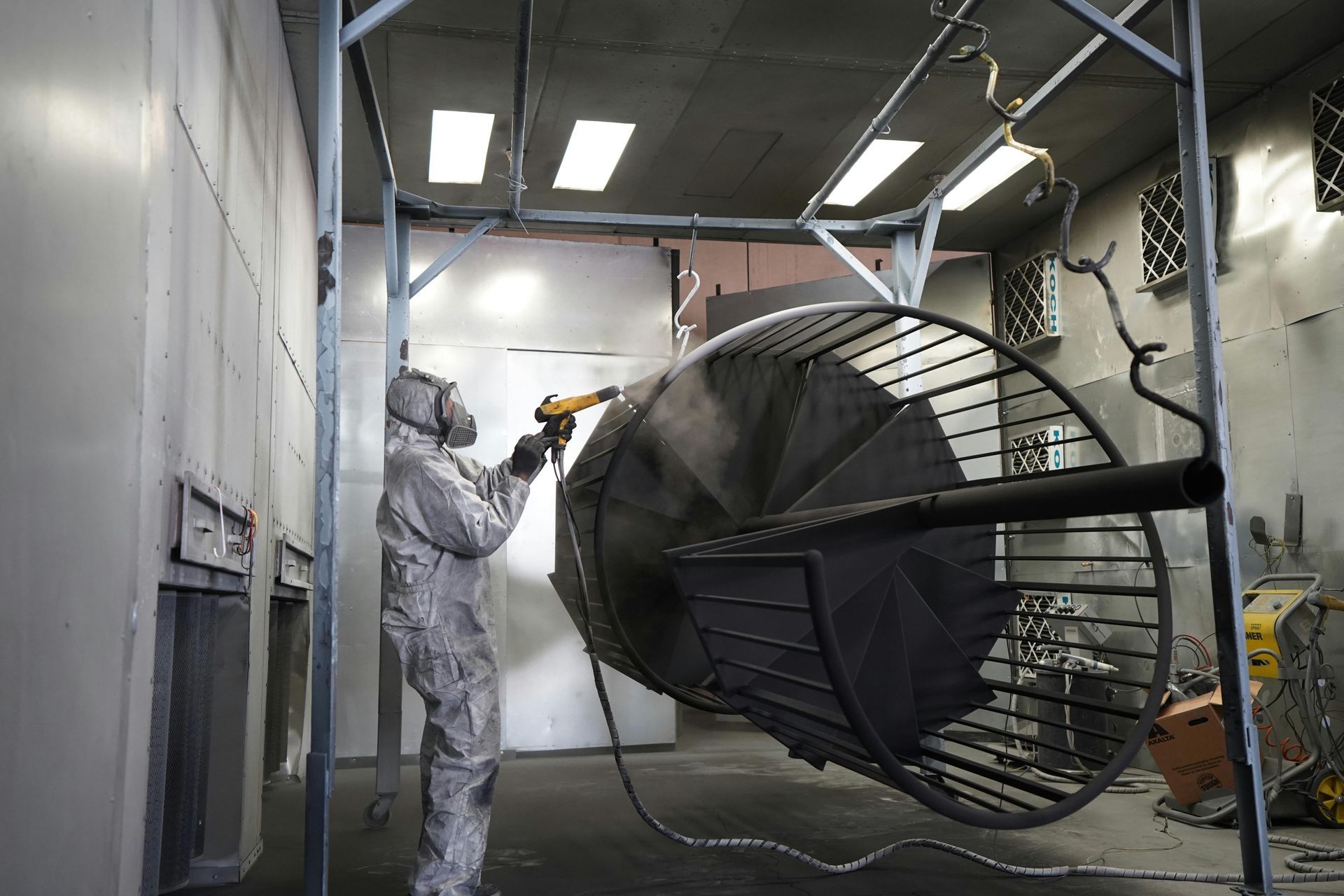
Medical environments stress finishes more aggressively and more often than consumer settings. Coatings must withstand daily wipe downs, harsh cleaners, and handling. Powder coatings are thermoset films that cure into dense, crosslinked layers. When properly specified and applied, they deliver the combination of durability, chemical resistance, and repeatable appearance that medical buyers expect.
The performance priorities
- Hygiene and cleanability: Smooth, sealed surfaces that do not trap soils and can be wiped quickly.
- Chemical resistance: Resilience against alcohols, quats, bleach, peroxides, and enzymatic cleaners used on carts, rails, and device housings.
- Mechanical durability: Impact, abrasion, and scratch resistance for items that are rolled, stacked, and transported daily.
- Aesthetics with consistency: Tight color and gloss control across large fleets and multi-year reorders.
- Documented quality: Traceable powder lots, cure logs, and inspection records that support audits and supplier qualification.
Materials commonly coated
Stainless steel, aluminum, cold rolled steel, and cast alloys used in carts, IV stands, workstations, cabinets, instrument racks, pump and monitor housings, wall rails, and bed components.
Compliance, Documentation, and Quality Controls
While the exact certification pathway depends on the product category, buyers frequently align to ISO-style quality systems and request documentation that mirrors aerospace and device expectations. Many reference AS9001 style approaches, ISO 9001, or ISO 13485 for medical devices.
What documentation usually includes
- Travelers and route sheets that prove each step was completed: pretreatment, masking, cure.
- Lot traceability for powders and pretreatments with certificates of conformance.
- Cure validation using in-situ thermocouples or probe logs to verify time at temperature.
- Inspection records for film build, color, gloss, adhesion, and visual criteria.
- Retained panels from each color batch for future reference and complaint handling.
Antimicrobial and Low-VOC Advantages
Powder coatings inherently avoid solvents during application, which supports indoor air quality goals. Many chemistries also accept antimicrobial additives. These additives can reduce the growth rate of microbes on the coated surface. They do not replace cleaning protocols, but they can serve as an additional safety factor on high-touch items.
Where antimicrobial powders make sense
Nurse stations, bed rails, door and drawer handles, cart handles, clinician work surfaces, waiting room seating frames, and exam tables. In all cases, confirm compatibility with your cleaning agents and standard operating procedures.
Pretreatment and Surface Preparation
Nothing impacts coating life more than preparation. Medical buyers should insist on written pretreatment procedures and proof of process control.
Essential preparation steps
- Degreasing and rinsing: Removal of machining oils, forming lubricants, and fingerprints.
- Media blasting where appropriate: Creates a consistent anchor profile on complex shapes and removes legacy coatings without warping thin sections when parameters are correct.
- Conversion coating: Iron or zinc phosphate for ferrous substrates or chromate-free alternatives for aluminum to improve corrosion resistance and adhesion.
- Outgassing bake for castings: Drives off entrained volatiles so the finish cures without pinholes or fisheyes.
Masking critical interfaces
Threads, grounding points, mating faces, sensor seats, heat sinks, and seals should be masked with high-temperature tapes and plugs. Clear callouts on drawings reduce rework and ensure functional performance.
Cure Control and Verification
Powder datasheets list a cure schedule, but the correct metric is part temperature over time. Ovens should be mapped for uniformity and parts should be instrumented regularly.
What to look for
- Time-at-temperature logs that show parts reached and held the specified cure window.
- Film build measurements recorded with calibrated gauges and aligned to drawing targets.
- Color and gloss checks with instruments or approved visual masters to control batch variation.
Test Methods and Acceptance Criteria
Specify tests that match your use conditions. Typical methods include:
- Adhesion: Cross-hatch per ASTM standards to confirm cohesive bonding.
- Impact and mandrel bend: Flexibility and resistance to cracking on formed parts.
- Chemical rubs: Wipe cycles with isopropyl alcohol, bleach, and quats to prove resistance.
- Corrosion resistance: Humidity or salt fog where transport or storage warrants it.
- Cleanability trials: Soil, dwell, and wipe procedures that mirror your cleaning SOP.
Typical Medical Applications
Patient care and facility items
Beds, gurneys, IV stands, rolling carts, cabinetry, monitor arms, wall rails, and storage systems benefit from durable, cleanable coatings.
Device OEM frames and housings
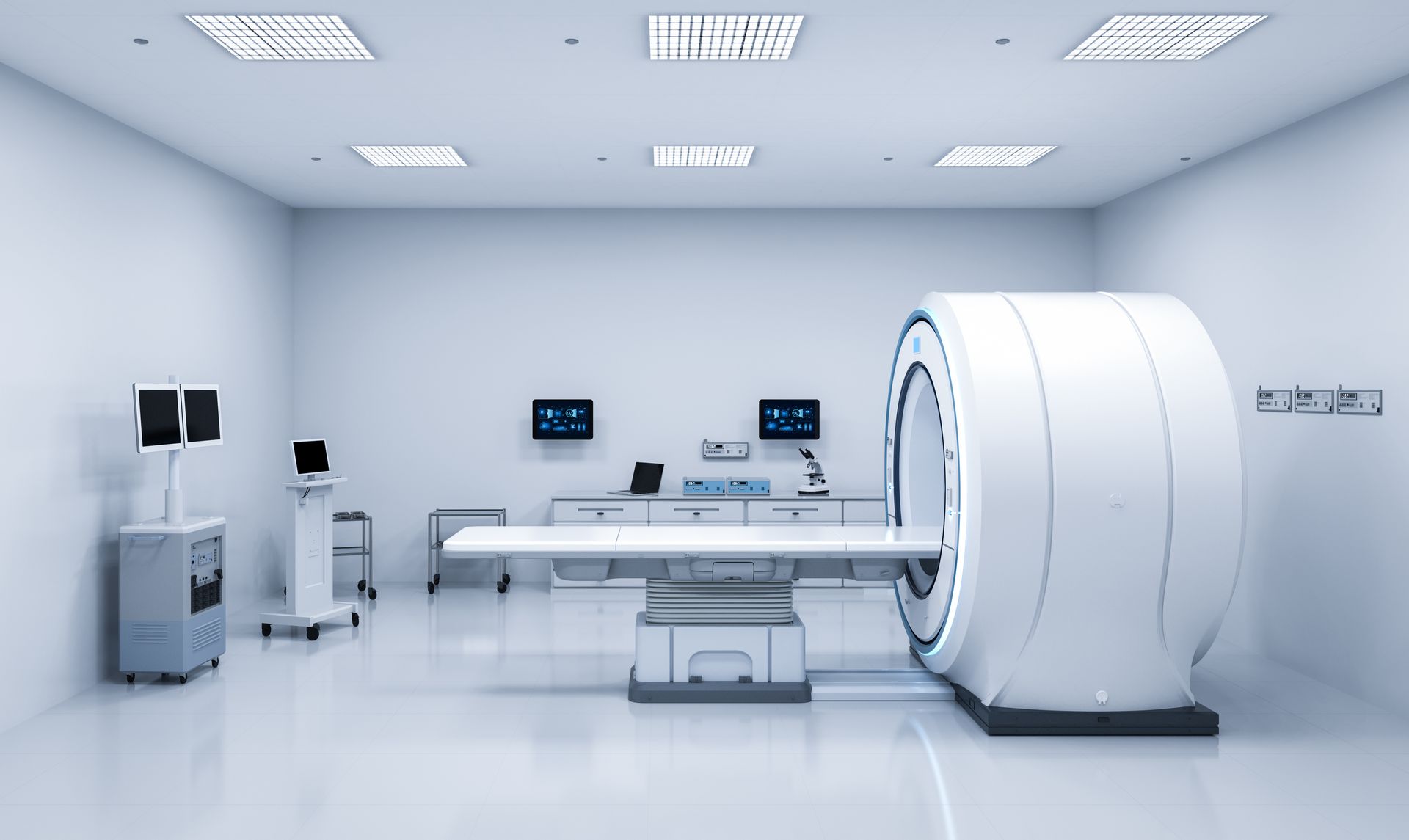
Diagnostic and imaging equipment often requires tight color control and repeatable gloss so systems delivered months apart still match. Many buyers require retained panels and color references to manage long-term consistency.
Finish Options and Visuals
Neutral whites and soft grays dominate clinical spaces, but color is used strategically to code departments, zones, or functions. Texture can hide fingerprints while remaining easy to wipe. Low-gloss and silky-matte looks are common to reduce glare around screens.
Cost Drivers and Lead Times
The price of a medical-grade coating program reflects more than the square footage of metal.
- Geometry and masking: Complex parts with many masked features require time and skill.
- Pretreatment stack: Multi-stage wash lines and conversion coatings add value and cost.
- Color management: Custom colors, antimicrobial adders, and multiple finishes increase material changeovers.
- Documentation level: C of C, full travelers, cure logs, retained panels, and enhanced inspection packages add administrative labor.
- Batching strategy: Economies improve when releases are planned to minimize color changes and oven downtime.
Selecting a Utah Partner
Choose a finisher with a clean, segmented process flow for pretreatment, coating, and cure. Confirm that equipment capacity matches your part sizes and that airflow and filtration protect surface quality. Ask to review example travelers, cure logs, and retained panels. If your device program is growing, ensure the coater can scale from prototypes to production without sacrificing consistency.
Full Blown Coatings supported a northern Utah hospital group that was standardizing casework and carts across multiple facilities. Chemical rub tests with quats and isopropyl alcohol were part of the signoff. The team built a set of retained panels and a color master to ensure each reorder matched the original fleet. Months later, when a new wing opened, the repeat order matched without visible shift, and the maintenance team reported faster wipe downs compared to the legacy painted units.
Buyer’s Checklist You Can Copy
- Drawings that call out masked zones, grounding points, and film build targets.
- Finish specification with color code, gloss, texture, and acceptable ΔE range if applicable.
- Pretreatment requirements and any conversion coating preferences.
- Cure schedule and requested verification method.
- Inspection plan with test methods and acceptance criteria for adhesion, impact, bend, and chemical resistance.
- Documentation level: C of C, travelers, cure logs, retained panels, first-article requirements.
- Packaging and labeling instructions for hospital receiving, plus protective films or corner guards if needed.
- Delivery plan for sites in your county and coordination for after-hours receiving if required.
FAQs
Can powder coating handle daily hospital disinfecting?
Yes, provided the chemistry is selected for chemical resistance and the cure is validated. Always confirm compatibility with your specific cleaners.
Is antimicrobial powder necessary?
It is helpful on high-touch items. It is not a substitute for cleaning. Use it as a complementary control where policy allows.
How does powder compare to wet paint for medical equipment?
Powder typically offers thicker, more uniform films, better chip resistance, and lower ongoing maintenance. It also avoids solvent emissions during application.
What should we ask for on a pilot order?
Specify sample panels and a first-article inspection that covers film build, cure confirmation, color, gloss, adhesion, and chemical rubs. Approve those standards before scaling up.
Service Areas and Next Steps
Reliable medical finishes are available across Salt Lake County, Utah County, Davis County, Weber County, and Cache County with pickup and delivery options by arrangement. If you are planning a new equipment rollout or standardizing finishes across facilities, gather your drawings and cleaning SOPs, decide your documentation level, and request sample panels. The result is a finish that stands up to daily sanitizing, looks consistent across buildings, and arrives with the paperwork your quality team expects.
Ready to evaluate a coating program? Share your prints and finish requirements. You will receive a practical plan for pretreatment, powder selection, cure control, and documentation, along with a schedule aligned to your deployment timeline.
Share This Post!