Passivation: what it is, how it works, and when you need it
TL;DR — Passivation
- Passivation is a chemical clean for stainless steel that removes free iron so a stable chromium oxide film can form, boosting corrosion resistance and coating adhesion.
- Works best on 300 and 400 series stainless; not for carbon steel or aluminum.
- Two common chemistries: citric (effective and safer to handle) and nitric (legacy, often spec-driven).
- Typical workflow before powder coating: clean, blast if needed, rinse, passivate, neutralize, dry, apply adhesion promoter if required, then powder coat and cure.
- Use passivation when parts face moisture, salts, or heavy fabrication that can embed iron; minimize handling and time before coating.
- Verify quality with water-break-free checks, copper sulfate testing for free iron, and cross-hatch adhesion; align with standards like ASTM A967, ASTM A380, and AMS 2700.
- Avoid pitfalls such as poor degreasing, dirty rinses, recontamination from handling, and long delays before coating.
- Cost and lead time depend on alloy, contamination, geometry, masking, and documentation; coordinated pickup and delivery can streamline jobs in Northern Utah.
For blasting, passivation to spec, and powder coating as one package, Full Blown Coatings can handle the process end to end.
Passivation: what it is, how it works, and when you need it
If you have ever asked “what is passivation and why do so many specs call for it,” this guide gives you the practical, shop-floor answer. Passivation is a controlled chemical treatment for stainless steel that removes free iron and helps the surface form a stable, chromium-rich oxide film. The result is higher corrosion resistance, cleaner parts, and better adhesion for downstream finishes like powder coating. This article explains the chemistry, methods, standards, and quality checks, and where passivation fits in a blasting-to-coating workflow. Examples reference project types common across Salt Lake County, Utah County, Davis County, Weber County, and Cache County.
What passivation is (and is not)
Definition. Passivation is a post-fabrication chemical process that dissolves exogenous iron and iron oxides on the surface of stainless steel. By removing these contaminants and allowing chromium at the surface to oxidize, the steel develops a thin, continuous passive film that resists rust.
What it is not.
- It is not paint or plating.
- It is not simple degreasing.
- It does not increase thickness in any measurable way.
- It is not a substitute for proper cleaning, blasting, or conversion coating when those are required by a coating system.
Why it matters. Free iron left from tooling, handling, or embedded particles becomes local anodes that start rust staining. A well executed passivation step clears this risk and stabilizes the surface chemistry.
How the chemistry works
Stainless steels contain chromium, often nickel and other elements. When the surface is clean and free of iron contamination, chromium reacts with oxygen and moisture to form a transparent oxide barrier. Acid formulations used in passivation selectively dissolve iron and its oxides faster than they attack chromium-rich phases. After a proper rinse and dry, ambient exposure finishes the re-oxidation step, creating a more uniform passive layer.
Citric vs nitric systems
Citric acid systems.
- Safer to handle and more environmentally friendly.
- Highly effective at chelating iron and iron oxides.
- Typical bath variables include concentration, temperature, and dwell time; controls are straightforward.
- Excellent choice for shops that combine blasting, washing, passivation, and coating in one line.
Nitric acid systems.
- Legacy method with a long track record under many aerospace and industrial specifications.
- More aggressive oxide removal; requires strict ventilation, handling, and neutralization protocols.
- May be specified when historical approvals or certain alloy conditions apply.
In practice, many facilities lead with citric chemistry unless a customer spec requires nitric.
Where passivation fits in a powder coating workflow
A typical stainless finishing path for coated parts looks like this:
- Cleaning and inspection. Oils, coolants, and soils must be removed before any surface prep.
- Media blasting or vapor honing (as required). Used to unify texture, remove scale, and open the surface.
- Alkaline wash and rinse. Ensures bath life and consistent surface energy.
- Passivation bath, rinse, and neutralization. Dwell time is set for the alloy and condition.
- Drying and contamination control. No fingerprints, no re-deposition of iron.
- Conversion or adhesion promoter if called for. Stainless does not take phosphate like carbon steel; some systems use silane or zirconium chemistry to aid adhesion.
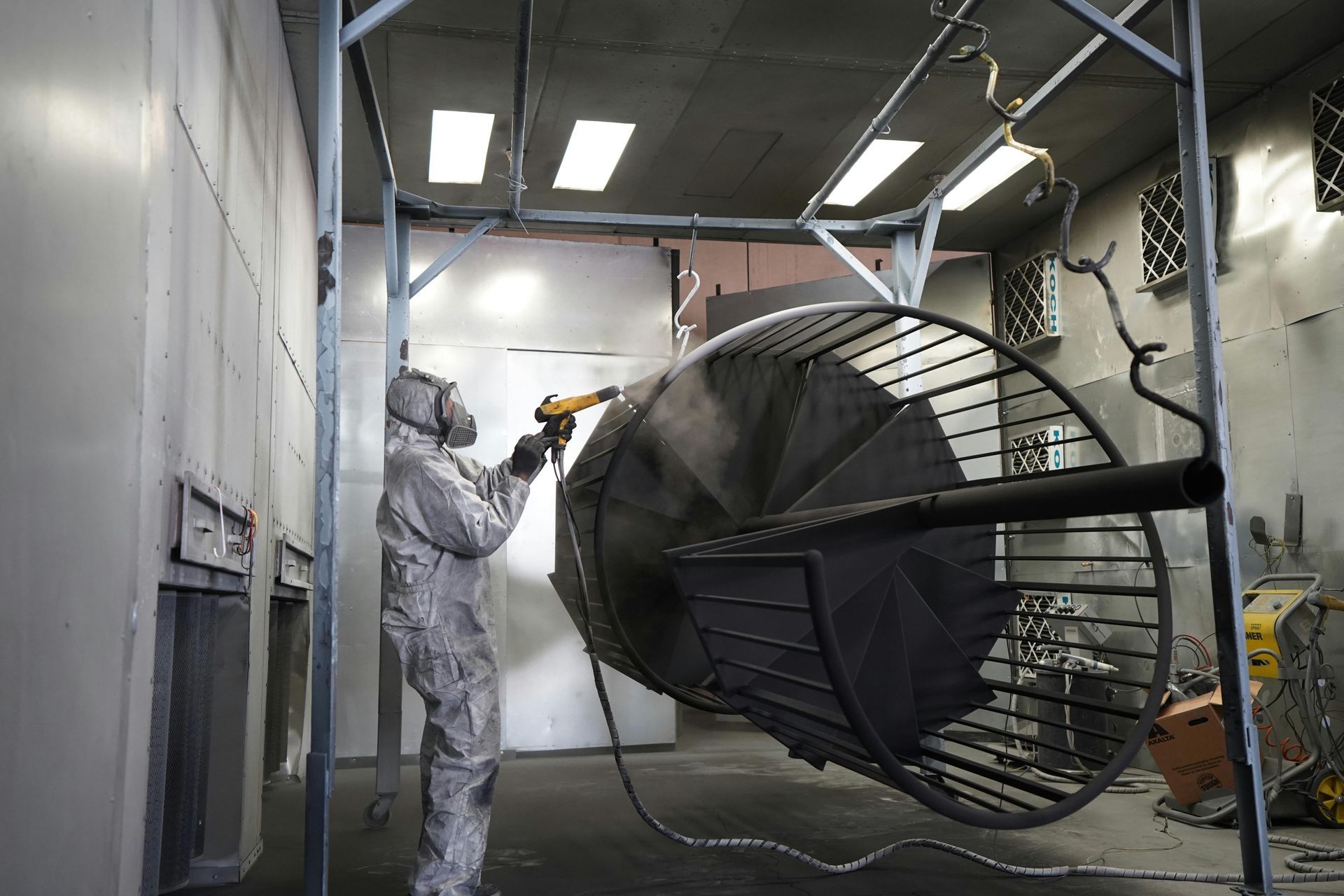
- Powder coating and cure. Application window is kept tight after surface prep to protect cleanliness.
When to passivate if you plan to coat
- Passivate before coating when stainless will be exposed to moisture, chlorides, or de-icing salts and you want an extra safeguard beneath the coating.
- Skip passivation only when an approved conversion-and-powder system is already validated for the stainless grade and end use, and the cleaning process demonstrates water-break-free surfaces with excellent adhesion testing.
A fabrication firm in Davis County delivered a batch of stainless rail panels that had light “tea staining” after outdoor storage. At Full Blown Coatings, the team re-cleaned, citric-passivated, and verified water-break-free panels before applying a textured polyester powder. The rails have remained stain-free through two winters, and cross-hatch adhesion still scores five out of five.
Materials and suitability
- Austenitic stainless (300 series). Excellent candidates for passivation. Fabrication steps that smear free iron benefit the most.
- Ferritic and martensitic stainless (400 series). Also suitable; parameters may differ.
- Precipitation-hardening grades. Require attention to heat-treat condition and guidance from the specification.
- Carbon steel, aluminum, zinc. Do not passivate these with stainless methods. Use appropriate conversion coatings or anodizing systems.
- Titanium and nickel alloys. Special procedures exist; ask for spec-driven process sheets.
Specifications and acceptance testing
Shops should align process windows with established standards, maintain bath logs, and document inspections.
- ASTM A967 / A967M approaches to passivation for stainless steel, including citric and nitric methods, and test options. Reference ASTM International for method details.
- ASTM A380 guidance on cleaning, descaling, and passivation of stainless.
- AMS 2700 for aerospace work; issued by SAE International.
- Verification tests. Water-break-free cleanliness check, copper sulfate test for free iron, humidity or salt-fog exposure where required, and coating adhesion tests when a paint or powder will follow.
Benefits you can measure
Corrosion resistance. A sound passive film reduces risk of rust staining and pitting, especially in coastal air, winter roadway spray, or chlorinated washdowns.
Coating performance. Cleaner, iron-free surfaces reduce underfilm corrosion and edge creep. Adhesion improves when the prep path is stable and repeatable.
Sanitation and appearance. In medical, food, and lab environments, passivated stainless stays brighter and is easier to wipe clean.
Lifecycle cost. Passivation is a low-thickness, low-mass step that prevents expensive rework. It protects both bare stainless and any premium coating system you add on top.
Quality pitfalls and how to avoid them
- Inadequate degreasing before the bath. Oils block acid access, leaving islands of contamination.
- Rinse water carryover. Dirty rinse tanks re-deposit iron; counterflow rinses reduce this risk.
- Poor drying or handling. Fingerprints and carbon steel contact can re-seed iron; use stainless or polymer racks and clean gloves.
- Skipping neutralization. Some residues can affect downstream adhesion; neutralization and final DI rinse close the loop.
- Time delays to coating. If you plan to powder coat, control the window between prep and application to protect surface energy.
Small shop lesson. A custom equipment builder brought a batch of 304 brackets that picked up rust specks during storage near a carbon steel saw. After a citric passivation cycle and strict handling controls, the brackets passed copper sulfate testing and took a high-bond epoxy powder topcoat with clean edges and no creepage after chamber testing.
Cost and scheduling
What drives price. Alloy and condition, contamination level, geometry and masking complexity, documentation requirements, and whether passivation is bundled with blasting and coating.
Typical lead times. Small lots of brackets or handrails can move in a few business days when passivation is integrated with a powder line. Complex welded assemblies, aerospace documentation, or medical device work will require additional review.
Logistics. Many Utah projects combine pickup, finishing, and delivery to compress timelines. When you send drawings, include alloy, prior processes, and any mandatory specification so the process sheet can be matched quickly.
Frequently asked questions
Do I still need passivation if I am powder coating the stainless
If corrosion resistance is critical or the stainless was heavily fabricated, passivation is a valuable upstream safeguard. For some validated coating systems, a conversion-plus-powder path can be used instead, but it should be backed by adhesion and corrosion testing.
Will passivation change the look
No added color or thickness should be visible. The process brightens the surface slightly by removing contaminants.
Citric or nitric, which is better
Citric is effective, safer to handle, and widely accepted under ASTM A967 methods. Use nitric only when the customer specification demands it or when specific alloy conditions call for it.
How long does the passive film last
The film is self-healing in normal atmospheres. If the surface stays clean and free of iron contamination, the passive layer remains stable for years.
Can carbon steel be passivated like stainless
No. Carbon steel requires different pretreatments. Passivation as described here is a stainless-specific process.
Utah service areas
Passivation, blasting, and coating support is commonly requested across Salt Lake County, Utah County, Davis County, Weber County, and Cache County. When projects cross county lines, coordinated pickup and delivery can keep schedules tight without sacrificing process control.
Putting it all together in a coating stack
For outdoor stainless handrails, food service carts, lab frames, and machine guards, a robust stack often looks like: alkaline clean, media blast as needed, passivation with documented controls, final rinse and dry, approved adhesion promoter where required, then a high-durability polyester powder. Adhesion testing and a short salt-spray exposure verify the system before full rollout.
Real world wrap-up. A Northern Utah lab requested powder-coated 316 stainless carts that could handle daily sanitizing. The team prepared witness coupons alongside the job, ran citric passivation under ASTM A967, and coated with a chemical-resistant polyester. Coupons passed water-break, copper sulfate, cross-hatch adhesion, and a cleaning chemical soak test. The carts have remained bright and stain-free through aggressive wipe-downs.
Conclusion
Passivation is small in cost and large in impact. It removes the free iron that triggers stains, promotes a stable chromium oxide film, and prepares stainless for demanding environments and coatings. When you follow a clean, documented process, you gain better corrosion resistance, better adhesion, and fewer surprises in the field.
If you want a single partner to handle blasting, passivation to spec, and powder coating with pickup and delivery across the Wasatch Front, reach out to Full Blown Coatings. A quick review of your alloy, drawings, and target standard is all it takes to map the right path for a durable, compliant finish.
Share This Post!