Why powder coating for aerospace under ISO/AS9100 matters
TL;DR — Powder Coating for Aerospace (ISO/AS9100)
- Powder coating provides durable, lightweight, low-VOC protection for aerospace interiors, avionics housings, and ground-support equipment.
- ISO/AS9100 adds aviation-grade controls: documented travelers, first article inspection, calibrated gauges, cure logs, and full traceability.
- Performance depends on disciplined prep: precision cleaning, media blasting, conversion coating, outgassing, masking, and purpose-built racking with solid grounding.
- Cure is validated with thermocouples on representative mass to hit time-at-temperature. Film build is held within spec and Faraday areas are engineered up front.
- Release testing covers thickness, adhesion, impact, bend, gloss, color delta, humidity or salt fog, and specified chemical rubs.
- Use powder for consistent appearance and abrasion resistance in cabins and on the ramp. Choose alternatives like anodize, conversion coat, ceramic, or vacuum coating when ultra-thin or high-temp films are required.
- Cost drivers: part size and complexity, masking, pretreatment stack, finish tier, special tests, and documentation packages.
- Buyer checklist: drawings with mask and film-build zones, color and gloss targets, required tests, documentation needs, sample panels or pilot build, and packaging specs.
Need an aerospace-grade, ISO/AS9100-aligned finish in Utah? Full Blown Coatings can quote, sample, and document to spec.

Why Powder coating is Important in aerospace
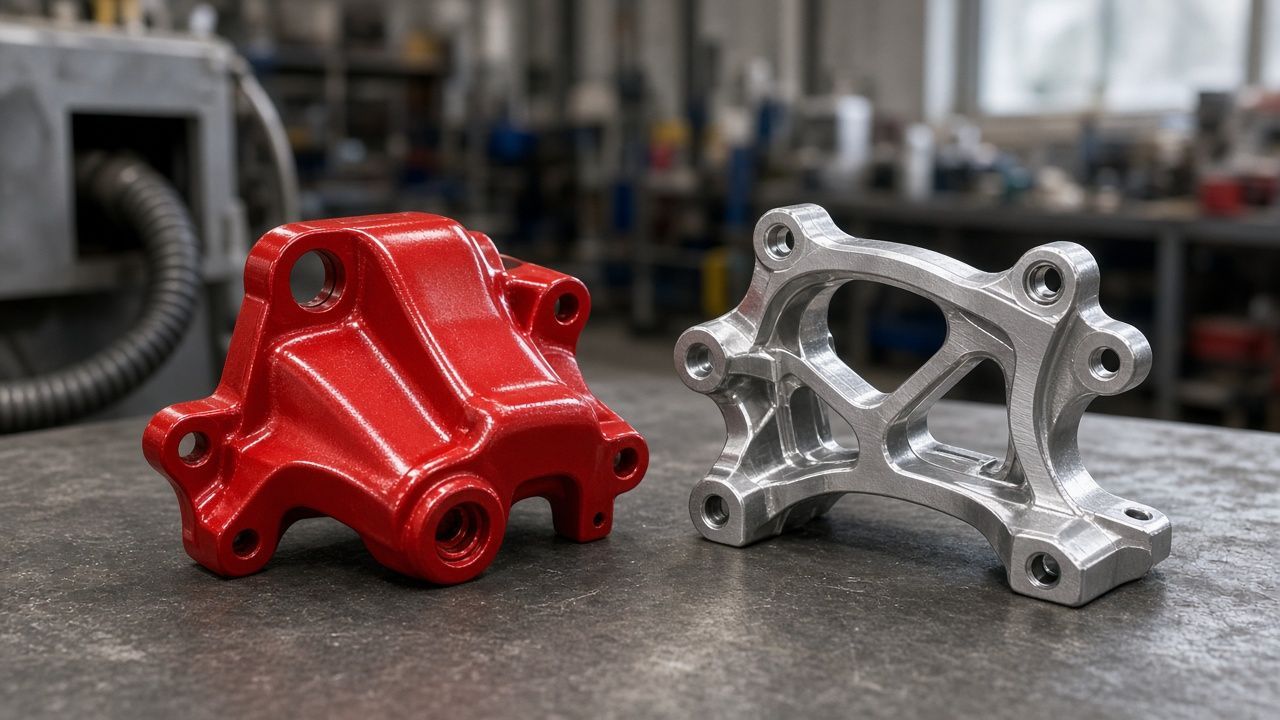
Aerospace programs demand coatings that are light, durable, repeatable, and fully traceable. Powder coating for aerospace meets those requirements when it is engineered with the right chemistry, pretreatment, and process controls. Alignment with ISO/AS9100 ensures the entire workflow is documented and auditable, from incoming materials and surface preparation to cure validation and final inspection. The result is a finish that protects critical parts and ground-support equipment, looks consistent across fleets, and stands up to demanding service environments.

The case for powder coating in flight and ground operations
Why aerospace engineers choose powder
- High durability against abrasion and handling
- Excellent corrosion resistance when paired with the correct pretreatment
- Consistent film builds that control weight and appearance
- Broad range of gloss, texture, and color options for cabin, cockpit, and GSE
- Low to no solvent emissions and reclaim potential for overspray
Where it is used
- Interior hardware such as brackets, seat and galley components, and stowage systems
- Avionics and electrical housings where uniform appearance and protective dielectric films are required
- Ground-support equipment such as maintenance carts, stands, and racks that see weather and heavy handling
Full Blown Coatings: A maintenance team asked for a uniform, glare-controlled texture on a set of tool carts that shuttle parts between the hangar and the ramp. After bead blasting, conversion coating, and a low-gloss textured powder, carts returned to service with improved scuff resistance and better visual consistency for inventory labeling.
What ISO/AS9100 changes in real life
Beyond ISO 9100
ISO/AS9100 brings aviation-specific rigor. Expect documented travelers, first article inspection packages, controlled work instructions, calibration and training records, and closed-loop corrective action for any nonconformance. Those elements matter when a coating must be reproduced the same way on every lot and when customers need traceability years later.
Typical documentation and acceptance artifacts
- Certificates of Conformance listing powder lot, pretreatment chemistry, and cure data
- First Article Inspection reports where required
- Cure profiles from thermocouples on representative mass
- Inspection records for thickness, gloss, color delta, adhesion, and hardness
Substrates and pretreatment that make or break performance
Common aerospace metals
- Aluminum grades used for structures and interior components
- Carbon and stainless steels used in racks, brackets, and fixtures
- Magnesium and titanium in select applications where care is needed with pretreatment and cure
Surface preparation sequence
- Precision cleaning and de-oiling to remove machining fluids or fingerprints
- Media blasting to create an anchor profile and remove oxides or old finishes
- Conversion coating, often a chromate-free system for environmental compliance
- Outgassing prebake for castings and porous substrates to prevent pinholes
- Masking of fits, threads, grounding points, and keep-out zones
Full Blown Coatings: An avionics enclosure arrived with patchy adhesion from a prior finish. After solvent cleaning, targeted blasting, and a tighter conversion-coat window, the repainted enclosure passed crosshatch adhesion and a Skydrol rub test specified by the customer.
Application engineering and cure control
Racking and grounding
Correct racking ensures good electrical contact for powder attraction and avoids shadowed areas. Purpose-built fixtures minimize part-to-part variation and reduce touch-up points.
Film build and Faraday areas
Engineers specify target thickness windows to meet weight and protection goals. Application parameters and gun settings are tuned to drive powder into corners and recesses that are susceptible to the Faraday effect.
Cure validation
Oven setpoints are not enough. Thermocouples are placed on representative mass to confirm time-at-temperature. Cure windows are validated for each color and chemistry so adhesion, impact, and solvent resistance hit spec every time.
Testing and quality assurance
What gets measured
- Dry film thickness with calibrated gauges
- Adhesion via crosshatch or pull-off methods
- Impact and bend resistance for handling durability
- Gloss and color delta against RAL, Federal Standard, or customer master panels
- Humidity and salt fog checkpoints for corrosion resistance
- Chemical resistance where applicable to Skydrol, fuels, oils, and cleaners
Release criteria
Parts ship with thickness within spec, cure charts attached to the lot record, and all special tests documented. If a part fails a checkpoint, it is quarantined and dispositioned per formal nonconformance and corrective action procedures.
Where powder coating excels in aerospace service
Interior environments
Uniform color and gloss, selectable textures that hide fabrication marks, and durable films that stand up to passenger contact and cleaning agents.
Ramp and hangar environments
Superior chip and abrasion resistance compared to many liquid enamels, lower maintenance, and corrosion protection that pays back over long cycles of exposure.
Full Blown Coatings anecdote: A fleet operator requested a texture that would disguise scuffs on frequently moved racks. Switching from a smooth satin to a fine texture reduced visible wear and cut touch-up requests during the next maintenance cycle.
When to consider alternatives
Powder coating is not ideal for every use case. Anodizing may win when ultra-thin films and conductive sealing strategies are required on aluminum. Chemical conversion coatings are often specified for ground points and fastener interfaces. Ceramic or vacuum coatings can be preferred where extreme temperatures or ultra-thin functional films are mandatory. A qualified finisher should advise when to mix technologies on a single assembly.
Appearance control at fleet scale
Color systems and tolerances
Programs often call out RAL or Federal Standard references, gloss bands, and allowable color delta from a signed master panel. Texture finishes can improve visual uniformity over large, fabricated surfaces.
Repeatability
Consistent pretreatment, oven profiling, and controlled racking mean the fiftieth part matches the first. That repeatability is critical when parts come from different vendors and must look uniform in the same cabin or on adjacent racks.
Sustainability and safety advantages
Powder contains little to no solvents, and overspray can often be reclaimed to reduce waste. Efficient transfer rates and reduced emissions support environmental goals without sacrificing performance.
Logistics, scale, and lead times
Planning for first articles and production
First article inspection introduces extra front-end time for fixtures, masking plans, and cure profiling. Once those elements are locked, repeat orders move faster and with fewer variables.
Part size, masking, and complexity
Large, complex assemblies increase racking and masking time. Early collaboration on break points, keep-out zones, and subassembly strategy reduces rework and improves cost.
Budgeting and cost drivers
What influences price
- Part size and geometry
- Masking complexity and number of keep-out features
- Pretreatment stack and conversion coat type
- Color and finish tier, including metallics or multi-coat systems
- Special testing such as chemical rubs, salt fog, or hardness mapping
- Documentation packages such as FAI and full lot traceability
A simple bracket in a standard color may run quickly through the line. A multi-mask assembly in a metallic texture with cure profiles and chemical testing will require more time and cost accordingly. The right partner will quote both options with clear assumptions.
Buyer’s checklist for aerospace powder coating
- Provide drawings with clear callouts for masked features, grounding points, film build zones, and cosmetic faces
- Specify color, gloss, and allowable ΔE from a master panel
- List required tests and acceptance thresholds
- Confirm documentation needs such as ISO/AS9100 CoC, FAI, and cure profiles
- Ask for sample panels or a pilot build when aesthetics are critical
- Align on packaging so finished faces are protected during transport
Frequently asked questions
Can powder meet my OEM spec
Yes, when the chemistry, pretreatment, and testing align with the specification. A qualified shop will identify gaps before work starts.
Do you offer chromate-free systems
Most aerospace programs now request chromate-free conversion coats. Those options are available and widely validated.
How do you protect grounding points
Masking plans and post-process verification ensure continuity where required. Conversion coat only or bare metal keep-outs can be maintained per drawing.
What color tolerances can you hold
With a signed master panel, tight ΔE tolerances are achievable. Texture can be used to improve perceived uniformity across welded or machined surfaces.
How is cure ensured on heavy parts
Thermocouples ride the load to capture time at temperature. Cure is verified against powder manufacturer windows and recorded per lot.
Conclusion
Powder coating for aerospace succeeds when it is treated as a controlled process rather than a simple paint step. ISO/AS9100 governance provides the quality backbone. Correct pretreatment and cure validation ensure mechanical and chemical performance. Appearance is repeatable across fleets, and service life improves in both cabin and ramp environments.
If you would like to see how a documented, aerospace-grade workflow translates to your parts, request a sample panel set or a pilot run. Full Blown Coatings regularly supports Utah customers with media blasting, conversion coating, masked powder application, and complete documentation. Their team can review drawings, propose racking and masking strategies, and deliver coatings that meet both specification and schedule.
Share This Post!