Powder Coated Sheet Metal and Powder Coated Steel | need to know
TL;DR:
- Powder coated sheet metal is a common choice for commercial enclosures, panels, cabinets, machine covers, and fabricated components because it delivers a durable, uniform finish with good repeatability in production.
- Powder coated steel can perform very well in commercial and industrial settings, but steel usually needs more attention to prep, pretreatment, and primer selection than aluminum or already-clean substrates.
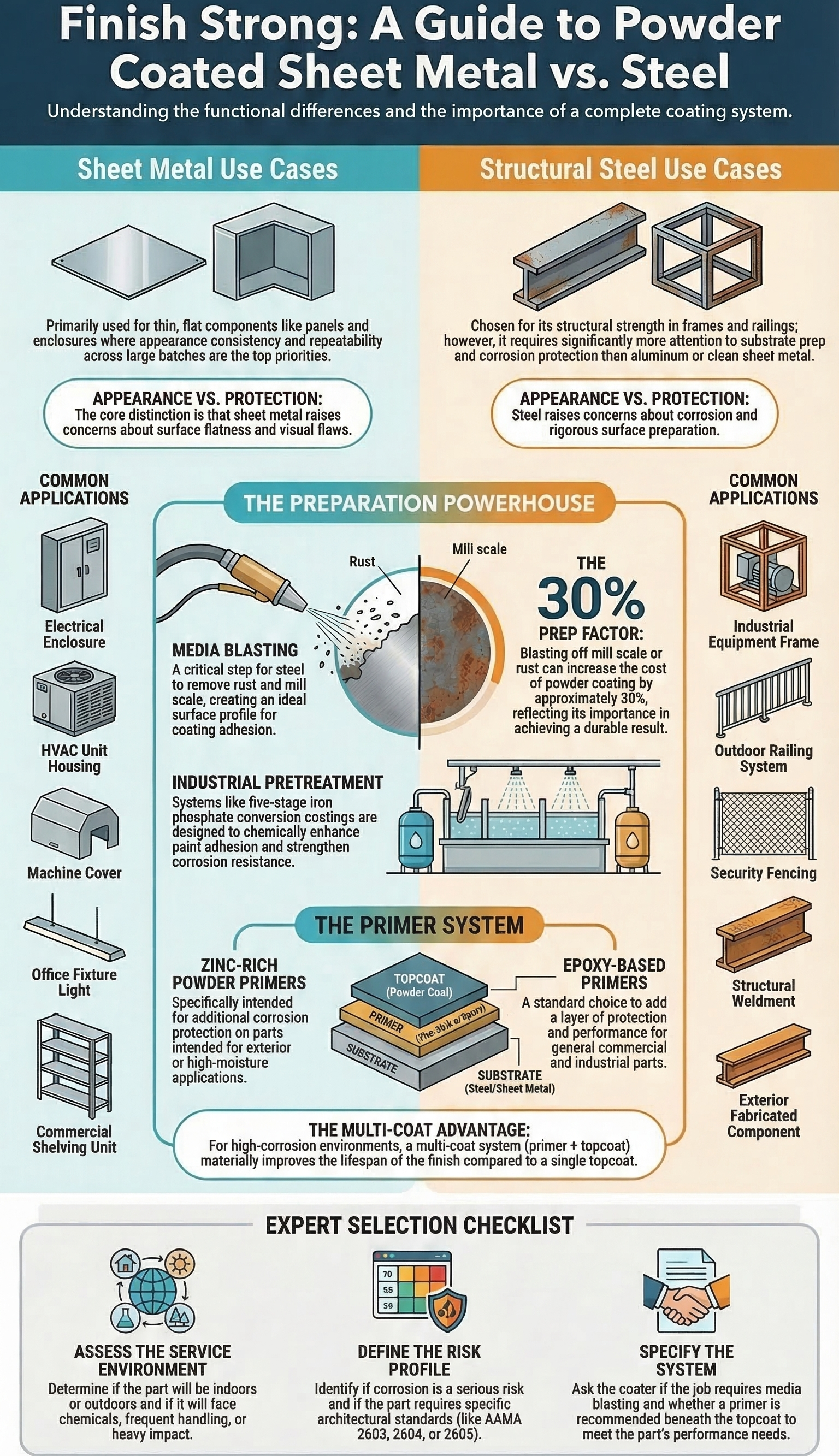
- When coating steel, IFS states that a powder primer is recommended, and if corrosion is a concern, a zinc rich powder primer may be used; otherwise, a standard epoxy-based primer adds protection and performance.
- Pretreatment matters because industrial pretreatment systems are designed to improve corrosion protection and paint adhesion on metal substrates.
- Media blasting is often critical for steel and previously coated parts because it removes rust, mill scale, and failed finishes while improving surface profile for coating adhesion. One pricing source even notes that blasting mill scale or rust can add about 30% to cost, which shows how significant prep is in real commercial work.
- For high-corrosion or exterior environments, multi-coat systems using an epoxy or zinc rich primer beneath a top coat can materially improve corrosion protection.
- Need any sheet metals powder coated? contact Full Blown Coatings now for professional coatings and advice!
Powder Coated Sheet Metal and Powder Coated Steel
When businesses look into powder coated sheet metal and powder coated steel, they are usually comparing more than appearance. They want to know how the finish will hold up in service, whether it can resist corrosion, how consistent it will look across multiple parts, and whether it makes sense for their commercial or industrial application. For companies comparing media blasting, sand blasting, powder coating services, and metal finishing, the real answer usually comes down to substrate type, prep quality, pretreatment, and the coating system chosen.
Powder coating is widely used in commercial manufacturing and fabrication because it can create a durable, even finish on metal parts. In practical terms, it is often a strong fit for enclosures, cabinets, panels, frames, guards, rails, structural accessories, and fabricated assemblies that need both protection and a clean finished look.
What Is Powder Coated Sheet Metal?
How Powder Coating Works on Sheet Metal
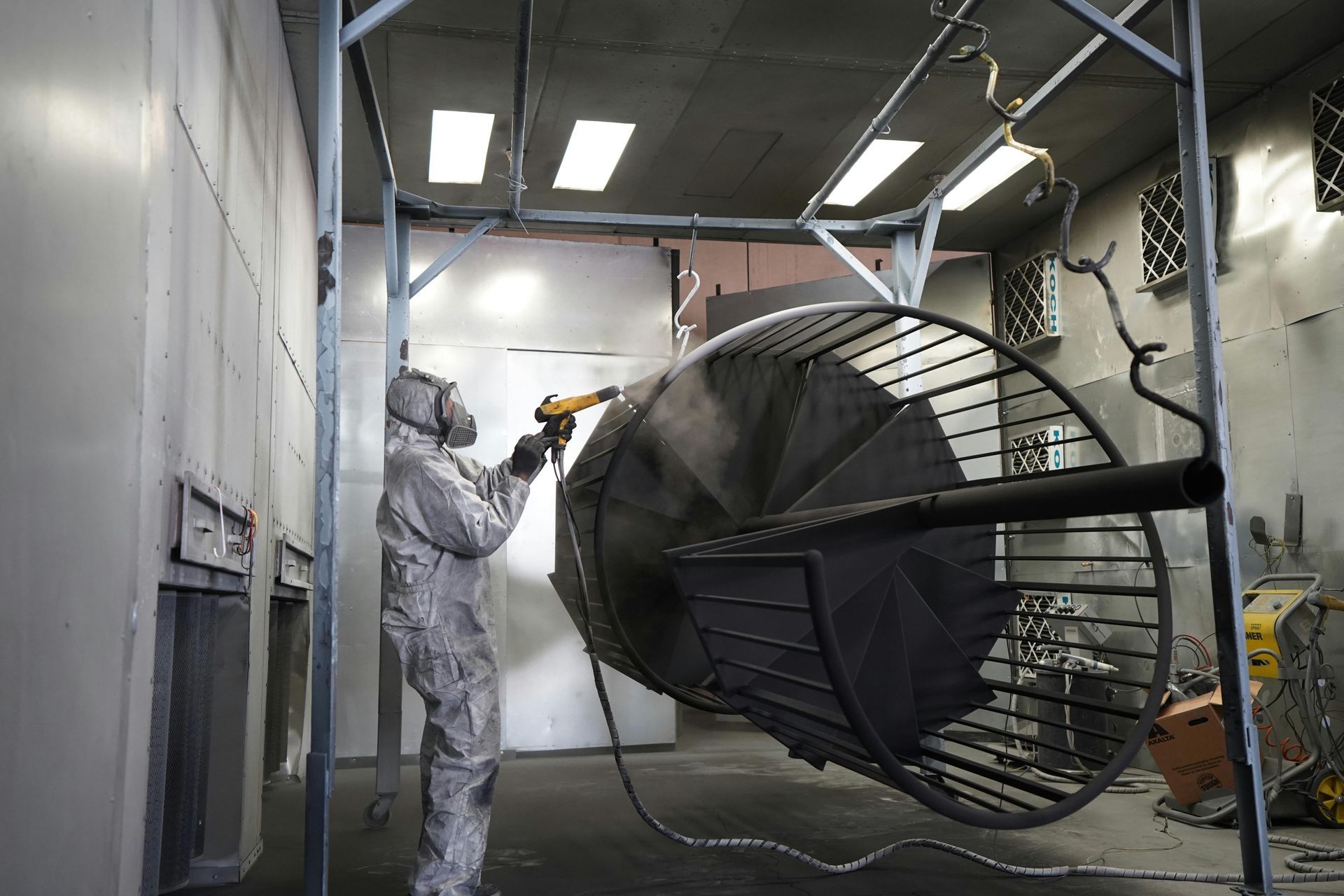
Powder coating applies a dry powder finish to a prepared metal surface, then cures it into a hard protective layer. In commercial environments, this process is popular because it can produce a more uniform and repeatable finish than many conventional wet paint systems, especially on batches of similar fabricated parts. This makes it a practical choice for businesses that need consistency across many pieces.
Sheet metal is especially well suited to powder coating because it is used in so many repeatable commercial products. Flat panels, covers, cabinets, electrical enclosures, HVAC housings, office fixtures, machine skins, and fabricated housings all benefit from a finish that looks clean and performs well under regular use.
Why Sheet Metal Is So Common in Commercial Work
One reason powder coated sheet metal is so common is that sheet metal shows defects easily. Flat, visible surfaces tend to reveal runs, inconsistencies, and appearance problems faster than more irregular shapes. That means finish quality matters. When the prep and application are done well, powder coating can deliver a crisp, consistent appearance that works well for customer-facing commercial products as well as back-of-house industrial equipment.
This is one place where shops often see the difference between “color on metal” and a real finishing process. At Full Blown Coatings, that distinction often matters most on visible panels and enclosures. A rough fabricated steel bracket can hide a lot more than a large flat access panel can.
What Is Powder Coated Steel?
Why Powder Coating Is Popular on Steel
Powder coated steel is widely used because steel is strong, versatile, and common across industrial and commercial fabrication. It shows up in equipment frames, railings, carts, racks, weldments, fencing, supports, guards, and a long list of fabricated components. Powder coating adds a protective and visually consistent finish that can help these parts perform better and look better over time.
Why Steel Needs More Attention Than Many People Realize
Steel can be an excellent substrate for powder coating, but it usually needs more process attention than aluminum. IFS notes that when coating steel, a powder primer is recommended. If corrosion is a concern, a zinc rich powder primer may be used. Otherwise, a standard epoxy-based primer can provide another layer of protection and performance.
That is a major point for commercial buyers. A finish system on steel is not always just one top coat. In many cases, especially when the part will live outside or in a corrosive environment, the right answer includes blasting, pretreatment, primer, and then the top coat.
Powder Coated Sheet Metal vs Powder Coated Steel
The Difference Is Not Just Shape
Many people use these terms like they describe totally different things, but sheet metal and steel can overlap. Sheet metal may itself be steel, or it may be aluminum or another metal formed into thin panels and fabricated components. The more useful distinction is usually this: sheet metal raises appearance and flatness concerns, while steel raises corrosion and substrate-prep concerns.
Thin visible sheet metal panels often need careful handling and finish control to avoid visual flaws. Steel parts, especially fabricated or field-used ones, often need stronger prep and more robust protection against corrosion. That is why the coating system should match both the part geometry and the service environment.
Where Each Shows Up Most Often
Powder coated sheet metal is common for:
- Electrical enclosures
- Cabinets
- Machine covers
- HVAC housings
- Interior fixtures
- Sign panels
- Commercial shelving
Powder coated steel is common for:
- Frames
- Railings
- Fencing
- Brackets
- Weldments
- Guards
- Structural accessories
- Exterior fabricated components
Benefits of Powder Coated Sheet Metal
Consistent Appearance
One of the biggest benefits of powder coated sheet metal is appearance consistency. Commercial buyers often need a finish that looks uniform from one part to the next, especially when producing repeat batches of panels, enclosures, or cabinets. Powder coating helps support that repeatability when the prep and application are controlled well.
Good Durability for High-Use Environments
Sheet metal parts often live in commercial spaces where they are touched, cleaned, bumped, and used regularly. A durable powder finish can help those parts hold up better over time. This is valuable for equipment housings, utility enclosures, shop fixtures, and other fabricated components that need to stay presentable.
Strong Fit for Production Work
Because sheet metal parts are often fabricated in repeatable dimensions, they pair well with production-oriented powder coating. Commercial manufacturers benefit from having a finish process that can scale from a few pieces to larger runs without completely changing the appearance profile from part to part.
Benefits of Powder Coated Steel
Better Protection When Properly Prepped
The biggest advantage of powder coated steel is that it can combine the structural strength of steel with a more durable protective finish. That matters in real-world service where parts face weather, abrasion, handling, or moisture. But that protection depends heavily on prep and system design.
PPG states that pretreatment products and integrated solutions are designed to enhance, strengthen, and protect metal substrates and to support exceptional corrosion protection and paint adhesion. That is not a minor technical detail. It is one of the key reasons some coated parts last and others fail early.
Primer Systems Can Make a Big Difference
IFS states that powder primers are applied to properly pretreated metal substrates, including steel, and require a powder top coat to help provide the best in substrate protection. Their materials also note that zinc rich primers are intended for additional corrosion protection on exterior applications, while epoxy primers can add another level of protection and performance.
This matters most for exterior fabricated steel, commercial railings, exposed supports, equipment frames, and other high-use parts. If corrosion is part of the risk profile, asking whether a primer system is recommended is not overkill. It is part of specifying the job correctly.
Why Media Blasting Matters for Powder Coated Steel and Sheet Metal
Blasting Removes What the Coating Cannot Fix
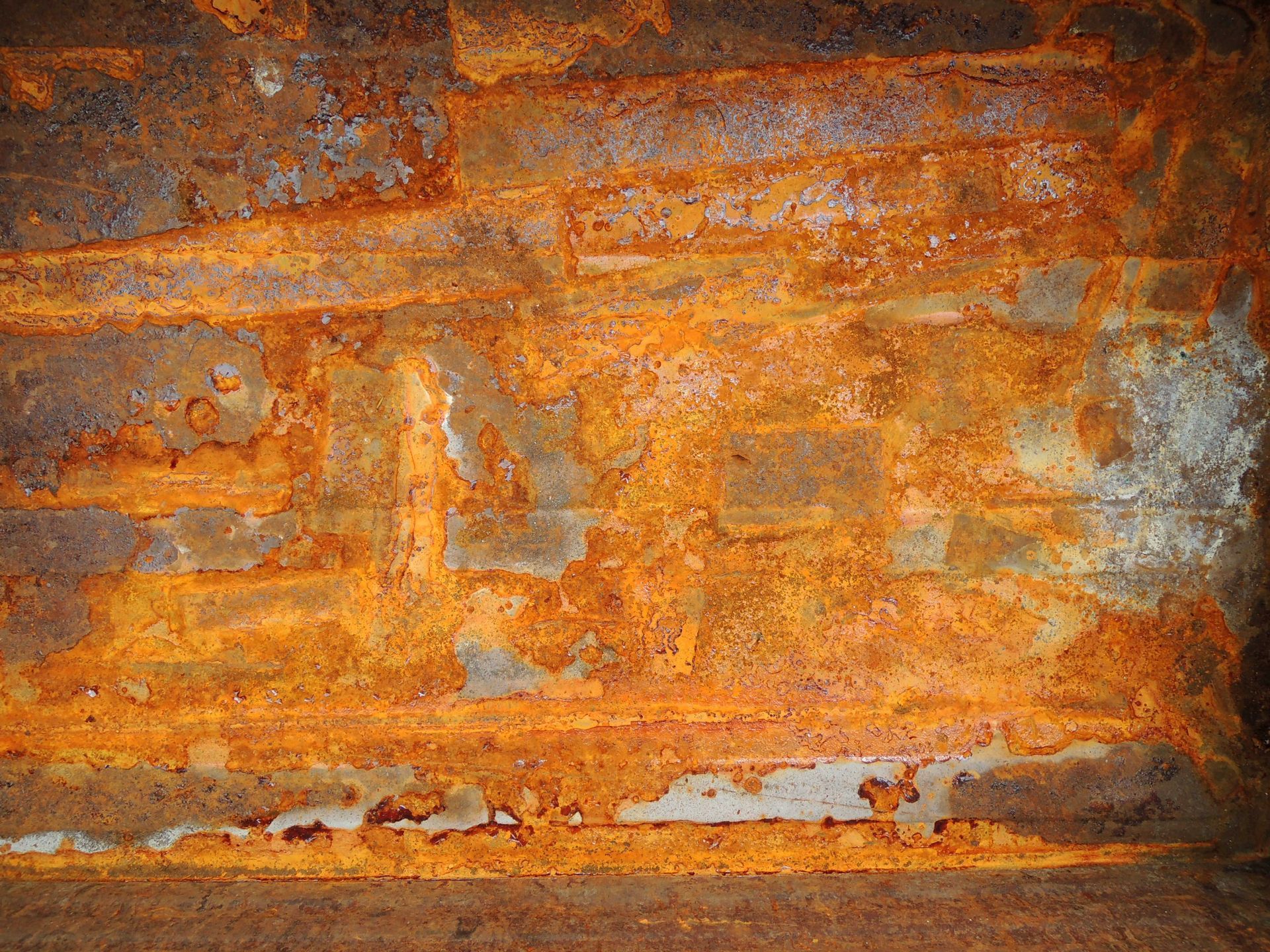
Media blasting is often one of the most important steps in commercial finishing because powder coating does not magically solve bad substrate conditions. Rust, mill scale, old failing coatings, and heavy contamination all interfere with adhesion and long-term performance.
The technical data for one IFS zinc rich primer notes that pretreatment may consist of a five-stage iron phosphate or equivalent conversion coating, and or SSPC 10 near white blast with an optimum surface profile. That is a strong reminder that good systems are built on surface preparation, not just topcoat selection.
Blasting Has Real Cost and Performance Implications
One pricing source states that blasting mill scale or rust can add about 30% to the cost of powder coating. That is useful not just as a pricing detail, but as proof of how important prep is in real commercial projects.
At Full Blown Coatings, this is often where project expectations get clearer. Clean new fabricated steel is one kind of job. Rusted, scaled, or previously coated steel from the field is another. The final color may be the same, but the path to a durable result is not.
Common Problems Businesses Want to Avoid
Corrosion Under the Coating
If steel is not properly cleaned, blasted, pretreated, or primed where needed, corrosion can begin under the finish. That is one of the most expensive mistakes in commercial metal finishing because the failure may not appear until the part is already in service.
Appearance Problems on Visible Panels
Flat sheet metal surfaces reveal defects quickly. That makes application quality, handling, and quality control especially important on visible commercial panels and enclosures.
Choosing the Wrong System for Outdoor Use
Not every powder coating system is meant for the same environment. IFS architectural materials note that different systems are built to satisfy different performance levels, including standards such as AAMA 2603, 2604, and 2605, with high-performance fluoropolymer systems used for the most demanding architectural exposure levels.
That does not mean every commercial steel part needs an architectural fluoropolymer. It does mean buyers should not assume any powder is automatically suitable for any exterior condition.
How to Choose the Right System
Start With the Service Environment
Ask these questions first:
- Is the part indoors or outdoors?
- Is corrosion a serious risk?
- Is the part decorative, structural, or both?
- Will it see chemicals, frequent handling, or impact?
- Does it need blasting?
- Does it need a primer beneath the top coat?
Match the Process to the Job
The best coating system for powder coated sheet metal is not always the best system for powder coated steel. Visible indoor sheet metal may prioritize smooth appearance and batch consistency. Exterior steel may prioritize corrosion resistance, pretreatment, blasting, and primer strategy. The right answer depends on the job, not just the color.
Final Thoughts
Powder coated sheet metal and powder coated steel can both be excellent choices for commercial and industrial applications, but they are not one-size-fits-all categories. Sheet metal often demands finish consistency and appearance control. Steel often demands stronger prep, pretreatment, and primer decisions. The finish only performs as well as the system behind it.
Share This Post!