Sandblasting Near Me | Media Blasting, Surface Treatment, and How to Choose the Right Blasting Media
TL;DR:
- Searching Sandblasting Near Me should really be about finding the right Media Blasting process, not just the closest shop. The right surface treatment depends on the substrate, the coating goal, and the finish you want afterward.
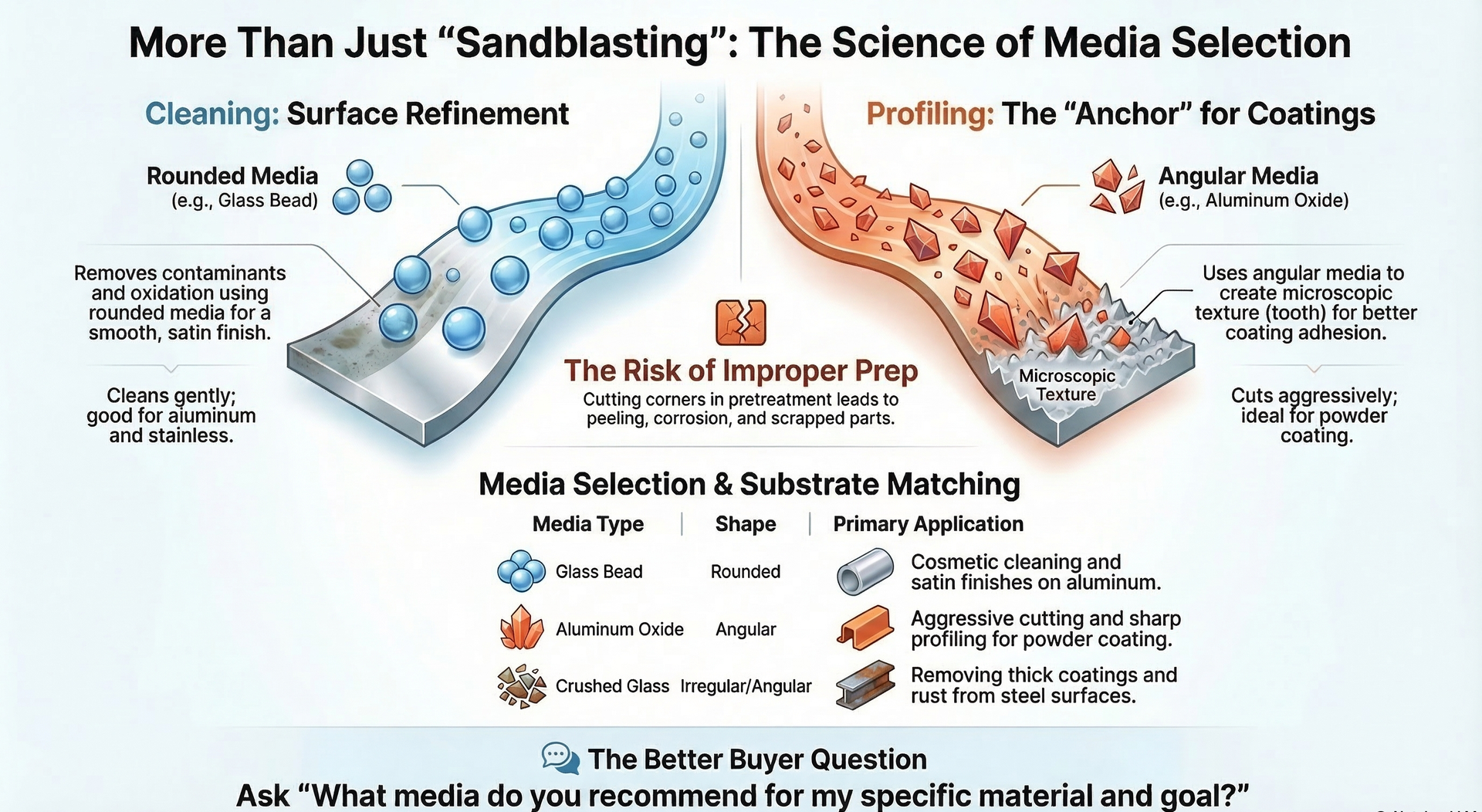
- Not all blasting media do the same job. Rounded media like glass bead are better for gentle cleaning and satin finishing, while angular media like aluminum oxide blast media and crushed glass are better for stripping coatings and creating a profile for adhesion.
- Glass bead is less aggressive and is often used on softer, non-ferrous metals such as stainless steel and aluminum when appearance matters. It is not the best choice for heavy rust or thick coating removal.
- Aluminum oxide blast media is hard, angular, and useful when you need faster cutting and a sharper profile before coating, plating, or other finishing steps.
- Surface prep is critical before powder coating. TIGER states, “Cutting corners in pretreatment can lead to downstream production disasters such as peeling, corrosion and scrap.”
- A better buyer question is not “Do you sandblast?” but “What media do you recommend for my part, and are you cleaning it, profiling it, or both?” That conclusion is an inference drawn from the cited blasting and pretreatment guidance.
Sandblasting Near Me | What to know
When people search Sandblasting Near Me, they are usually not just looking for the nearest blast cabinet or the cheapest quote. They are looking for the right Media Blasting solution for a specific problem. That might mean removing rust from steel, stripping old coatings, preparing parts for powder coating, cleaning aluminum without damaging it, or creating the right anchor profile for a new finish. The challenge is that the best surface treatment depends on the part, the material, the condition of the surface, and what happens after blasting.
That is why the type of blasting media matters so much. Different forms of abrasive blasting media cut differently, leave different profiles, and create different finish qualities. Some sand blast media are aggressive and designed to strip heavy coatings or mill scale. Others are much gentler and better for cosmetic finishing or cleaning delicate metals. If you are preparing a part for powder coating, the media choice can directly affect adhesion, corrosion resistance, and the final appearance.
What Media Blasting Actually Does
It is more than just “blasting something clean”
A lot of people think of blasting as one aggressive process that simply removes paint or rust. In reality, Media Blasting can serve several different purposes. It can strip old coatings, remove mill scale, clean oxidation, create a tooth or profile for coating adhesion, deburr parts, refine a surface, or leave a uniform cosmetic finish. The same shop may use different media on steel, stainless, aluminum, or cast parts depending on what the job requires.
This distinction matters because cleaning and profiling are not the same thing. A surface can look clean and still be poorly prepared for powder coating. On the other hand, a surface can be aggressively profiled when all the customer really wanted was a smooth satin appearance. Good blasting work starts by knowing the goal before the nozzle ever turns on.
Sandblasting vs media blasting
In everyday language, people still say “sandblasting.” In shop language, media blasting is usually the more accurate term because shops may use glass bead, crushed glass, steel shot, steel grit, garnet, or aluminum oxide blast media rather than actual sand. BlastOne’s guidance makes the core point clearly: there is no single abrasive that is best for every blasting job. The media has to match the application.
Why Surface Treatment Matters Before Powder Coating
The finish starts before the powder
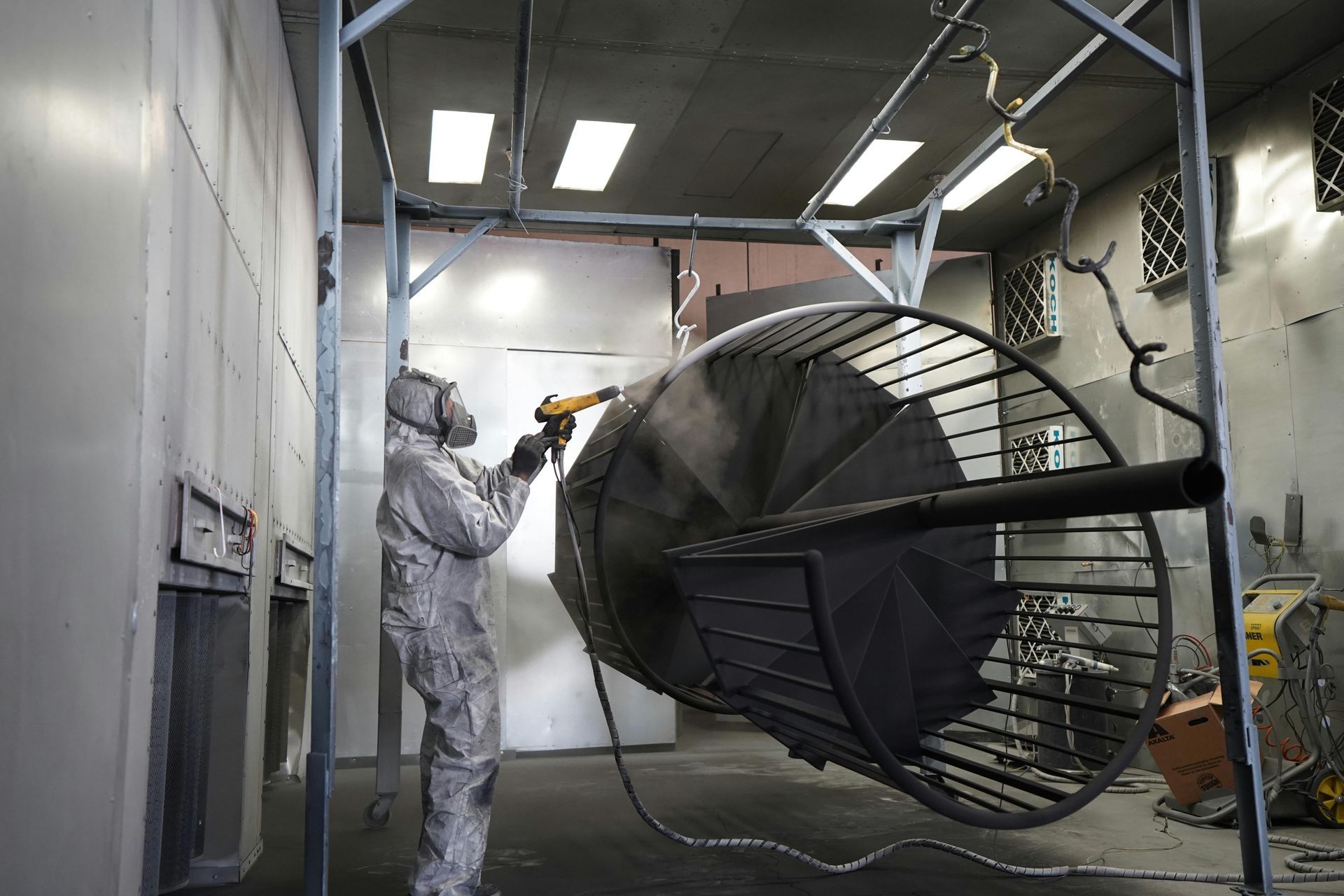
Powder coating gets most of the attention because it is the visible finish, but the surface prep underneath it often determines how well it actually performs. TIGER is direct on this point: “Cutting corners in pretreatment can lead to downstream production disasters such as peeling, corrosion and scrap.” That is one of the clearest reasons surface treatment matters so much.
If the substrate still has contamination, oxidation, failing old coatings, or the wrong surface profile, even a high-quality powder can struggle. A coating needs the right surface to bond properly. That is why blasting should not be treated like a generic first step. It needs to be tailored to the substrate and the finish system that follows.
Cleaning versus profiling
One of the most useful ideas for buyers is the difference between cleaning a surface and profiling it. Cleaning removes contaminants and visible surface problems. Profiling creates microscopic texture that helps the next coating grip the metal more effectively. BlastOne notes that if you are only cleaning without needing much profile, rounded abrasives can make sense. If you need a surface profile for adhesion, angular media are generally the better choice.
This is exactly why the same part might be blasted very differently depending on what comes next. A bare aluminum part being refreshed for appearance may need a very different process than a rusted steel bracket that is about to be powder coated.
Common Types of Blasting Media
Glass bead blasting media
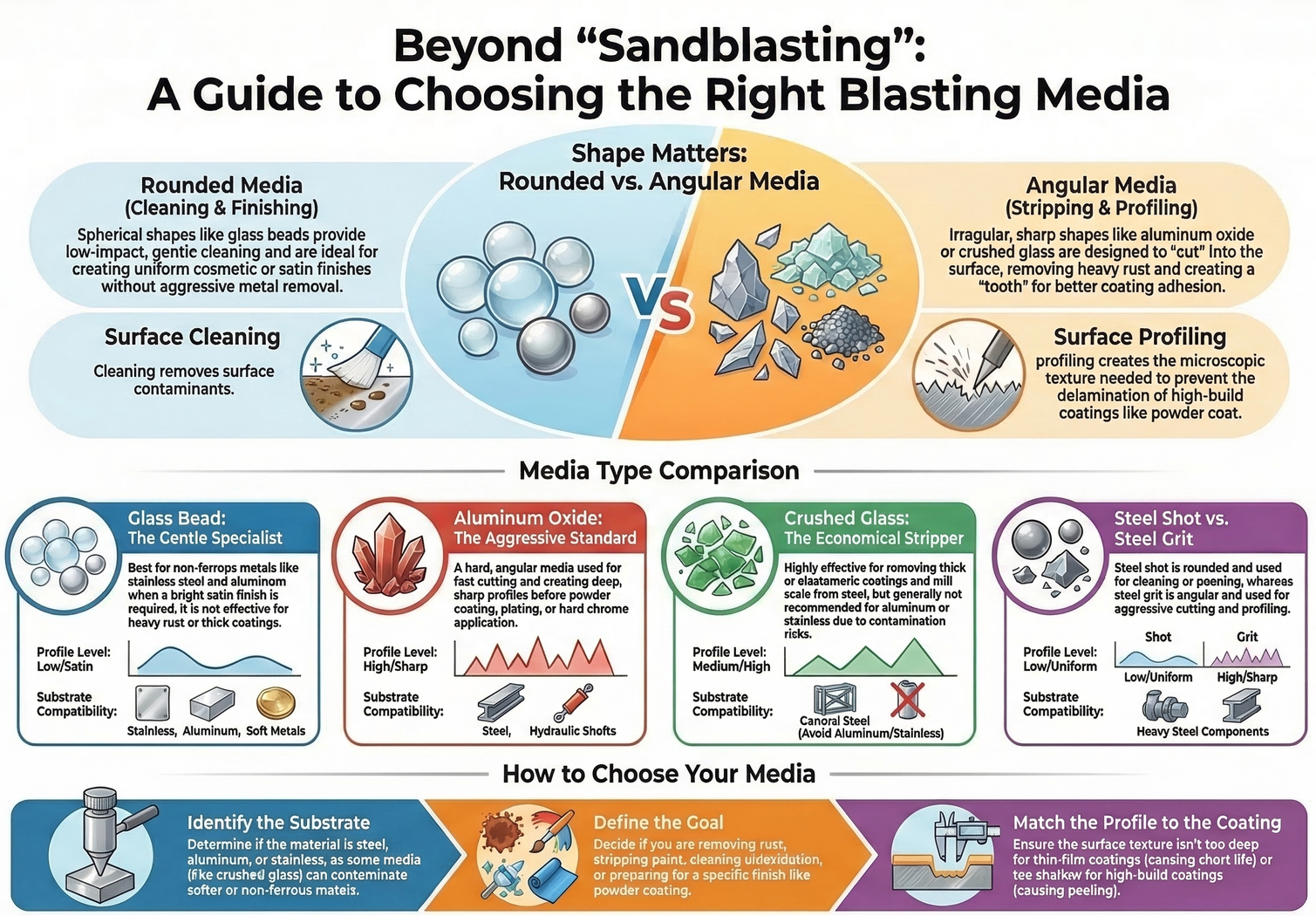
Glass bead is one of the better-known options because it is useful for a wide range of lighter-duty cleaning and finishing work. BlastOne describes it as a low-impact media with a spherical shape that prevents aggressive impingement, and its product guidance says it is less aggressive than sand or steel grit. It is commonly used to leave a bright satin finish on stainless steel and aluminum.
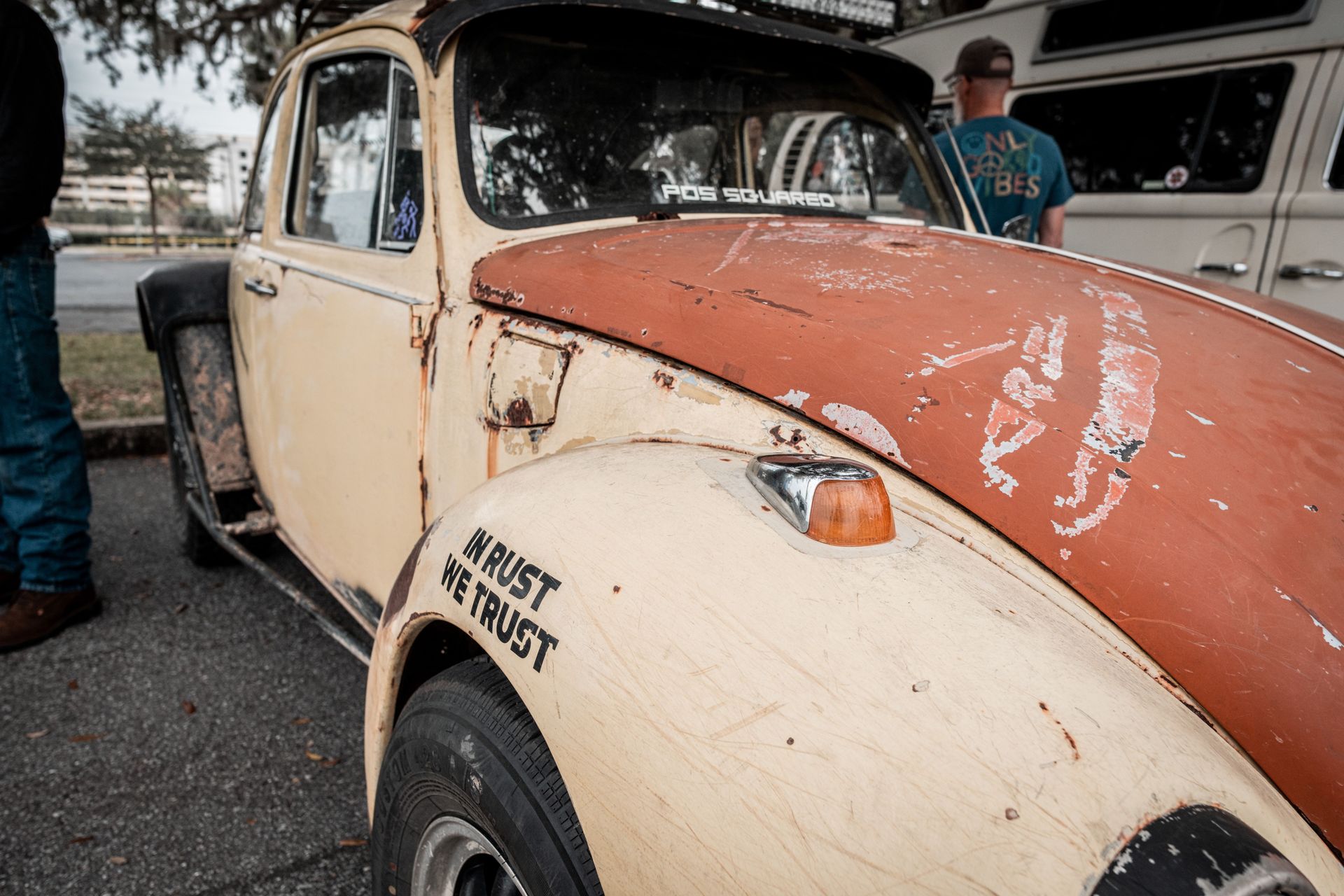
That makes glass bead a strong choice when the goal is appearance, gentle cleaning, or surface refinement rather than heavy coating removal. It can work very well for cosmetic metal parts, stainless components, aluminum pieces, and certain engine or fabricated parts where you want a clean, even finish without chewing up the substrate. What it does not do especially well is remove thick rust or heavy old coatings. If a customer brings in badly weathered steel and expects glass bead to do the job quickly, they are usually asking the wrong media to do the wrong work.
Aluminum oxide blast media
Aluminum oxide blast media sits much farther toward the aggressive end of the spectrum. BlastOne highlights its hardness, strength, and angular shape, and notes that it creates a deep, sharp profile in the surface being coated. It is used for jobs ranging from decorative frosting to preparing hydraulic shafts for hard chrome plating.
In practical terms, aluminum oxide is a very strong choice when you need cutting power and a more assertive anchor profile. It is useful for coating removal, serious prep before powder coating, and applications where surface adhesion matters more than leaving a soft cosmetic finish. It can also be a smart option when consistency matters and the blasting system allows the media to be reused appropriately. For many commercial metal finishing jobs, that extra aggressiveness is exactly what makes it valuable.
Crushed glass and other angular media
Crushed glass is another widely used abrasive blasting media because it is angular enough to remove coatings, rust, and mill scale while still being practical for general steel prep. BlastOne describes crushed glass as effective due to its irregular angular shape and notes that it is often used for removing very thick or elastomeric coatings.
This makes crushed glass a useful middle-ground option in many blasting environments. It is more aggressive than glass bead and often more economical than premium media in the right use case. But it is not universal. BlastOne also notes that crushed glass is generally not recommended for stainless steel or aluminum because of contamination concerns. That is an important reminder that “works on steel” does not automatically mean “works on everything.”
Steel shot and steel grit
Steel shot and steel grit are often mentioned together, but they behave differently. Rounded media are more associated with cleaning and peening, while angular media cut and profile more aggressively. BlastOne’s selection guidance groups steel shot with rounded cleaning-style media where profile is less desirable.
For buyers, the simple takeaway is that steel-based media can be very effective in industrial blasting, but the exact form matters. The result on the part depends not just on material hardness but on media shape and the finish objective.
How to Choose the Right Sand Blast Media
Start with the actual goal
The first question should always be: what are you trying to accomplish?
Are you:
- removing rust
- stripping paint
- knocking off mill scale
- cleaning oil and oxidation
- preparing for powder coating
- creating a decorative or satin finish
Those are different jobs, and they often require different media choices. BlastOne’s guidance around particle shape and profile makes it clear that media selection should follow the purpose of the blast, not just habit.
Match the media to the substrate
The next question is what the part is made of. Steel can usually tolerate more aggressive blasting than aluminum. Stainless often has appearance and contamination concerns. Softer metals and thinner parts may need a gentler approach. BlastOne specifically notes that crushed glass is not recommended for stainless steel or aluminum, which shows how easy it is to get this wrong if the shop treats every job the same.
At Full Blown Coatings, this is often where a short conversation saves a lot of trouble. A customer may come in asking for the “most aggressive” blast possible, but once we look at the substrate and the finish goal, it becomes clear that a more controlled media choice will actually produce the better result.
Match the media to the profile you need
All coatings have profile requirements. BlastOne’s abrasive guide notes that excess surface profile can shorten the life of thin-film coatings, while insufficient profile can cause delamination of high-build coatings. That is a very practical point. More aggression is not always better. The best profile is the one that matches the coating system.
That means if a part is headed for powder coating, the blast should be chosen with that final finish in mind. If it is only being cleaned for appearance, the media and pressure may need to be much gentler.
What to Ask When You Search “Media Blasting Near Me”
A better buyer conversation sounds like this:
- What media do you recommend for my part?
- Are you trying to clean the surface or create a profile?
- Is this setup appropriate for steel, stainless, or aluminum?
- Will the blasted finish be coated afterward?
- Do you blast and powder coat in-house?
- How do you avoid contamination problems?
These questions matter because the best media blasting near me provider is not just the closest one. It is the one that understands how blasting media, substrate condition, and finishing goals fit together.
Why full-service blasting and coating matters
When blasting and coating are handled as one coordinated process, the outcome is often better. The blasting stage can be matched directly to the coating requirement, and there is less risk of mishandling, contamination, or poor communication between vendors. TIGER’s process guidance emphasizes that thorough cleaning and surface preparation enhance adhesion and prevent defects, which supports the value of treating surface treatment as part of the whole finishing plan.
For customers, that usually means fewer surprises and a better final result.
Final Thoughts
The phrase Sandblasting Near Me sounds simple, but the right answer depends on much more than location. Media Blasting is a real process decision. The right blasting media, sand blast media, aluminum oxide blast media, or other abrasive blasting media depends on what the part is made of, what condition it is in, what you need to remove, and what finish comes next.
If you are trying to choose between gentle cleaning and aggressive prep, between cosmetic refinement and serious coating adhesion, or between stainless appearance work and steel powder coat prep, the media choice matters. The most helpful shop is the one that can explain that difference clearly, then match the process to the result you actually need. That is what turns blasting from a rough prep step into a professional surface treatment.
Share This Post!