Powder Coating Cast Iron: Prep, Outgassing, Drop-Off
A cast-iron part can come through the shop looking promising. A machine base. An old gear housing. A piece of antique iron someone dragged out of a barn. After blasting it looks clean and ready, and then, partway through the cure, small bubbles or pinholes rise through the finish. That is outgassing: trapped air and old oil working their way out of the casting's pores while the powder is still melting. Powder coating cast iron is work we take on, but that one behavior is what separates it from coating most flat rolled steel. If you are planning powder coating cast iron in Northern Utah, here is what drives the result and how to get a porous part ready before drop-off.
Can You Powder Coat Cast Iron? The Short Answer
Yes. Cast iron is one of the metals commonly powder coated, and we coat it at our Sandy shop, from machine bases and brackets to gear housings, automotive cast covers, and restoration pieces coming in from across the Wasatch Front. If you have been typing "can you powder coat cast iron" into a search bar, the honest answer is yes, with one qualification: the part has to suit the process. It needs to hold up under blasting and pretreatment, tolerate cure temperatures, and fit an industrial-sized oven, which gets confirmed at the estimate.
The bigger difference is what is inside the metal. Porous castings carry an outgassing risk that flat rolled steel usually does not, so the prep conversation matters more here than it does for a clean piece of sheet or plate. If you are still deciding whether your metal type matters at all, our overview of metal types and powder coating breaks that question down without turning every job into a chemistry lecture.
Why Powder Coating Cast Iron Behaves Differently From Wrought Steel
Porosity, Trapped Oil, and Old Sand Castings
Cast iron is usually sand cast, and that process leaves a structure full of micro-voids. Add the graphite that gives cast iron its character, and you get a metal with tiny pockets everywhere. Over years of service, those pockets soak up whatever surrounds them: cutting oil, coolant, grease, moisture from soil, fertilizer residue. The contamination is not just sitting on the surface. It lives below it.
That is why an old machine base from a working shop, or a casting that sat on a dirt floor for decades, carries more risk than a fresh casting, even when both look identical after blasting. The longer and dirtier the service history, the more the part has absorbed. If your project is an heirloom piece, our antique restoration page covers how blasting and powder fit that work.
What Outgassing Does to a Powder Coating
Outgassing is easy to picture. In the cure oven, the part gets hot. Trapped air and moisture inside the casting expand and push toward the surface while the powder is melted and flowing. The result is a finish marked by pinholes, bubbles, or small craters where gas broke through. TIGER Coatings' guidance on outgassing explains the same mechanism on porous substrates: gases and impurities need a path out before the powder film forms, or the finish pays for it.
This is not buried in fine print. Our warranty page names cast iron alongside aluminum, magnesium, and other porous materials in the outgassing exclusion, with bubbles and pinholes called out specifically. Aluminum has its own outgassing story in our aluminum powder coating guide. This article stays on cast iron.
Prep That Makes or Breaks Cast Iron Powder Coating
Blast Every Part First
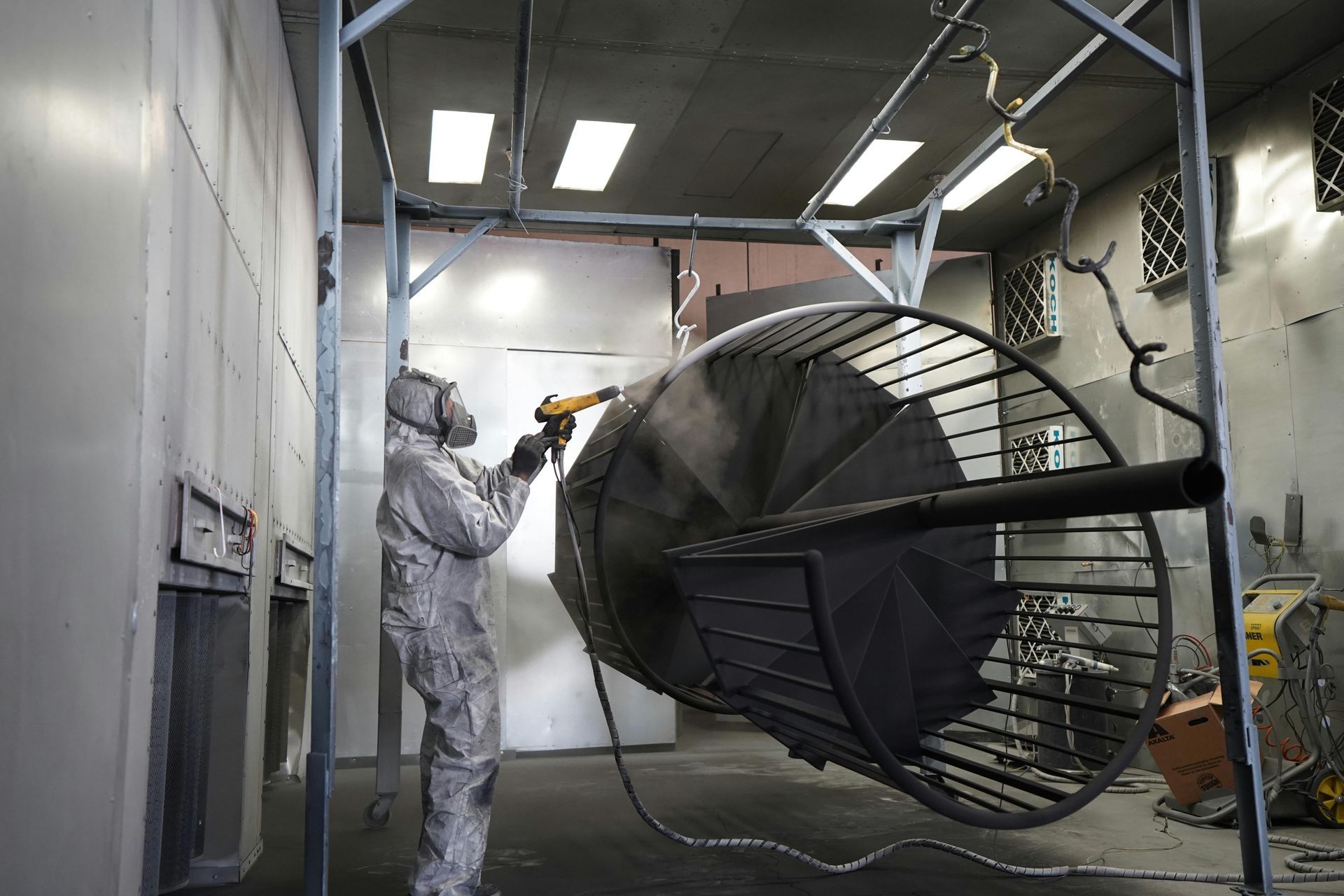
Every part that comes through this shop is inspected, then sandblasted or media blasted before it is coated. That is the baseline, not an optional upgrade. Blasting removes old paint, rust, mill scale, and surface oil, and it etches a profile the powder can grip. Prismatic Powders' part preparation guidance puts the same idea in manufacturer language: clean metal plus a toothy profile is what adhesion depends on.
Skipping the blast to save a step is a false economy on cast iron. Our warranty is clear that parts that are not sandblasted void coverage. If you want the longer view of how we approach abrasive prep, see our sandblasting services page.
Ask About a Pre-Bake / Outgassing Step
A pre-bake (sometimes called an outgassing bake) is a heat cycle before powder goes on. The idea is simple: drive trapped air and moisture out of the casting so those gases do not push through during the real cure. Our shop talks about this step when the part history or porosity warrants it. You should ask at quote time whether your casting needs one.
What we will not do here is invent a universal schedule. Bake time and temperature depend on the part, its thickness, and how contaminated it is. For how cure heat works in general, including why thick castings take longer to reach part metal temperature, see our powder coating temperature article. Bring the question to the estimate rather than assuming every cast part gets the same bake.
Primer on Outdoor Cast Iron
If the casting lives outdoors, plan on primer. We recommend primer on all outdoor metal, cast iron included. On a porous outdoor piece, that layer does two jobs: it improves adhesion between the iron and the topcoat, and it builds a barrier that helps when moisture, UV, and winter salt are part of the year.
Declining recommended primer on outdoor metal voids warranty coverage the same way declining a recommended blast does. Indoor machine bases may land in a different conversation. Outdoor brackets, fixtures, and architectural castings should not.
Design Details: Sharp Edges, Overlaps, and Capped Tubes
Powder pulls thin over a sharp edge. That thin line is where rust starts later. Sharp edges need to be rounded before drop-off. We do not round them for you, and the warranty treats that as the customer's responsibility.
Overlapping metal layers and non-seal welds trap air, moisture, and contaminants that can outgas or push rust from the inside. Capped tubes without weep holes trap expanding vapor in the oven and can damage the finish. If you are a fabricator sending welded cast-iron assemblies, seal welds and weep holes are drop-off readiness items, not afterthoughts.
To put the prep decisions in one place, use the table below as a planning map for common cast iron conditions.
| Part condition | What to plan before coating |
|---|---|
| Fresh casting or new fabrication | Standard blast and coat; round sharp edges before drop-off |
| Old oil-soaked machine base or housing | Ask about an outgassing pre-bake at quote time |
| Outdoor cast piece (brackets fixtures decor) | Blast plus primer; note sprinkler and salt exposure |
| Antique or restoration cast iron | Photos first; discuss rust depth prior repairs and outgassing risk |
| Part with overlapping layers or capped tubes | Review weld seals and weep holes before drop-off |
| Automotive cast cover | Confirm cure-heat tolerance and remove heat-sensitive attached parts |
When Powder Coating Is the Wrong Fit for a Cast-Iron Part
Not every cast-iron part belongs in a powder booth. Parts that cannot leave the site (permanently installed equipment, fixed architectural iron that cannot be removed) cannot go through an industrial oven. Assemblies with rubber bushings, plastic housings, sealed bearings, electronics, or other heat-sensitive pieces still attached are poor candidates until those pieces come off or the job is redesigned.
Safety-critical heat-treated parts need an engineer's sign-off before any bake or cure cycle. Cure heat can affect metallurgical condition, and that call is not a coating shop's to make. If fit is the question, ask at the estimate. We run an industrial-sized oven and confirm oversized pieces before you load the truck.
Being straight about poor-fit cases saves everyone a wasted trip. Powder coating is durable when the part suits the process. It is the wrong tool when it does not.
Quote Photos and Drop-Off Checklist for Cast Iron
Good photos make a better estimate. Send overall shots plus close-ups of rust pits, old coating, welds, edges, and any machine plates or identification marks. Note oil, coolant, fertilizer residue, or prior service in salt or chemical environments. Restoration pieces benefit from photos of prior repairs and thin sections.
Before drop-off:
- Remove attached rubber, plastic, and hardware that cannot take cure heat, when you can.
- Degrease heavily soiled castings as best you can so blasting starts from a cleaner baseline.
- Round sharp edges yourself.
- Address capped tubes and overlapping layers before the part arrives.
- Flag machined surfaces or threads that need masking.
When the part arrives, we inspect condition and fit, then recommend prep before any powder goes on. That sequence is how we keep cast iron jobs honest.
Utah Outdoor Exposure: Freeze-Thaw, UV, Sprinklers, and Road Salt
Northern Utah is hard on outdoor metal. Freeze-thaw along the Wasatch Front pulls moisture into any breach. High-desert UV ages coatings. Sprinkler overspray and winter road salt add chlorides. On porous cast iron, those exposures matter more if the coating is thin at an edge or compromised by outgassing defects.
That is why outdoor cast pieces get the full prep conversation: blast, an outgassing discussion when the history warrants it, and primer. Our warranty also lists salt water, chlorine, fertilizers, pesticides, and sprinkler exposure among conditions that can void coverage. Placement and rinsing are part of owning outdoor iron.
We serve Sandy and Salt Lake City as the hub, with published coverage across the listed Utah counties plus Uinta County in Wyoming. Details live on our service areas page. Pickup or delivery may be available for some jobs; confirm at quote.
Common Mistakes Buyers Make With Cast Iron Coating
The expensive mistakes are usually quiet. Declining the blast to save a line item. Skipping primer on outdoor iron. Ignoring outgassing risk on an oil-soaked casting. Dropping off parts with sharp edges still crisp. Comparing a quote that skips prep against one that includes blast, primer, and an outgassing conversation, then picking the lower number as if the scopes matched.
Get a Free Quote for Cast Iron Powder Coating
If you have a cast-iron part ready for powder, send photos and a short note about where it lives and what it has been through. Request a free quote through our contact page, call 801.631.1708, or email service@fullblowncoatings.com. Drop-off is at 9479 South 500 West, Sandy, UT 84070, behind Titan Cabinetry. For a broader look at how we handle powder work locally, start at our powder coating in Salt Lake City page.
Bring the porosity question early. That is how cast iron finishes hold up.
Share This Post!