Powder Coating Engine Parts: What to Strip, Mask, and Clean First
Every engine build reaches the same moment. The parts come off the engine, get stripped down to bare metal, and the finish suddenly feels as important as the machine work. Powder coating engine parts is work many shops see, and a pattern shows up across those jobs. The difference between a clean finish and a bubbled, pitted one is rarely the powder. It usually comes down to what happened, or didn't happen, before the part left your garage.
Three things matter most: which parts belong at a powder coater, what has to come off or come out first, and how to plan the job so it goes smoothly. For the finishing basics, see
powder coating in Salt Lake City.
Powder Coating Engine Parts: What Can Go in the Batch
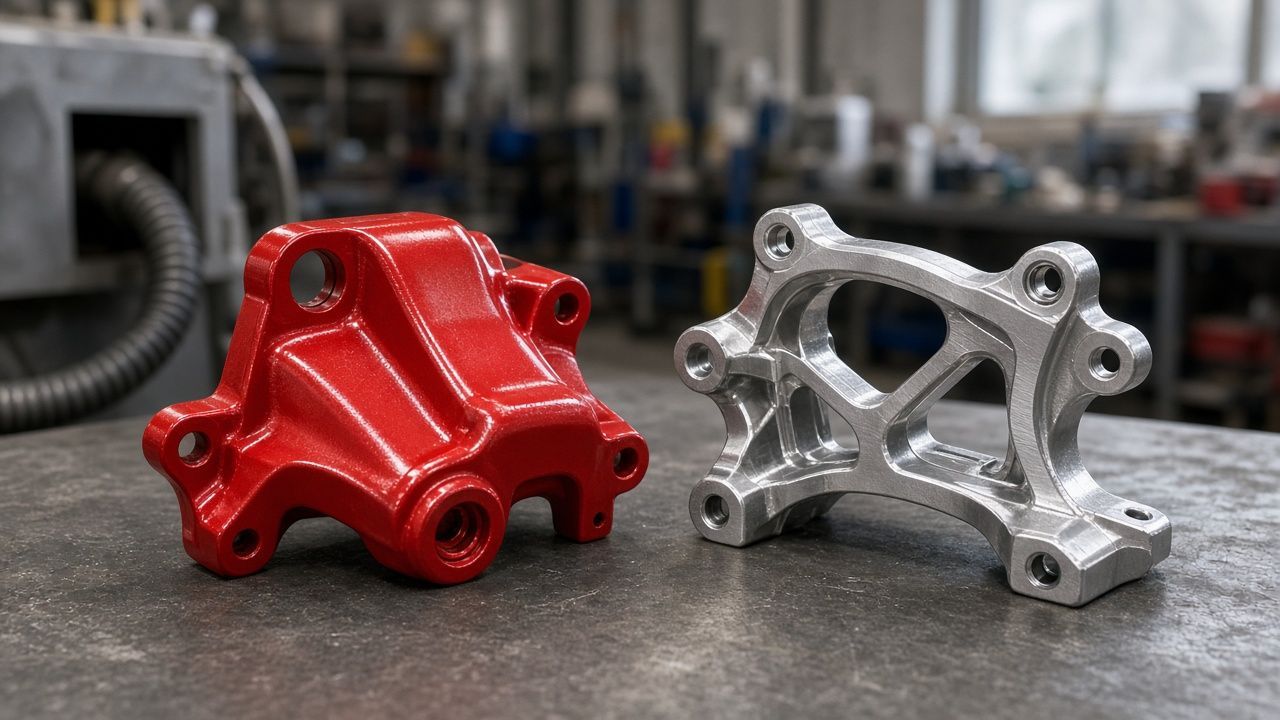
If you're standing in front of a torn-down engine wondering what to send, the pieces many shops commonly powder coat are the ones you see when the hood is open: valve covers, timing covers, oil pans, intake manifolds, brackets, pulleys, and block exteriors. Not every shop takes every one of these, so ask us whether your part is a fit. These parts see engine-bay heat, not exhaust heat, and they're the visible parts of a build where a tough, colored finish pays off on a restoration or a fresh rebuild.
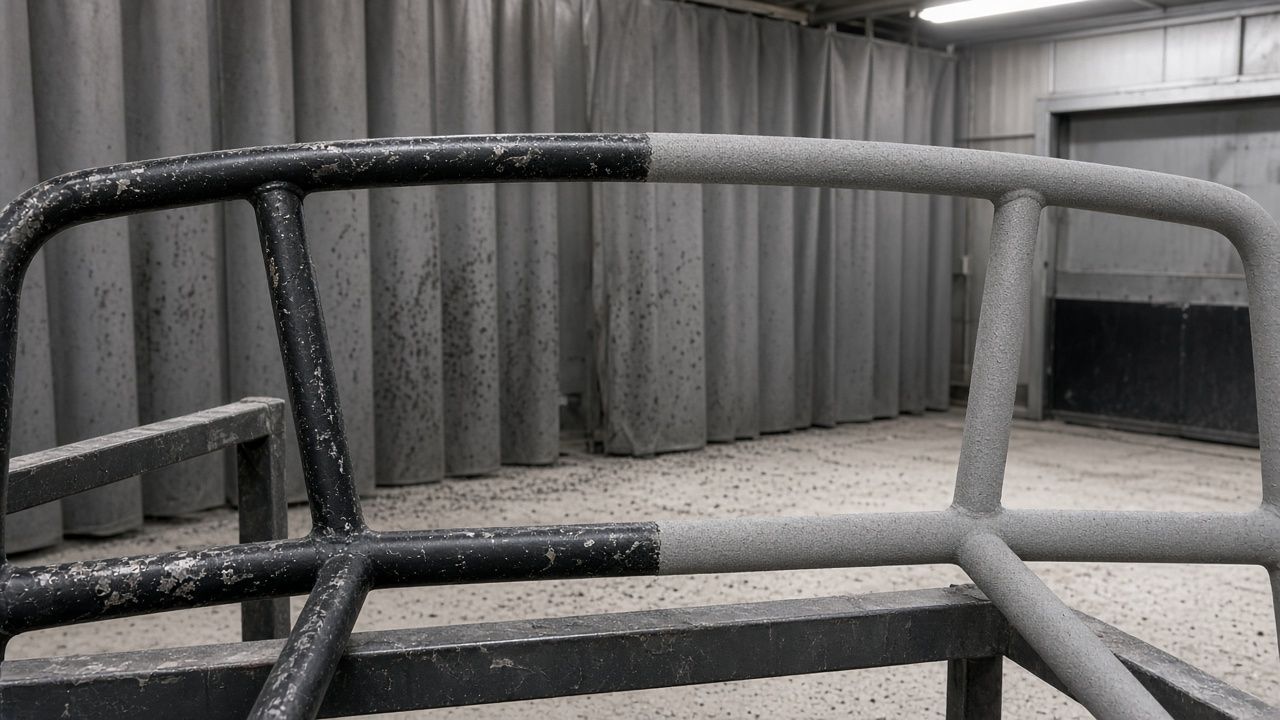
The same thinking extends to the rest of the car, from frames and racks to chassis parts.
Parts That Should Go to Cerakote or Stay Bare
Not everything under the hood belongs in a powder batch. The quick reference below sorts the usual parts by finish route and prep.
Exhaust manifolds and headers run hotter than conventional powder is built for, so those parts start a different conversation about Cerakote finishes.
Machined and sealing surfaces are the other category to think through. Decks, bores, gasket faces, threads, and bearing journals either get masked per written instructions or stay bare. And if a part is heat treated, precision machined, bonded, or otherwise sensitive to heat, it should be looked at individually. The metal itself has to come up to cure temperature, and many conventional powders cure somewhere around 350°F to 400°F, which is why heat-sensitive parts need extra thought.
| Engine part | Usual finish route | Prep to plan for before drop-off |
|---|---|---|
| Valve covers | Powder coat | Remove gaskets and hardware; cast covers can outgas; list sealing faces to mask in writing |
| Timing covers | Powder coat (ask us whether your part is a fit) | Remove seals; degrease; list gasket faces and threads to mask |
| Oil pans | Powder coat (ask us whether your part is a fit) | Clean out oil completely; list the gasket flange and drain threads to mask |
| Intake manifolds | Powder coat | Clean oil from runners and passages; cast aluminum can outgas; primer recommended on aluminum; mask ports, threads, sealing faces |
| Brackets and pulleys | Powder coat (ask us whether your part is a fit) | Remove bearings and hardware; round sharp edges on brackets |
| Engine block (exterior) | Powder coat (call to discuss your block) | Fully stripped bare block; plugs, bearings, dowels out; written masking list for decks, bores, threads, galleries; clean again after blasting |
| Exhaust manifolds and headers | Cerakote (ask us) | Runs hotter than conventional powder is built for; discuss on the call |
| Machined and bearing surfaces | Masked or left bare | Spell out every surface in the written part description |
In general, standard powder suits many engine-bay parts, and Cerakote is often the route for parts that run too hot for it. If your build mixes both, list every part, and flag the headers on your part list so the finish route is settled before drop-off.
How to Powder Coat an Engine Block Without Surprises
If you want to powder coat an engine block, most of the work that decides the result happens on your end before the block ever reaches a coater. Blocks are big, heavy castings, so call to discuss your part before you plan around coating it.
Bring a Fully Stripped, Bare Block
The block needs to arrive completely disassembled: no freeze plugs, no cam bearings, no oil gallery plugs, no dowels, no leftover hardware. Most shops don't disassemble or reassemble customer parts, and that surprises people on engine jobs. If it's bolted in, pressed in, or plugged, it comes out before drop-off.
Getting the oil out of the passages matters as much as the teardown. Oil trapped in recesses and holes weeps out during the cure and shows up as defects in the finish. Warranties on powder finishes commonly exclude defects caused by hidden oils, greases, or anything flowing out of recesses during the cure, which makes degreasing a requirement rather than a tip.
Parts are typically inspected and then sand blasted or media blasted to strip oxides, old finishes, and surface contamination, and to give the powder something to grip. Because metal under heavy corrosion can hide damage, shops are generally not responsible for damage that blasting reveals or causes on corroded parts. One thing to plan for: blast media can lodge in passages, galleries, and threaded holes. However clean the block looks when you pick it up, clean it thoroughly again before assembly. If the block still has an old finish, read about
powder coat removal.
Machine Work and Scheduling
Boring, decking, and honing all affect which surfaces need masking and when the block should be coated, and every build is a little different. Have your build order worked out rather than assuming a fixed sequence, and make sure machining oils are gone before the block comes in. On scheduling, many shops want parts in house a couple of days before the scheduled date, so build that into your timeline.
Masking the Block
Masking is typically done only per written instructions, and every job needs a full part description with measurements, colors, and any special instructions. For engine block powder coating, that masking list carries a lot of weight. Decks, bores, threads, oil galleries, dowel holes, and freeze plug bores all belong on it.
Cast Aluminum and Cast Iron: Why Outgassing Matters
If there's one word to learn before you coat a casting, it's outgassing. Cast aluminum, cast iron, and magnesium are porous, and those pores hold air and contaminants. When the part heats up in the oven, that trapped gas expands and pushes up through the melting powder, leaving pinholes and bubbles. TIGER Coatings has a
technical write-up on outgassing in powder coating if you want the deeper detail.
The honest part: cast pieces can be outgassed before coating, and that helps, but no one can promise a porous casting won't release gas during the cure. That's why bubbles and pinholes from outgassing on cast iron, aluminum, magnesium, and other porous castings are commonly excluded from warranty coverage. Some finishes raise the stakes: candy, chrome, illusion, and wrinkle finishes are prone to bubbling on pinholed surfaces, and those are often processed one time only. For more on this metal, see
powder coating cast iron.
A few practical notes for castings:
- Ask how castings are handled. Whoever coats your parts, ask what they do with cast pieces before the coat goes on. The answer tells you a lot.
- Media choice matters. Sandblasting generates heat that can warp thinner metal, and bead blasting cleans without damaging the surface. Common media include soda, glass, walnut, and corn cob. Learn more about sand blasting in Salt Lake City.
- Primer on aluminum. Primer is commonly recommended on aluminum parts, and skipping it can affect warranty coverage. Weighing finishes? Compare powder coating vs anodizing.
Powder Coating an Intake Manifold
Intake manifolds are a common powder coating job across the industry, and they're the textbook outgassing case: porous cast aluminum, oil hiding in the ports and runners, and threaded bosses everywhere. Everything in the last section applies twice over.
Clean the runners and passages of oil before drop-off, because blasting handles surface contamination, not oil pooled inside. Ports, threads, and sealing faces should all be on your masking list. The primer recommendation for aluminum applies here too. And keep in mind that contact with fuel can damage a powder finish, so the coating is for the outside of the part.
Prep Checklist Before You Drop Off Engine Parts
Many problem jobs trace back to one of these steps being skipped.
- Tear it down completely. Remove rubber, plastic, seals, gaskets, bearings, sensors, electronics, and attached hardware.
- Degrease thoroughly. Thick oils and weld slag have to be removed before coating. Trapped oil in passages is yours to deal with.
- Round sharp edges on brackets. Shops generally don't round edges, and sharp edges don't hold an even powder thickness.
- Document the masking. Mark the areas on the part and list them in your part description. Anything not listed won't be masked.
- Take photos. Clear photos of each part make the estimate faster and catch problems before anything goes in the truck.
- Mind the timing. Parts dropped off late in the day are often processed the next business day.
How Pricing Works for Engine Jobs
Engine parts are usually quoted per job, and the structure behind the number is fairly standard. Blasting is often billed by the hour, many shops set minimums per order and per color, and chrome, metallic, and silver finishes commonly need a clear coat that adds cost. Rush service is sometimes available when scheduling allows.
Final prices are typically confirmed only after parts are delivered, inspected, and processed, because a greasy block out of a barn and a clean fresh casting aren't the same job.
Planning Drop-Off or Pickup
Engine parts are heavy and awkward to haul. If loading a block sounds like a bad afternoon, ask whether pickup or delivery is available in your area. Whether you drop off or arrange pickup, the rules are the same: stripped, clean, and documented.
Get a Quote on Your Engine Parts
Text or email a part list, photos, your target color, and any masking concerns to get the job scoped. You can call 801.631.1708, email service@fullblowncoatings.com, or bring parts to the shop at 9479 South 500 West in Sandy, behind Titan Cabinetry. A clean teardown and a written masking list are what get engine finishes right the first time. Ready to start?
Request a quote.
Share This Post!