Powder Coating Brake Calipers: Prep, Heat, Masking, and Drop-Off for Automotive Projects
This article is general information only. Brake work should be verified by a qualified technician, and all project specifics are confirmed at quote time.
Some of the most interesting conversations at our bench start with a cardboard box. Someone lifts the lid, and inside sit four brake calipers still bolted to their brackets, caked in brake dust, with the pistons seated and fluid residue pooled in the casting. They want them red. They want them red for a show or a weekend install. That's usually when we start talking about what powder coating brake calipers actually involves, because it's a process job, not a paint job.
The part has to come off the vehicle, get stripped and blasted, get masked in exactly the right places, and get cured at oven temperatures. If any of those steps gets skipped or shortcut, the finish fails, or worse, the caliper stops being rebuildable. This article walks you through prep, heat, masking, color expectations, and how to plan a drop-off at our shop in Sandy, Utah.
Can You Powder Coat Brake Calipers? (Yes, as Removable Parts)
Yes, calipers can be powder coated, with a few conditions:
- The caliper must be off the vehicle.
- It should be disassembled, with pistons, boots, seals, and pads removed.
- It must be drained of brake fluid and fully dry.
- Threads, bores, and mating faces must be masked before powder is applied.
- It must be able to withstand oven curing, which is why rubber and fluid cannot be present.
If you're searching "powder coat brake calipers" or "powder coating calipers," you're probably planning a color change on a performance car, a truck build, or a restoration, and you want to know what the job actually involves. That's the right question, because the answer determines whether the project goes smoothly or turns into a teardown surprise.
Why Calipers Get Powder Coated Instead of Painted
A caliper lives in one of the harshest environments on a vehicle. It sits behind the wheel, inches from the road, catching gravel, brake dust, water, car-wash chemicals, and in Utah, months of road salt. A rattle-can or brush-painted caliper can look good leaving the garage and look tired within a season.
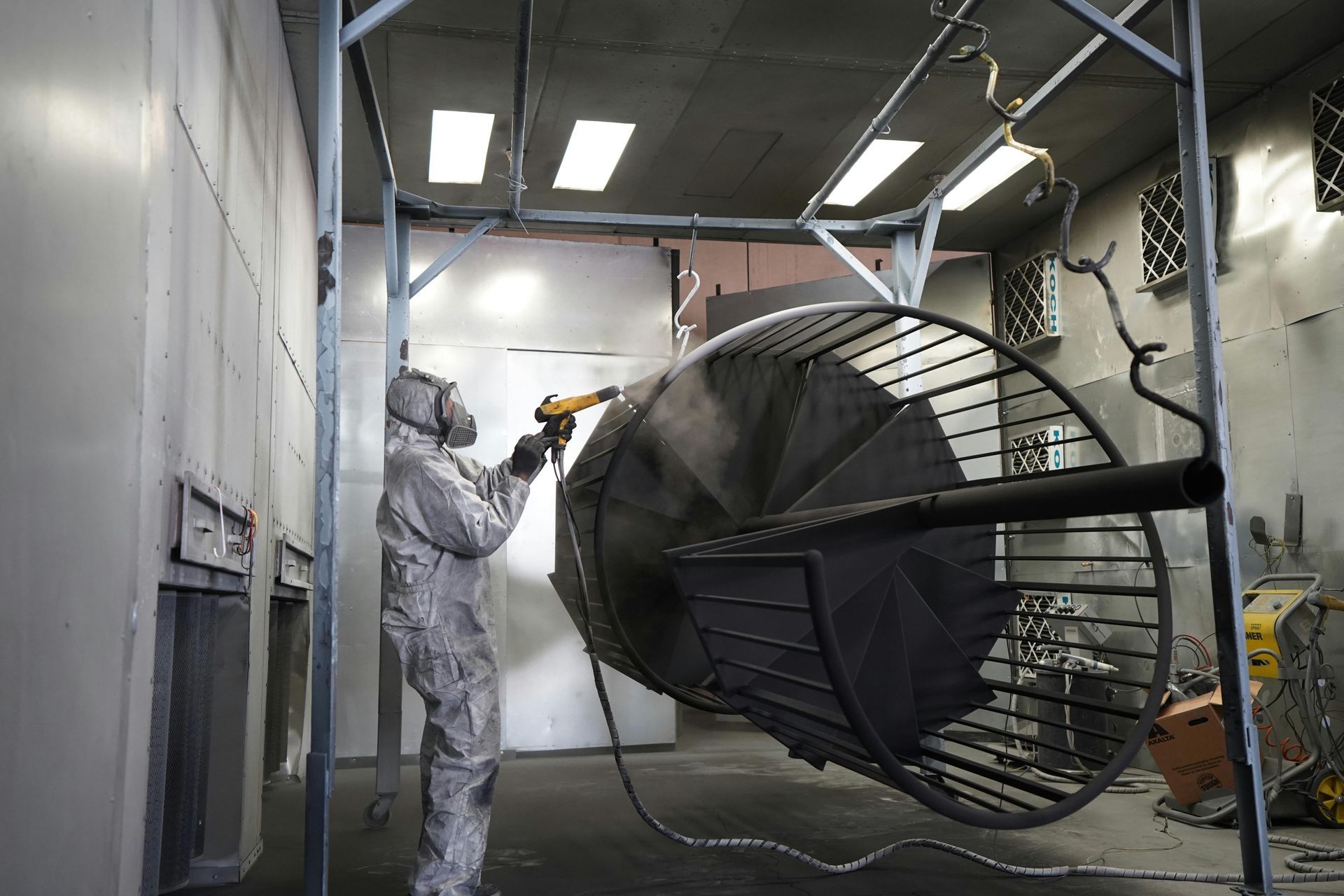
Powder coating is different from paint in how it's applied and how it cures. The powder is applied as a dry, electrostatically charged coating, then cured in an oven, where it flows and chemically cross-links into a hard, tightly adhering film. On a part that gets hammered by heat cycling and road grime, that harder film tends to hold up better than paint films that air-dry. Calipers are also practical candidates: they're small, metal, and easy to remove in pairs or sets for blast, mask, and cure.
For broader automotive context, see our page on automotive powder coating and our guide to automotive sandblasting before drop-off.
Disassembly: What Comes Off Before Drop-Off
Pistons, Boots, and Seals
Here's the rule of thumb: rubber and soft components do not belong in a blast cabinet or a cure oven. Piston boots, seals, and dust caps must come out before the caliper body is coated. Cure ovens run hot enough to destroy elastomers, which is also why an assembled, fluid-filled caliper can never go through the coating process.
Who handles disassembly varies by project. Some customers deliver fully torn-down calipers ready for blast; others ask about teardown options. Confirm at quote time whether you or the shop handles teardown and reassembly, because it affects both the plan and the scope of work.
Bleeder Screws, Banjo Fittings, and Brackets
Typical removable hardware includes bleeder screws, banjo bolts and crush washers, brake lines and fittings, pads, clips, hardware, and caliper brackets. Brackets are often coated as separate parts to match, or left bare depending on the look you're after. That's a quote-time conversation, and sending photos ahead helps. There's a full drop-off checklist later in this article.
What the Customer vs. the Shop Typically Handles
As general industry practice, many shops receive calipers already disassembled and drained, while some accept them assembled and handle teardown as part of the job. There's no single standard, so treat it as a "confirm at quote" item rather than an assumption. If you're unsure what state your parts should arrive in, send photos with your quote request before hauling anything in.
Heat, Braking, and Cure Temperatures
What the Cure Oven Means for the Part
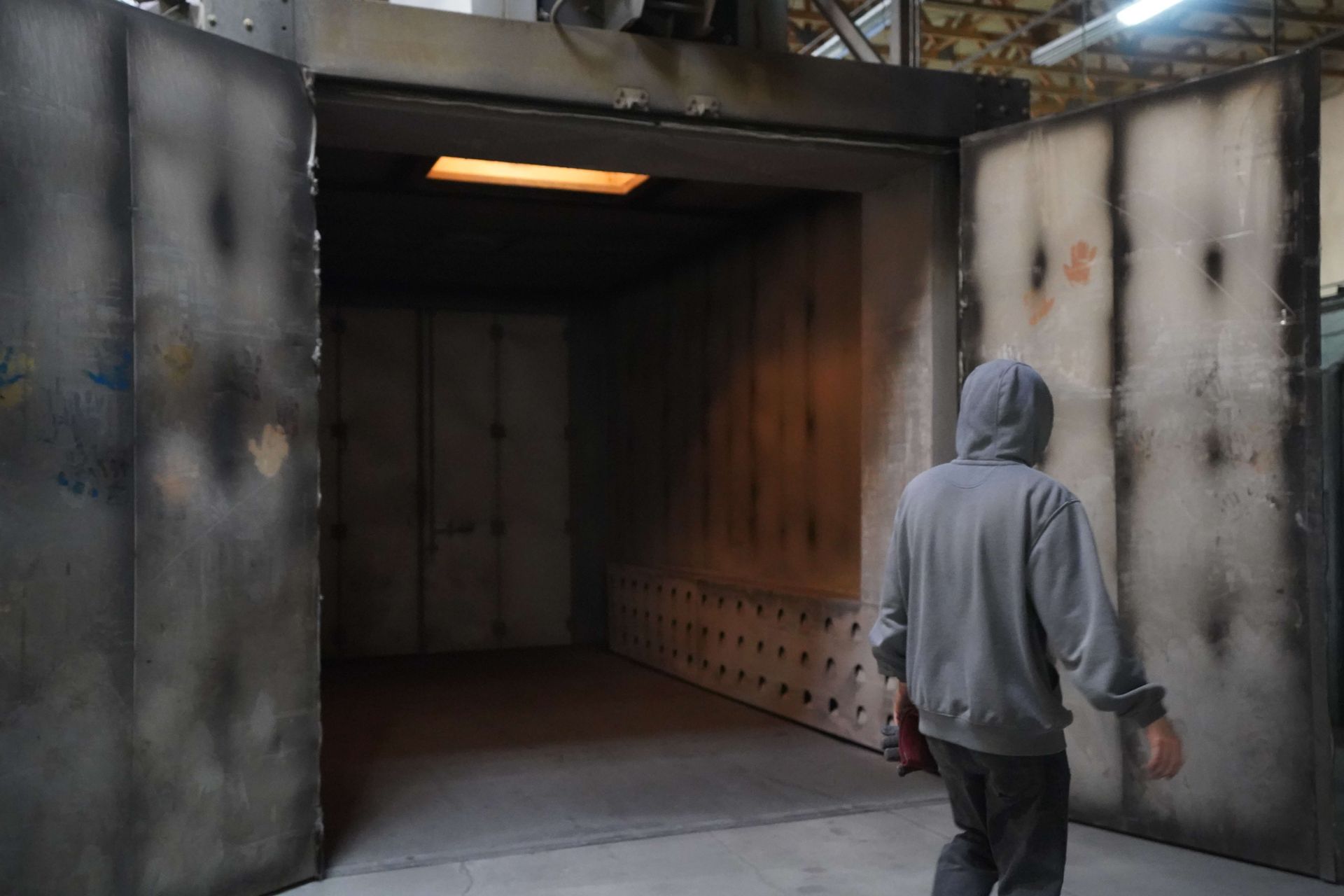
Powder coating cures at elevated oven temperatures, typically in a range hot enough to melt and flow the powder into a continuous film. That heat is precisely why seals, boots, and fluid must be out of the part, and why cure schedules matter for finish quality. If you want the technical breakdown of cure temperatures and what they mean for different substrates, we cover it in detail in our temperature and cure article.
Heat from Braking and Finish Choice
Calipers also see heat in service, especially under hard braking, towing, or track use. The finish and film thickness conversation should reflect how the vehicle is actually used. A street car driven to work and back puts different thermal demands on a caliper than a car that sees track days, and the right powder choice can differ between them. Tell us how you use the vehicle and we'll factor that into finish selection.
For thin-film, heat-adjacent, or tight-clearance considerations, we've written a separate comparison of Cerakote versus powder coating and their use cases, which is worth reading before deciding between the two.
Film Thickness and Fitment
Powder adds measurable film thickness compared to paint. That means sliding surfaces, threads, and piston bores must be masked, and the piston goes back in after coating, not before. A bore that gets powder in it may no longer accept the piston without machining, and a threaded hole full of powder is a job to chase clean at best.
One practical tip that saves headaches: if you're planning new pistons or a rebuild kit, rebuild after coating, not before. The seals and new components you install today would need to come back out for the coating process.
Blast Prep Before Powder Coating Brake Calipers
Surface prep is where adhesion is won or lost. Every part we coat gets inspected and blasted before any powder touches it. There are no exceptions, because powder over rust, old coating, or contamination is a finish waiting to fail.
Cast Iron vs. Aluminum Calipers
Calipers come in two common flavors, and they prep differently:
- Cast iron calipers are typically blasted to remove rust, scale, and old coating down to clean metal. Iron rusts readily, especially through a Utah winter, so stripping to bare metal is the foundation of the job.
- Aluminum calipers are blasted with appropriate media to strip coatings and oxidation without excess material removal. Aluminum is softer, so media selection matters.
You can read more about our capabilities on the sandblasting and media blasting pages. For aluminum-specific prep notes (outgassing, primer), see can you powder coat aluminum.
Cast-Aluminum Outgassing
Here's a technical term worth knowing if your calipers are cast aluminum: outgassing. In plain English, porous castings can trap air or contaminants in microscopic voids. When the part heats up in the cure oven, that trapped gas expands and pushes out through the still-liquid powder, leaving pinholes or bubbles in the finish.
The standard mitigation is a thorough pre-bake to drive off trapped gases before coating, often combined with a primer to seal the surface. We recommend primer on aluminum parts for exactly this reason. It fills and seals the porosity that would otherwise show up as blemishes after cure.
Residual Fluids and Contamination
Brake fluid is the enemy of adhesion. It's hygroscopic, meaning it absorbs water, and it creeps into casting pores and lingers. A caliper that's drained, flushed, and fully dry coats noticeably better than one that was hastily emptied the night before drop-off. Old fluid, grease, and road film all have to be gone before blast, because blasting over contamination just drives it deeper into the surface.
Before transport, drain the calipers and cap or bag the line openings. It keeps fluid off your seats, your truck bed, and our bench.
Masking: Threads, Bores, and Mating Faces
On a caliper, the masking list typically includes the piston bore, thread holes for bleeder screws and banjo fittings, bracket bolt mating surfaces, slider pin bores, and any sealing surface.
The reason is simple: powder in threads and bores causes fitment problems at reassembly. A properly masked job comes back to you as a rebuildable caliper. A poorly masked one can come back as a paperweight. When you're comparing quotes between shops, ask specifically whether masking of threads and bores is included, because skipping it is one of the most common corners cut in this line of work.
Sharp Edges, Primer, and Outdoor Durability
Powder pulls thin over sharp edges as it flows and cures. Thin spots over sharp edges are exactly where corrosion starts on parts exposed to salt and water. If your calipers have sharp casting edges or machined edges, round them before drop-off. We don't round edges as part of the coating process.
We recommend primer on all aluminum parts and all outdoor metal, and calipers count on both counts. They live behind the wheel, fully exposed to the elements. Northern Utah is hard on finishes: freeze-thaw cycles, strong UV at elevation, road salt all winter, and sprinkler overspray in the summer all stress a coating. Primer plus proper blast prep reduces the voids where corrosion begins.
Our 12-month limited warranty covers powder-coated surfaces for cracking, peeling, and extreme fading from normal climatic exposure, with published exclusions. Salt, chlorine, and fertilizer exposures can void coverage, so if your calipers will see unusual chemical exposure, say so at quote time. The exact terms live on the warranty page.
Color and Finish Expectations
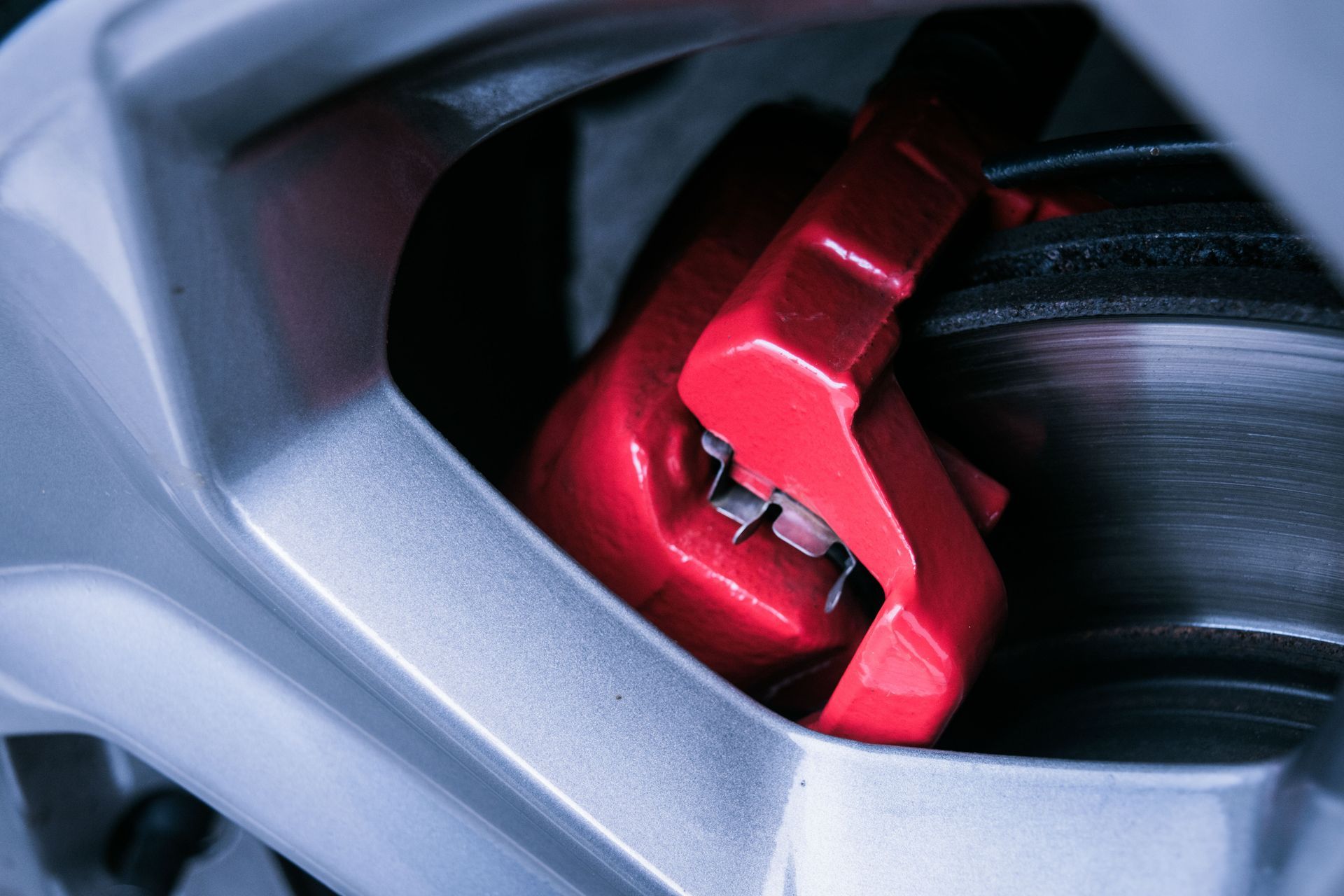
Color is the fun part. Powder coated brake calipers are available in standard colors, metallics, and a wide range of finishes through supplier relationships like Prismatic Powders. Clear-over-color options can add depth and gloss layering for a more premium look. One note: we don't claim exclusive color-matching capability, but if you're trying to match an existing accent, a logo color, or a specific reference, bring it up at quote time with photos or a physical sample.
Because calipers are visible behind most wheels, finish quality on the visible faces matters. When a caliper is blasted properly and masked properly, the color reads even across the casting texture instead of blotchy or streaky. That evenness is what separates a professional brake caliper powder coating job from a rattle-can weekend.
How Much Does Powder Coating Brake Calipers Cost?
We keep pricing questions out of this article on purpose, because pricing moves with part condition, prep needs, and project scope. For the current discussion of what caliper coating typically costs and what drives the variation, read our dedicated post: how much does powder coating a brake caliper cost.
Quote Photos and Drop-Off Checklist
What to Send for an Accurate Quote
Photos let us assess condition and prep needs before you ever drive in. Send shots of each caliper from multiple angles, close-ups of threads and bores, a note on casting type (cast iron vs. aluminum), and whether brackets are included. Send those photos with your quote request so prep needs are clear before you drive in.
Drop-Off Checklist
Before you load up:
- Calipers fully disassembled (pistons, boots, seals, pads removed; confirm shop teardown options at quote)
- Brake fluid drained, openings capped or bagged
- Hardware bagged and labeled (bleeder screws, banjo bolts, brackets)
- Sharp edges rounded before arrival
- Color and finish choices ready to discuss
- Vehicle use noted (street, tow, track) for the finish conversation
Drop-off is at 9479 South 500 West, Sandy, UT 84070, behind Titan Cabinetry. Confirm drop-off timing before you drive in. Pickup or delivery may be available for some jobs; confirm at quote.
Get a Free Quote for Powder Coating Brake Calipers
Ready to plan your caliper project? Request a free quote through the contact page, call 801.631.1708, or email service@fullblowncoatings.com. Send photos of your calipers for a faster, more accurate quote, and drop off at 9479 South 500 West, Sandy, UT 84070, behind Titan Cabinetry. We're happy to talk through prep, masking, and color options before you commit to anything.
Share This Post!