Can You Powder Coat Aluminum? Prep, Outgassing & Primer Explained | Full Blown Coatings
Aluminum prep, outgassing, primer, and drop-off guidance for Northern Utah.
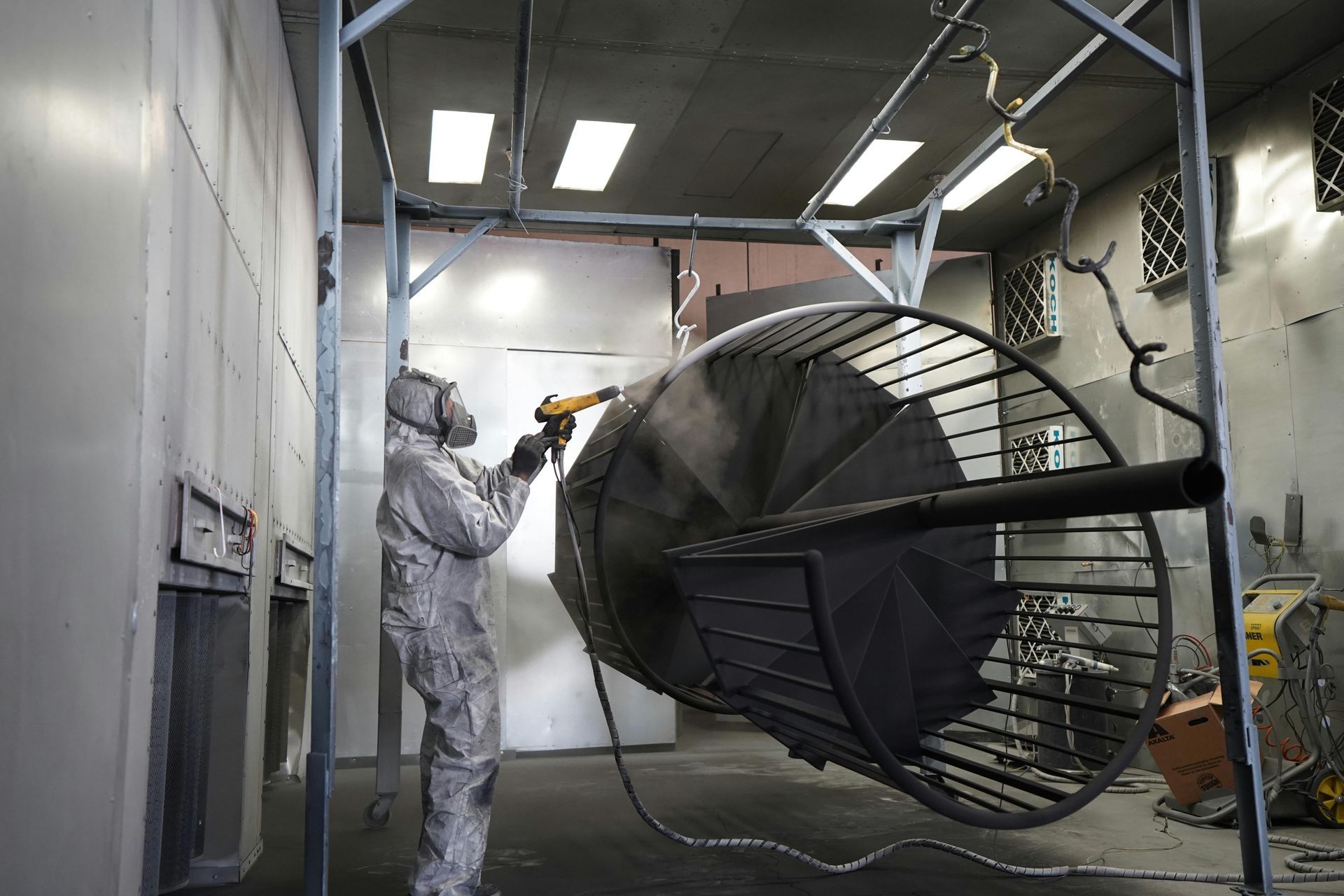
Can You Powder Coat Aluminum? Prep, Outgassing, and Outdoor Primer Before Drop-Off
This article is general information only, not engineering or safety advice. Every project is evaluated individually, and the shop's process, part condition, and part design control what work can be done.
Can You Powder Coat Aluminum? The Short Answer
Yes. Aluminum is one of the most common substrates that comes through the shop. Powder coating succeeds when four conditions are met: the part can be blasted to a clean profile, it can be pretreated, it can tolerate the cure temperatures required for powder to flow and bond, and it fits inside the oven. If you want the cure side of that equation in more depth, see how much heat powder coating actually requires.
Aluminum arrives in many forms: wheels, gates, railings, patio furniture, equipment housings, brackets, ranch and agricultural components, and automotive or recreation parts. Homeowners bring patio sets. Fabricators bring gate frames and rail systems. Contractors bring commercial components. Automotive and recreation customers bring wheels, bumpers, and off-road pieces. Commercial buyers bring larger production batches. The fundamentals stay the same, though the prep plan can differ part to part.
One practical screening question is size. The shop runs an industrial-sized oven built for large and oversized work. If you are unsure whether a part will fit, ask before you load the truck.
Cast Aluminum vs. Wrought and Extruded Aluminum: Why It Changes the Job
When someone asks about powder coating cast aluminum versus extruded aluminum, the real question underneath is usually about porosity. The two forms behave differently in the oven, and understanding why helps you compare quotes accurately.
Cast Aluminum, Porosity, and Outgassing
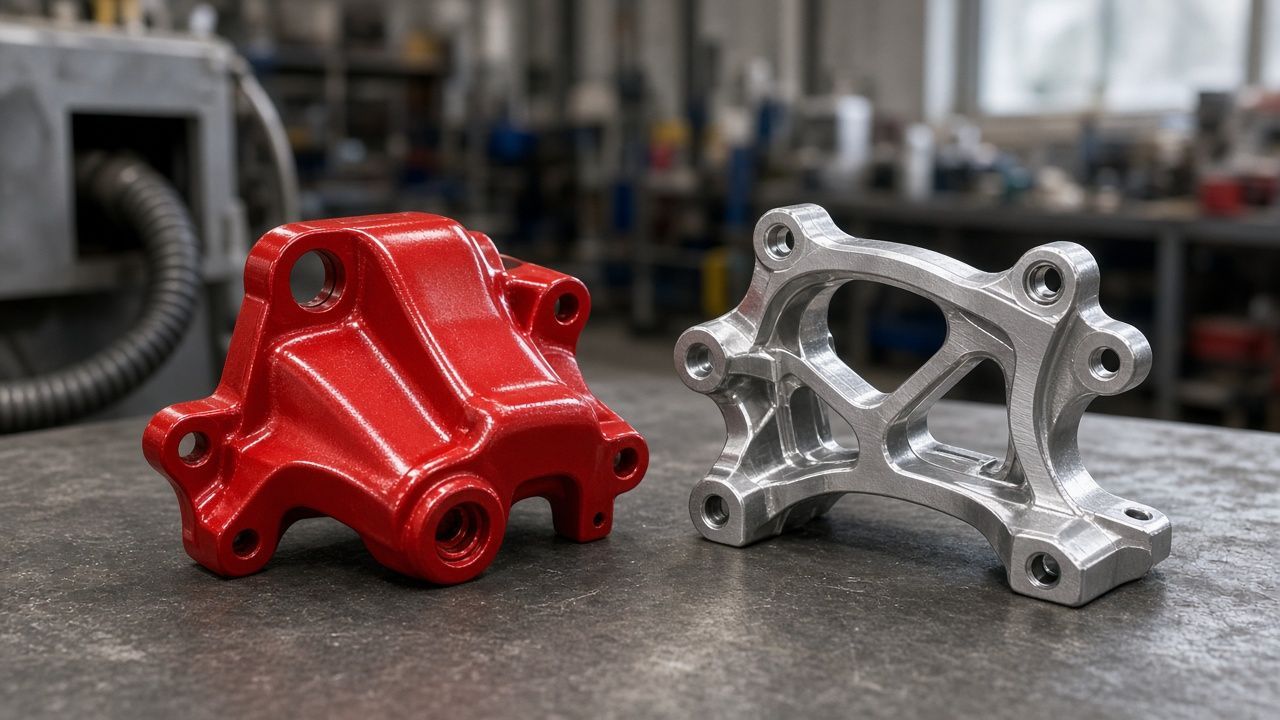
Cast aluminum is made by pouring molten metal into a mold. That process can leave microscopic voids, tiny pockets of trapped air and moisture, scattered through the metal. You cannot see them, but the oven can find them. When a porous cast part is heated for cure, trapped gas expands and pushes outward through the still-liquid powder. The result is small bubbles or pinholes in the finished surface. In the industry this is called outgassing, and it is one of the most common failure modes on cast aluminum finishes.
Manufacturers address this directly in their technical guidance. TIGER Coatings discusses outgassing on porous substrates such as aluminum, noting that gases escaping during cure can cause surface defects and that pre-baking and outgassing-forgiving products are recognized mitigation approaches. We will not invent shop-specific outgassing specs here, because the right approach depends on the individual casting, its condition, and the powder being used. A porous, decades-old patio chair casting is not the same job as a clean new marine-grade casting.
What we will say plainly: when you compare quotes on cast parts, ask whether the quote includes outgassing steps such as a pre-bake. A quote that skips outgassing on porous cast parts is not the same scope of work as a quote that includes it, even if the price is lower. Outgassing problems are not always visible on day one. They show up later as pinholes that let moisture in.
Wrought and Extruded Aluminum
Wrought and extruded aluminum, the material in most gates, railings, fence panels, and structural components, is generally denser than cast aluminum and less prone to outgassing. The metal has been formed under pressure rather than poured into a mold, so it has fewer voids to release in the oven.
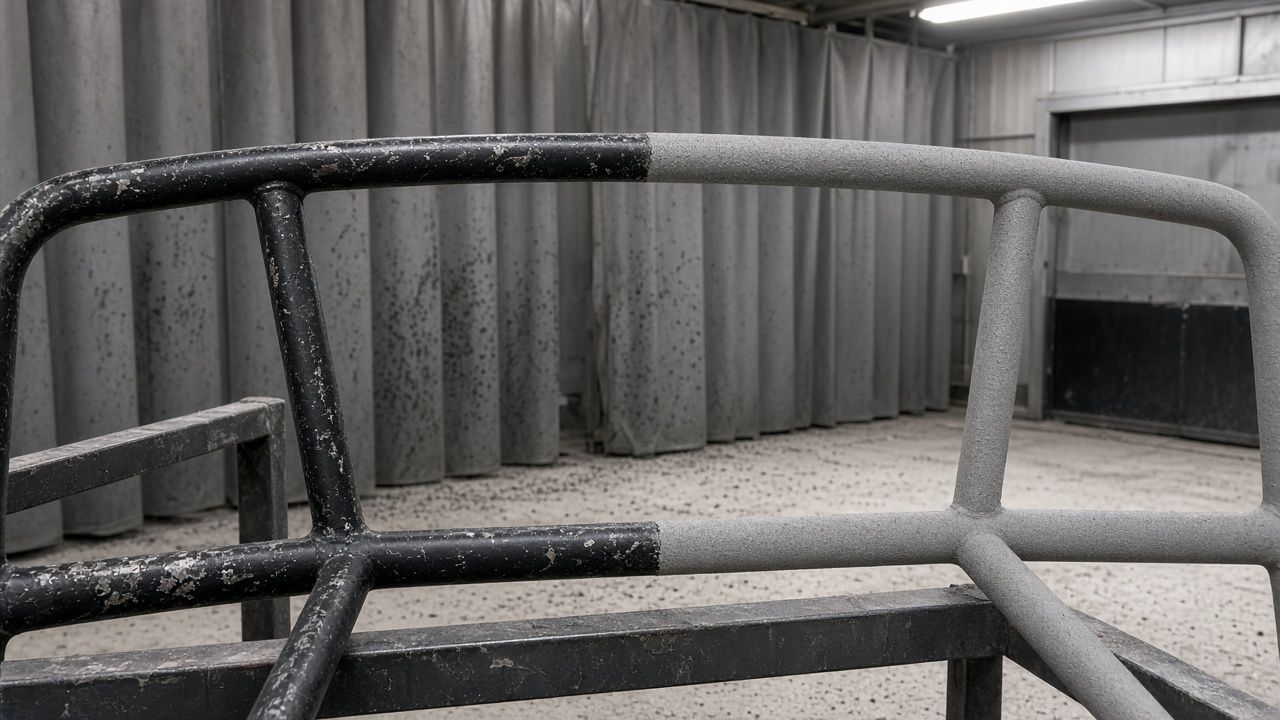
That does not make it a skip-the-prep substrate. Extruded aluminum still arrives with mill scale, oxidation, shop oils, or old coatings that must come off completely before powder will bond. Every part that comes through this shop is inspected and then sandblasted or media blasted before coating. Aluminum earns its finish in the prep stage the same way steel does.
For fabricators reading this: the design decisions you make at the weld table matter more than any decision the coater makes. Sharp edges, welds, and capped tubes are covered in the design section below.
Why Primer Is Recommended on Aluminum and All Outdoor Metal
The shop recommends primer on all aluminum parts and on all outdoor metal, period. This is not an upsell. It is a coverage decision. A primer layer does two things on aluminum. First, it improves adhesion between the metal and the topcoat powder. Second, it builds a barrier layer that helps smooth over minor substrate imperfections and adds a buffer on parts where the substrate is less than ideal. On cast aluminum specifically, a suitable primer system is one of the recognized tools for managing porosity and outgassing risk.
There is also a warranty dimension. The shop's published warranty is a 12-month limited warranty covering powder-coated surfaces for cracking, peeling, and extreme fading from normal climatic exposure. It includes published exclusions, and declining recommended prep steps such as primer on aluminum and outdoor metal can affect coverage. Read the full terms and exclusions on the warranty page. Scope it exactly as published, because the exclusions list matters as much as the coverage list.
Outdoor metal goes beyond aluminum. Steel and wrought-iron gates, fences, railings, and patio frames also benefit from primer, and every part gets blasted before coating regardless of substrate. If you are weighing finish options specifically for wrought iron, see the separate comparison at wrought iron paint vs. powder coating.
Blasting Aluminum: Gentler Media vs. Aggressive Steel Profiles
Media selection matters more on aluminum than almost any other substrate. Aluminum is softer than steel. Blast media and blast profiles that are appropriate for heavy steel plate, where you want an aggressive anchor pattern cut into hard metal, can be too aggressive on softer aluminum. On thin-wall extrusions or parts with machined surfaces, the wrong media can erode edges, distort thin sections, or leave a rougher profile than the powder can bridge smoothly.
The decision includes media type and aggressiveness, whether the part is cast, thin-wall extrusion, or carries machined surfaces, and what condition the existing surface is in. A 30-year-old patio chair with two failing coating generations presents a different blasting problem than a new bare-extrusion gate frame. Professional surface preparation standards organizations like AMPP (the Association for Materials Protection and Performance) publish guidance on surface preparation and profiles for coated substrates. The general principle is consistent: the profile must suit both the substrate and the coating system. See AMPP resources for industry context.
What does not vary at this shop is the baseline. Every part is inspected, then sandblasted or media blasted before it is coated. There is no skip-the-blast option for aluminum. If a quote from anywhere skips the blast, that should raise a flag, because powder applied over oxidation or old coating is powder that will not stay. Shop blasting capabilities are detailed on the sandblasting and media blasting page.
A quick safety note for the DIY-inclined: blasting operations generate respirable dust, and crystalline silica exposure is a serious regulated hazard if you blast yourself. OSHA publishes guidance on controlling silica exposure in abrasive blasting. That is one reason blasting is best left to equipped shops.
Part Design Issues That Affect Powder Performance: Sharp Edges, Welds, and Trapped Moisture
Some powder coating problems are not caused by the coater or the powder. They are designed into the part. These three issues come up constantly, and all three are warranty-relevant.
Sharp Edges Must Be Rounded Before Drop-Off
Here is the physics in plain English: liquid powder, as it flows out during cure, pulls away from sharp edges. The coating over a crisp 90-degree edge is thinner than the coating on the flat face next to it. Thin coverage on an edge is a weak point, and edges are exactly where chips, corrosion creep, and finish failure usually start.
That is why the shop requires sharp edges to be rounded before drop-off, and why the shop does not round them for you. This is a fabrication-stage task. If you are a fabricator, grind and round your edges at the weld table when it takes two minutes, not at the coater when it becomes a rework conversation. Homeowners bringing in older parts should check edges too, especially on cut tubing and bracket corners.
Welds, Overlaps, and Non-Seal-Welded Seams
Handrails and fencing that are not welded solid, along with overlapping metals and non-seal-welded seams, create crevices. Crevices do three bad things: they trap blast media and contaminants, they block coating coverage in the overlap zone, and they collect moisture after installation. A seam that was never sealed becomes a capillary channel for water. In a coating context, an uncoated, moisture-holding seam inside an otherwise well-coated part is a failure waiting for winter.
Capped Tubes and Weep Holes
A capped tube with no weep hole is a sealed container. It traps moisture from condensation, and it traps air. In freeze climates, trapped water expands and works at the seams and coating from the inside. Trapped air expands in the oven and can force coating defects at the caps. The fix is simple: drill weep holes at the low point of any capped tube. Do this before the part arrives. Rounded edges, solid welds, and weep holes are before-drop-off tasks, not coater tasks.
When Powder Coating Is a Poor Fit for an Aluminum Part
An honest shop tells you when powder is the wrong tool. Here are the situations where it can be.
First, heat-treated or safety-critical aluminum. Structural, load-bearing, or aerospace-adjacent parts may have tempers and heat treatments that cure temperatures can affect. We do not make engineering determinations on those parts. If your part falls into that category, consult a qualified engineer before having it coated.
Second, parts that cannot leave their site or cannot be disassembled. Powder coating is a shop process: the part goes in the oven, or it does not get coated.
Third, heat-sensitive assemblies. Components with rubber, plastic, bearings, inserts, or electronics that cannot tolerate cure temperatures either need to be disassembled first or need a different finish entirely. Temperatures are covered in detail in our technical article on cure requirements. If you are weighing how a smaller batch shop handles parts like these versus a high-volume line shop, our guide to line shops and batch shops explains the difference.
Specialty Finishes: When Cerakote or Cera Coating Comes Up for Aluminum
Some aluminum parts come up in conversation where a thin-film specialty finish such as Cerakote, which the shop also offers as Cera Coating, may fit better than standard powder: firearms components, small automotive pieces, or items where a thin, durable film matters, sometimes including parts where full cure temperatures are a concern. Use-case framing is where we will stop. We do not publish performance figures or warranty terms for Cerakote here, because those belong to the manufacturer. If a number matters to your decision, verify it against manufacturer documentation. If a thin-film finish is genuinely relevant to your part, see Cerakote finishing and ask whether it or standard powder suits the job.
Outdoor Exposure: What Aluminum Faces After Coating
Where a part lives after coating shapes what it has to survive. Northern Utah winters are harder on coatings than newcomers expect.
Freeze-thaw cycles are the big one. Moisture that works into seams, capped tubes without weep holes, and unsealed overlaps expands and contracts with every freeze. That is exactly why the design section above matters here. A part that would coast along in a mild climate gets mechanically worked all winter.
UV exposure at elevation is another factor. Sustained UV is hard on finishes over time, which is one reason fade resistance and proper formulation matter. We do not publish lifespan figures, because real-world durability depends on the part, the color, the exposure, and the prep.
Sprinkler exposure deserves a specific callout. Gates, railings, and patio furniture that sit in sprinkler spray get chronic water contact and mineral deposits. Sprinkler exposure is addressed in the published exclusions on the warranty page. If your gate gets hit by sprinklers twice a day, say so at quote time so expectations and coverage are clear.
Road salt and winter runoff attack wheels, automotive parts, and gates near driveways. Salt, chlorine, and fertilizer exposures can also affect warranty coverage as published in the exclusions. Disclose all of it upfront. Coverage details are on the service areas page. Pickup and delivery within about 100 miles of the Salt Lake Valley shop may be discussed for many jobs.
Quote Photos and Drop-Off Checklist for Aluminum Parts
What to Send for an Accurate Quote
Photos are the fastest path to an accurate quote, and good photos beat phone descriptions every time. Send:
- Clear photos from multiple angles, including close-ups of edges, welds, and existing coating condition
- Part dimensions and weight, so oven fit can be screened
- Material if you know it (cast vs. wrought/extruded)
- Where the part will live: indoor or outdoor, sprinkler proximity, salt or fertilizer exposure
- Your desired finish and color direction
Drop-Off Checklist Before You Arrive
- Round all sharp edges (the shop does not round them)
- Weld handrails and fencing solid; address overlapping metals and non-seal welds
- Add weep holes to capped tubes
- Disassemble heat-sensitive components, rubber, plastic, and bearings where possible
- Remove soft goods, hardware, and anything that cannot take cure temperatures
- Decide on blast and primer recommendations for aluminum and outdoor metal before approving the quote
Drop-Off Location
Drop off parts at 9479 South 500 West, Sandy, UT 84070, behind Titan Cabinetry.
Common Buyer Mistakes with Aluminum Powder Coating Projects
These are the recurring ones, and every one of them is avoidable:
- Skipping or declining blast on aluminum. Every part gets inspected and blasted at this shop, and that is a feature of the process, not an option to trim.
- Declining primer on aluminum or outdoor metal, which is warranty-relevant.
- Dropping off parts with sharp edges, open seams, or capped tubes without weep holes.
- Comparing quotes that skip outgassing steps on cast aluminum. The cheapest quote is often a different scope of work, not the same job for less.
- Not disclosing salt, chlorine, fertilizer, or sprinkler exposure, which affects both finish expectations and warranty coverage.
- Assuming every finish suits every part. Standard powder and thin-film specialty finishes serve different purposes.
Get a Free Quote for Your Aluminum Powder Coating Project
If you have aluminum parts you are thinking about coating, the easiest first step is to request a free quote through the contact page. Send a few photos with part details, dimensions, material, and where the part will live, and you will get a real answer for your specific project. You can also call 801.631.1708 or email service@fullblowncoatings.com. Drop-off is at 9479 South 500 West, Sandy, UT 84070, behind Titan Cabinetry. Bring parts that are prepped right, and the coating does the rest.
Before drop-off, send clear photos, dimensions, material details, and the intended environment so Full Blown Coatings can recommend the right blast, primer, and powder system.
Share This Post!