Wrought Iron Powder Coating: Plan Your Gate, Railing, or Fence Drop-Off
A practical drop-off guide for gates, railings, and fence panels.

Before drop-off, confirm that each gate, railing, or fence section can be removed, transported, blasted, coated, and cured safely.
Wrought Iron Powder Coating: Plan Your Gate, Railing, or Fence Drop-Off
A driveway gate with chalky black paint, or a porch railing that rusts at every weld, usually failed at the finish long before the iron itself gave out. When you already lean toward wrought iron powder coating for outdoor gates, railings, fence panels, or stair sections, the planning work shifts. Can the metal leave the site? Will the sections fit a shop blast-and-cure process? And are edges, welds, and outdoor primer decisions settled before drop-off?
This guide is for that project plan. If you are still weighing paint against powder as finish systems, start with Full Blown Coatings’ wrought iron paint vs powder coat article. Here, the job is simpler: decide whether your iron can run through a powder process, prep it for outdoor service, and arrive ready for intake.
General information from Full Blown Coatings, a Utah powder-coating and sandblasting shop. Each project needs to be evaluated individually. A shop’s process, the metal’s condition, and outdoor exposure control the work on any specific job.
When Wrought Iron Powder Coating Fits Your Project
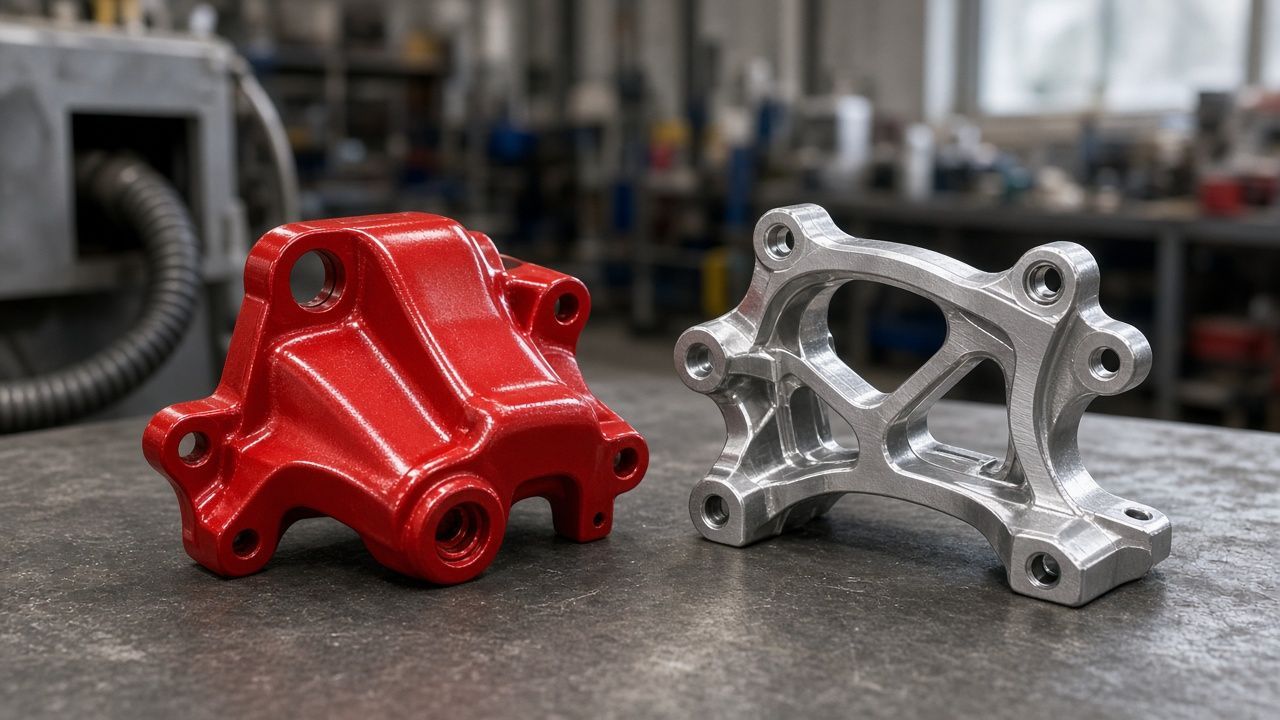
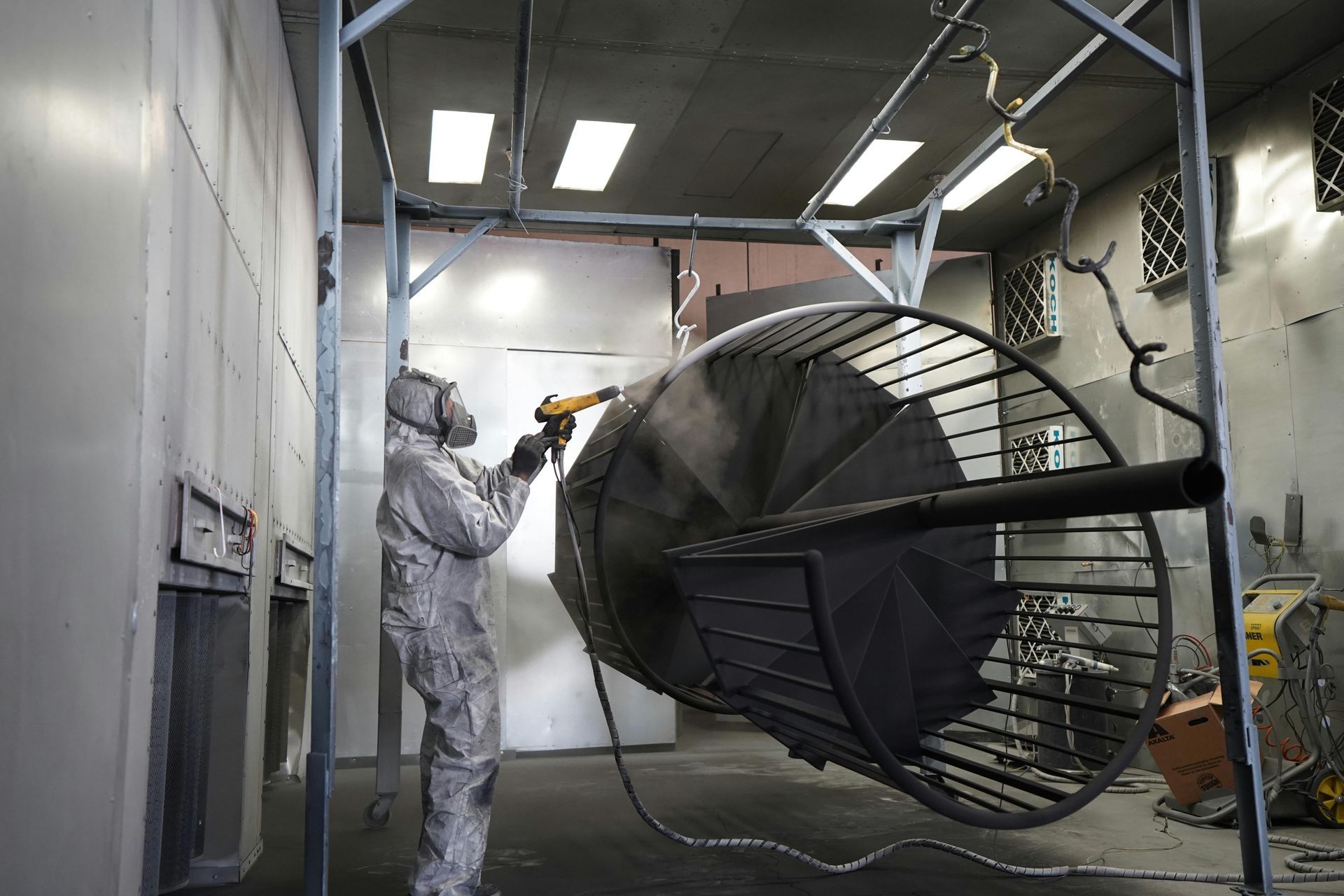
Powder coating is a dry-powder, electrostatically applied finish that cures under heat into a continuous film. Full Blown’s overview of powder coating services and the Salt Lake powder coating service page walk through that process in more detail. For outdoor iron, the finish only performs as well as the prep and the part design allow.
Powder tends to fit when:
- You can remove gate leaves, railing sections, fence panels, or stair runs as manageable pieces
- Those pieces can be blasted clean, coated evenly, and cured in an industrial oven
- The finish will be highly visible, so uniformity across long bars and decorative details matters
- You want a harder outdoor film than a casual brush-on touch-up cycle usually delivers
That is why powder coating gates, powder coating railings, and powder coating fence sections show up so often in residential and light commercial work. A powder coat fence panel that leaves the shop clean and consistent can look intentional on reinstall. A panel that never leaves the posts is a different conversation.
Full Blown notes industrial oven capacity of 10×10×40 on site for coating work that requires oven cure. Confirm during the estimate whether your longest section, tallest gate leaf, or widest panel fits the shop’s equipment and handling plan.
Removable Sections vs Fixed Installed Iron
This is the decision that saves the most time. Powder coating is a shop process. The metal has to arrive, get inspected, get blasted, receive powder, cure, pass QC, and leave again. If removal, transport, or reinstall is unrealistic, forcing powder onto fixed iron usually creates logistics problems before it creates finish problems.
Removable work usually includes:
- Swing or slide gate leaves unbolted from posts and hardware
- Railing sections lifted as panels or runs with clear break points
- Fence panels or decorative inserts that can travel flat or racked
- Stair or balcony sections fabricated as coatable units
Fixed installed iron (continuous welded runs, posts set in concrete, older railings that cannot come apart cleanly) is often better served with a quality paint system applied on site. That is not a lesser project. It is the route that matches how the metal actually lives on the property. The live paint-vs-powder article covers that finish-system choice for undecided readers. This post assumes you are already leaning powder and need the removable-path plan.
For many jobs within about 100 miles of Salt Lake City, pickup and delivery can be discussed when sections are heavy or awkward to haul. Ask when you request the estimate so transport is part of the plan, not an afterthought.
Outdoor Prep That Actually Protects the Finish
Color choice gets attention. Prep decides whether that color stays attached. Protective-coating practice treats surface preparation as part of the coating system, not a side chore. The Association for Materials Protection and Performance (AMPP) publishes industry standards and education used across corrosion and coating work. On a wrought-iron-style project, that mindset shows up in blasting, outdoor primer decisions, edge geometry, and weld design.
Blast every part before coat
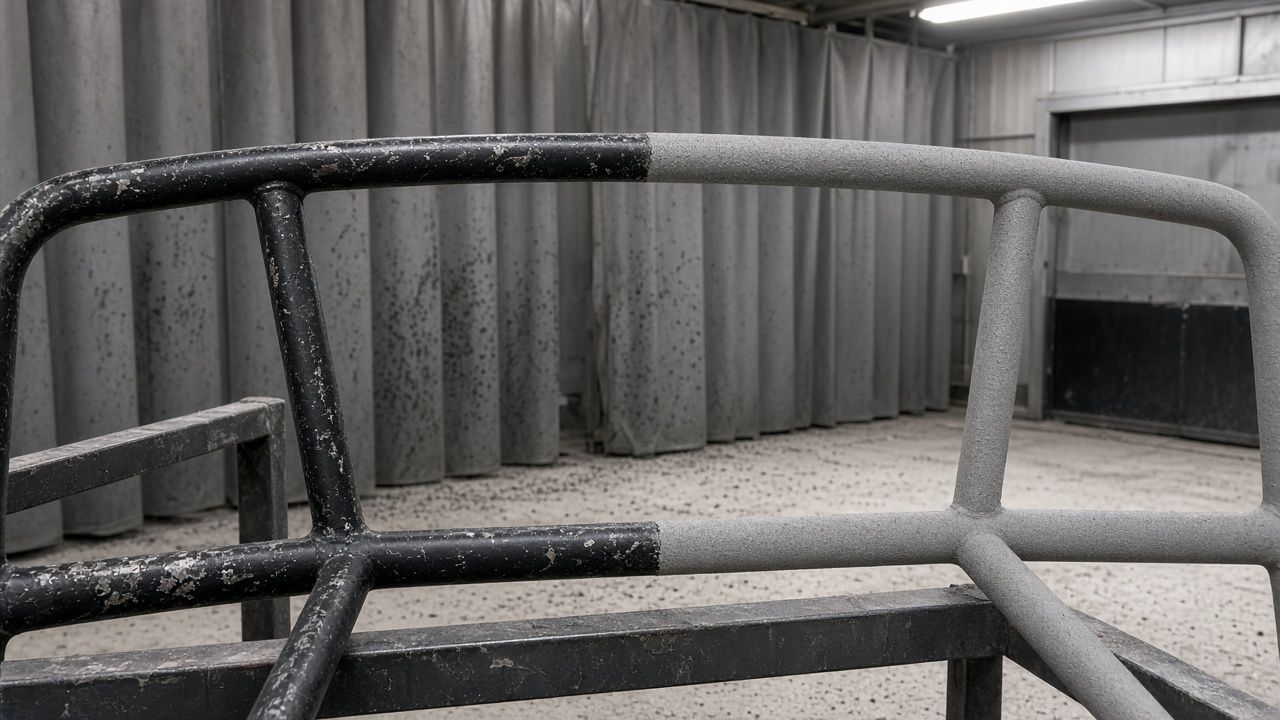
Full Blown states that the shop inspects, then sandblasts or media blasts every part before coating. Blasting removes old paint, rust, scale, and surface contaminants, and it creates a profile the powder can grip. Declining recommended blasting is not a small shortcut. On powder-coated work, declining recommended surface preparation voids the published warranty.
Abrasive blasting is a controlled shop process. The Occupational Safety and Health Administration identifies abrasive blasting with sand as a potential source of respirable crystalline silica exposure and provides requirements and guidance for controlling the hazard. For you as the customer, the practical takeaway is to use a shop set up for containment and media control rather than treating driveway blasting as the same job.
Primer on outdoor metal
Outdoor iron sees UV, moisture, freeze-thaw, sprinkler overspray, and road film. Full Blown recommends primer on all outdoor metal. Items powder coated when recommended powder chemistry is declined are outside the warranty. If the estimate includes outdoor primer, treat that line as protection planning, not an upsell to skim past.
Sharp edges, welds, tubes, and moisture traps
Powder needs enough edge thickness to hold. Sharp edges must be rounded before drop-off so the film can build properly. Full Blown does not round edges and is not responsible for rust that starts because sharp edges were left as-cut. Bring a grinder or have your fabricator break edges before the metal arrives.
Design details matter as much as surface prep:
- Handrails and fencing not welded solid can trap moisture in places powder cannot reach. Those areas can rust after install even when the visible faces look perfect.
- Overlapping metals and non-seal welds create moisture pockets. Rust can start inside the lap and migrate out.
- Capped tubes without weep holes risk vapor damage during oven cure and moisture problems later. Add weep holes before coating when tubes or pipes are capped.
- Salt, chlorine, fertilizers, pesticides, and sprinkler systems are called out as warranty-voiding exposures on the published warranty page. Tell the shop if the gate sits by a pool, the railing catches hard-water sprinklers, or the fence line gets winter de-icer splash.
None of those notes are meant to scare you off powder. They are the difference between a finish that looks good on pickup day and a finish that still looks intentional after a hard winter.
Quote Checklist for Gates, Railings, and Fence Work
A clear quote starts before the truck is loaded. Send or bring:
- Photos of every side, plus close-ups of rust, old coating failure, welds, overlaps, and damaged areas
- Part count and approximate dimensions for each gate leaf, railing run, fence panel, or stair section
- Material notes if known (mild steel, older wrought-style ironwork, repairs, or mixed metals)
- Color and texture goal (flat black, satin, textured, bronze, or a chip reference)
- Hardware plan: hinges, latches, rollers, and anything that should be removed or masked
- Weep holes and capped tube status for hollow members
- Edge and weld condition: whether sharp edges will be rounded before drop-off, and whether laps are seal welded
- Exposure notes: sprinklers, pool chlorine, fertilizer beds, road salt, or coastal-style salt exposure if relevant
- Logistics: whether you will drop off, need pickup within the shop’s discussed range, or need help sequencing removal and reinstall with your fabricator
Vague photos of “a black gate” produce vague estimates. Clear section lengths and condition notes produce a scope you can compare honestly.
Prepare for Drop-Off
Confirm the intake list before you leave the driveway.
- Round sharp edges so powder can hold film thickness at corners and cut ends.
- Remove soft goods, plastic trim, weatherstrip, and hardware you plan to reuse when practical. The shop does not disassemble and reassemble customer parts as a standard service.
- Label matched sections (left/right gate leaves, stair runs, panel order) so reinstall stays simple.
- Note masking needs in writing: hinge pads, mounting faces, threads, or bearing areas that must stay bare.
- Bring the same photos, dimensions, and finish notes used for the quote so the counter conversation matches the estimate.
- Pack or rack parts so finished faces will not grind against each other in transit after coating.
Process at the shop follows a familiar path: consultation and estimate, intake and approval, schedule and execute (blast, coat, cure), QC, then pickup or shipping. Your job on drop-off day is to make that path start with accurate parts and clear instructions.
What the Powder Warranty Covers (and What It Does Not)
For powder-coated surfaces, Full Blown publishes a 12-month limited warranty covering cracking, peeling, and extreme fading from normal climatic exposure, with stated exclusions and conditions on the warranty page. Read that page before you decline recommended prep. Blasting declined, outdoor primer declined, and sharp edges left unrounded are not small footnotes. They change what the warranty can cover.
The warranty also excludes design issues the coating cannot fix by itself, including moisture traps from non-solid welds, overlapping metals that are not seal welded, and capped tubes without weep holes. Mechanical damage, installation abuse, and chemical exposures such as salt, chlorine, fertilizers, and sprinkler contact are outside coverage as written. Plan the metal and the site conditions with those limits in mind.
Shop Location and Service Area
The shop is at 9479 South 500 West, Sandy, UT 84070, down the driveway behind Titan Cabinetry. Full Blown Coatings serves Northern Utah and nearby communities; see the service areas page for the current list. For many jobs within about 100 miles of Salt Lake City, pickup and delivery can be discussed when sections are heavy or awkward to haul.
Next Step
If your gate, railing, fence panel, or stair section can leave the site and fit a blast-and-cure process, powder is worth planning carefully. Settle removable logistics, outdoor primer, edge rounding, and weld details before the metal hits the shop floor.
Full Blown Coatings (sandblasting and media blasting plus powder coating) is ready to review photos and scope. Request a free quote, call 801.631.1708, or email service@fullblowncoatings.com. Bring clear photos, note outdoor exposure, and leave with a drop-off plan instead of a guess.
Share This Post!