Trailer Sandblasting: Teardown, Primer, and Powder Coating in Utah
It is a familiar sight in the yard. An equipment trailer rolls in with the deck boards already pried up and stacked in the owner's truck bed, rust bleeding down the frame rails from the crossmember welds, and paint lifting off the fenders in sheets. The first question is almost always the same: is this worth stripping down, or should I just wire-brush it and roll on another coat?
Trailer sandblasting is the step that answers that question honestly, because it decides whether a refinish holds or starts letting go after a season or two. The right call depends on the trailer's condition, the finish you want on it, and how much setup you have at home. Below, we walk through what blasting can and cannot fix, the DIY versus shop decision, teardown, media choice, primer, paint versus powder, and how to plan a drop-off.
What Trailer Sandblasting Actually Fixes (and What It Doesn't)
Blasting is controlled stripping. Media driven by compressed air hits the steel and takes off rust, flaking paint, old farm-grade coatings, mill scale, and surface contamination until you are looking at clean, bare metal. Mill scale, if the term is new to you, is the blue-gray skin left on new steel from the rolling mill. It looks solid, but it makes a poor bonding surface, and coatings applied over it tend to let go.
The blast step exists so primer and topcoat bond to sound metal with a fresh surface profile, not to layers that are already failing. At our shop, every part is inspected, then sandblasted or media blasted before it is coated. Skipping it is rarely worth the savings.
There are limits, though. Blasting reveals metal. It does not rebuild it. If a crossmember is paper-thin under the scale, the blast will show you that, not fix it. This matters enough that it is written into our published terms: when corrosion hides the true condition of the metal, the shop is not responsible for damage that results from blasting. If you are bringing in a ranch or farm trailer that has spent years in the weather, expect that blasting may expose thin spots or open up pitted areas. Blasting did not cause those thin spots; it uncovered them, and sometimes what is under the scale needs a welder before it needs a coater.
The Inside-of-the-Frame Problem
The worst corrosion on a trailer is rarely where you can see it. It lives inside tube steel rails, under the deck boards, at crossmember welds, and around the spring hangers where road spray hits first. Moisture gets in through pinholes and gaps in welds, then sits there year after year.
Two warranty-related points belong here. Capped tubes without weep holes can trap moisture and vapor that escapes during the cure, and the shop is not responsible for oven damage to them. Design and welding flaws such as overlapping steel and non-sealed welds that let moisture build up are not covered either. Neither is a reason to panic. They are reasons to say what you know at quote time. If your frame has capped tube ends, point them out and ask how they will be handled. Please do not start drilling into structural tube steel on your own before drop-off; that belongs in the quote conversation.
DIY Trailer Sandblasting vs Hiring a Shop
Search for how to sandblast a trailer and you will find two camps: people who bought a blast pot and swear by it, and people who did it once and paid a shop the next time. Both have a point. Here is how to tell which camp your trailer belongs in.
When DIY Makes Sense
If the trailer has light surface rust, no heavy scale packed into the welds, and it is going to get brushed or sprayed paint anyway, you can often handle it at home with a wire wheel, a flap disc on an angle grinder, and patience. We cover the methods that work, and the ones that waste your weekend, in our guide to cleaning rust off metal, so we will not repeat all of it here.
If you are tempted to buy a blast pot, price the whole setup, not just the pot. You need media, a compressor big enough to hold steady pressure, real protective gear, and a way to contain and clean up spent media and paint chips. A typical garage compressor struggles to keep up with continuous blasting. Sandblasting a trailer frame at home is a bigger project than most videos make it look.
When a Shop Blast Pays for Itself
The balance tips toward a shop when you have dense rust packed into weld seams, several layers of old paint, tight interior sections a wheel cannot reach, or any plan to powder coat. Powder applied over poorly prepared metal is a common cause of early peeling, which is why our 12-month limited warranty treats blasting as required: parts that are not sandblasted are not covered.
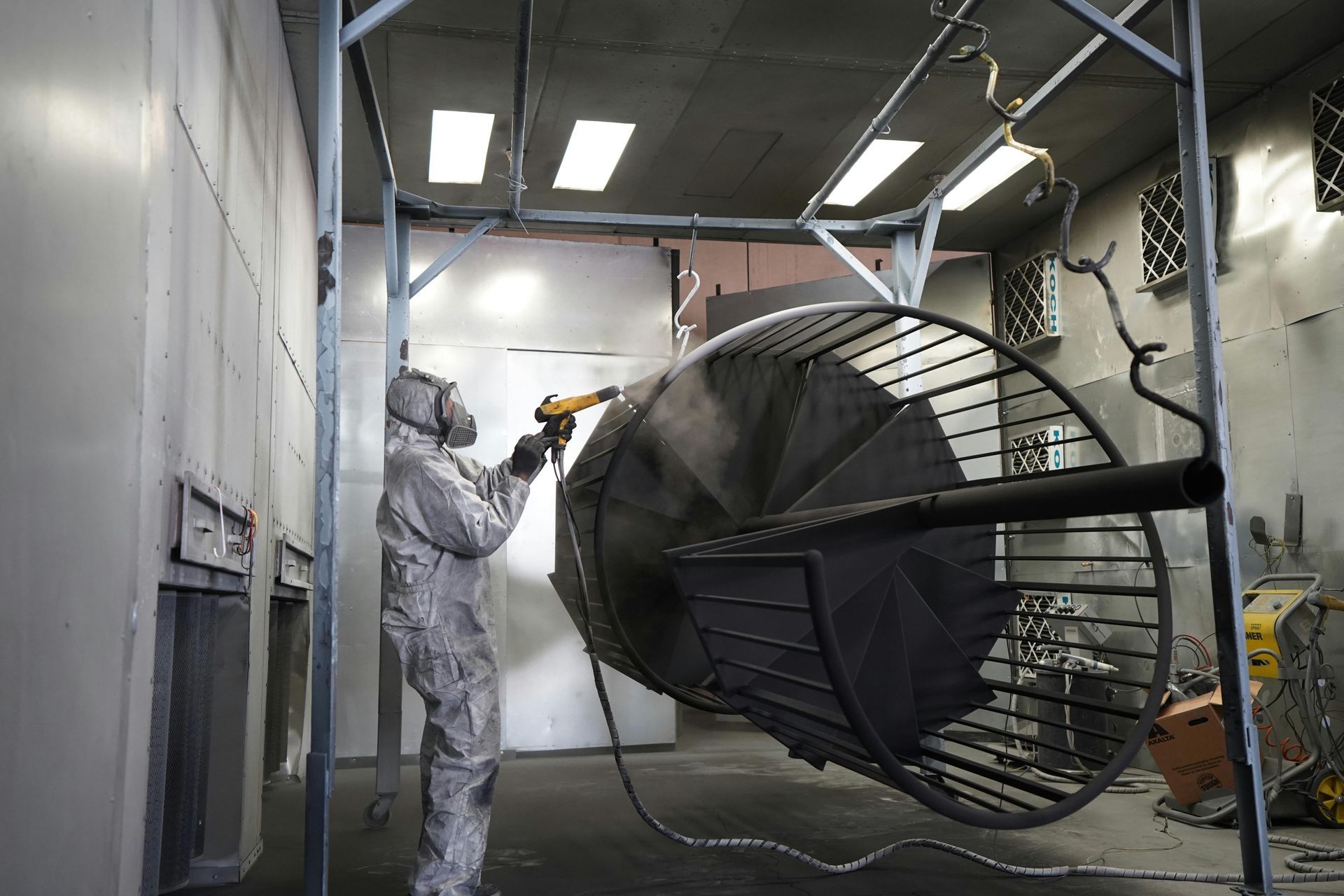
Size is the other factor. A full trailer frame is awkward to blast evenly in a driveway, and coating it at home is out of reach for most people. Full Blown has the largest powder coating oven in Utah, so long trailer frames can go in whole, and you can read more about the coating side on our powder coating page.
Dust, Silica, and Old Paint: The Health Side
This deserves a straight answer rather than a footnote. Abrasive blasting with sand creates respirable crystalline silica dust, a serious lung hazard, and OSHA's crystalline silica overview lays out the health risks. Blasting in a driveway without containment and a proper respirator is not a corner worth cutting.
Old paint is the second issue. Coatings on older trailers may contain lead, and grinding or blasting them at home can spread dust you do not want around your family or your property. OSHA's lead resources explain why lead exposure is taken seriously. If you suspect the existing paint is old enough to contain lead, mention it when you ask for a quote.
What Gets Blasted, What Gets Removed, What Gets Masked
Every trailer is a little different, so treat this as typical handling and confirm the final plan at quote.
| Trailer part | Typical handling | Why |
|---|---|---|
| Tongue, coupler, frame rails, crossmembers | Blast, prime, and coat | Main structure and usually the heaviest rust |
| Fenders and thin sheet panels | Blast with media chosen for thin sheet | Aggressive blasting can warp thin metal |
| Ramps, gates, and hinge areas | Blast and coat; hinge pins and hardware discussed at quote | Moving parts and hardware need a plan |
| Jack mounts, safety chain tabs, spring hangers | Blast and coat | Common rust traps where road spray hits |
| Axles, hubs, and springs | Decided at quote | Scope varies; greased bearings and seals do not go in the oven |
| Tires and wheels | Remove from the trailer | Rubber cannot take the cure; wheels are a separate job |
| Wiring harness and lights | Remove | Wire insulation and plastic lenses cannot take a 350 to 400 degree cure |
| Wood deck boards | Remove | The coating and cure are for the metal frame |
| VIN and ID plates | Photograph and flag at drop-off | Blasting can damage stamped or riveted plates |
Trailer wheels can be coated too, but they come off the trailer and are their own conversation.
Teardown Before Drop-Off
A little prep at home saves time and confusion when the trailer arrives:
- Pull the deck boards, lights, and wiring harness, as noted in the table above.
- Ask at quote how the axles, hubs, and springs will be handled, and plan on greased bearings coming out.
- Remove the jack if it comes off easily.
- Bag and label safety chains, pins, and small hardware so nothing goes missing.
- Remove, or point out, any registration decals you need to keep.
The item people overlook is the VIN or ID plate. Blasting can damage stamped or riveted plates, and a legible VIN matters for registration. Photograph every plate before you bring the trailer in, then flag the plates at drop-off so they can be protected or handled deliberately.
Sharp edges belong on the teardown list too. Powder needs enough thickness on an edge to protect it, and a knife-sharp edge will not hold it. Our warranty spells out that sharp edges must be rounded before drop-off, and the shop does not round edges. If you have cut brackets, trimmed sheet, or ground welds with sharp corners, take a few minutes with a grinder or file first. It is a small job compared with a rust line along every edge later.
Thin Fenders and Warping: Why Media Choice Matters
Blast media are not interchangeable, and on a trailer the difference shows up first on thin sheet. The media we list include soda, glass, walnut, green diamond, and corn cob, and the choice affects both how aggressively the surface is stripped and the texture left behind. Our media blasting page covers what each one does to a surface. Sandblasting can generate enough heat to warp thinner metal, which makes fenders, fender skirts, and sheet panels the warp-risk zones on most trailers.
So ask the question: what media will be used on my fenders, and why? A clear answer tells you the shop is planning around your trailer instead of running every part through one setting.
Blast and Paint vs Trailer Powder Coating
The paint versus powder decision comes down to how the trailer lives. A work trailer that sits outside and tows through Utah winters is where trailer powder coating tends to earn its keep: an oven-cured coating over blasted, primed steel is generally tougher against chips and brine than a quick coat of paint. If you are already paying for trailer sandblasting and painting, moving up to powder is often where the extra durability comes from.
The other side is a trailer that gets cut, welded, and patched every season, like a ranch trailer that always has a new repair coming. For that trailer, sandblasting the trailer frame and following it with a quality paint system you can touch up yourself may be the more practical choice. Powder is tough, but welding on a coated frame burns the coating around the weld, and touch-ups rarely blend perfectly.
For a sense of the range, we powder coat metal trailers for recreation and ATV customers, and we handle industrial and commercial work as well.
Why Primer Is Recommended on Outdoor Metal
A trailer is outdoor metal. The warranty recommends primer on all aluminum parts and all outdoor metal, and declining the recommended primer voids coverage. The reason behind the rule is practical: primer adds a corrosion-resistant layer between freshly blasted steel and the powder topcoat, and against road brine and freeze-thaw cycles, that layer is doing real work.
Skipping primer to save a little up front is one of the easiest ways to undercut an otherwise good trailer job.
Galvanized Trailers Need Different Prep
Some boat and utility trailers are galvanized, and powder over hot-dip galvanizing calls for its own prep approach. It is not the same process as coating bare steel. We go into the specifics in our article on powder coating galvanized steel, and the American Galvanizers Association's guidance on preparing galvanized steel for powder coating is a solid technical reference.
Tell the shop at quote time if your trailer is galvanized. It changes the plan, and drop-off day is the wrong time to find out.
Will the Frame Fit in the Oven?
In most cases, yes. We run the largest powder coating oven in Utah, so long trailer frames fit. If your trailer has a gooseneck or fixed uprights, mention it and send a few photos with your quote request so we can plan how it hangs. Many conventional powders cure in roughly the 350 to 400 degree range, which is why every heat-sensitive component has to come off before the trailer goes in.
One more detail if you like knowing how the process works: heavy trailer steel has a lot of thermal mass, so a thick frame rail takes longer to come up to cure temperature than a thin bracket does. What matters is the temperature of the metal itself, not just the air in the oven. Our article on the temperature required for powder coating explains part metal temperature in more depth.
Utah Weather Is Hard on Trailer Coatings
Utah roads get treated with deicing products every winter, and the UDOT deicing dashboard tracks how much of those products the state buys and uses. If you tow in winter, your frame, spring hangers, and coupler are collecting brine with every trip. That brine finds every spot where the prep was marginal.
Freeze-thaw cycles push moisture into weld seams and lap joints, and the strong UV at elevation is hard on lesser coatings. Then there is the exposure nobody plans for: sprinklers. A trailer parked beside the lawn can get soaked by irrigation all summer, often with fertilizer in the mix.
That matters more than most owners realize, because the warranty is voided by contact with salt water, chlorine, fertilizers, pesticides, sprinkler systems, industrial chemicals, fuel, tree sap, or vegetation. If the trailer lives in the driveway, park it out of the sprinkler's reach.
Boat Trailers and the Salt Water Exclusion
A boat trailer that only sees fresh water is ordinary outdoor metal as far as prep goes. Salt water is different. The warranty excludes salt water contact, so if your boat trailer backs into salt water, including the Great Salt Lake, that exclusion applies no matter how well the trailer was prepped. Better to know that before you choose a finish than after.
Planning Your Drop-Off: Photos, Quotes, and What Changes Scope
Whether your trailer is coming from down the street in Sandy or the far side of the Salt Lake Valley, a smooth job starts with good photos. The ones that help most are overall shots plus close-ups of the worst rust, the welds, and the underside beneath the deck. Rough measurements, the trailer type, and a note on what you plan to remove yourself round it out. Those details change the quote because they change the work.
Expect some uncertainty in scope. Blasting often uncovers thin metal that corrosion was hiding, and what the frame looks like after stripping can change the plan. Before anything leaves the shop, it is inspected, and our terms ask you to inspect your parts and sign off at pickup, so look the finished work over closely before you hook up and drive away.
On cost, our published terms list blasting services at $150 per hour, material included, along with a $120 minimum per order and a $40 minimum per color. How long a trailer takes depends on its size, its condition, and what is coming off, so trailers are quoted from photos, and inspection where needed, rather than a flat number. For a broader look at what drives the cost to sandblast a trailer or any other part, see our guide to sandblasting costs.
When you compare quotes, compare what they include, not just the total. One quote may skip primer, say nothing about media for thin fenders, or assume you are handling all the teardown. Ask each shop exactly what is covered.
Plan your pickup before you drop off, too. Under our terms, parts left 15 days after completion are charged storage of $50 per month per invoice, and parts left more than 30 days are considered abandoned. A finished trailer takes up real floor space.
The shop is in Sandy, and our service areas page shows where we work. If hauling a stripped frame is not practical, pickup and delivery covers a 100-mile radius from Salt Lake City, with fees based on distance, volume, and access, and larger or scheduled projects can go farther.
Get a Trailer Sandblasting Quote
Whether you are planning a full trailer restoration or just deciding if the frame is worth saving, the next step is simple. Request a free quote through our contact page, call 801.631.1708, or email service@fullblowncoatings.com. Send photos, tell us the trailer type and condition, and ask about media for the fenders and the primer. You can drop off at 9479 South 500 West, Sandy, UT 84070, down the driveway behind Titan Cabinetry, and every part is inspected before it is blasted and coated.
Share This Post!