Powder Coating in Salt Lake City: What to Know Before You Send in a Part
This guide was prepared by Full Blown Coatings as an informational resource for people comparing powder-coating options in the Salt Lake City area.
Powder coating is often a good fit for metal parts that see weather, road debris, handling, or regular use. Around northern Utah, that can include wheels, frames, railings, gates, shop equipment, agricultural parts, and fabricated metalwork. The finish is only one part of the outcome, though. Surface condition, part design, masking needs, and the intended environment all affect whether a project is suitable for the process.
Quick Check: Is Your Part a Candidate?
Is powder coating more durable than liquid paint?
When the part is properly cleaned, pretreated, and cured, powder coatings can provide improved performance over liquid coatings. The exact result still depends on the substrate, preparation, coating system, and the conditions the part will face.
Do I need to remove rust first?
Tell the shop about heavy rust, old coatings, body filler, or contamination. The preparation method should match the material and its condition; blasting may be part of that plan, but it is not a one-size-fits-all treatment.
Can every metal part be powder coated?
Many metal parts can be coated, but thin material, mixed assemblies, heat-sensitive components, and tight tolerances need special review before they go into a curing oven.
What should I do with bearings, rubber, plastic, or electronics?
Remove them when possible, or clearly identify them before dropping off the part. A shop needs to know what is inside an assembly before planning cleaning, blasting, masking, and cure.
The Sequence That Determines Coating Adhesion
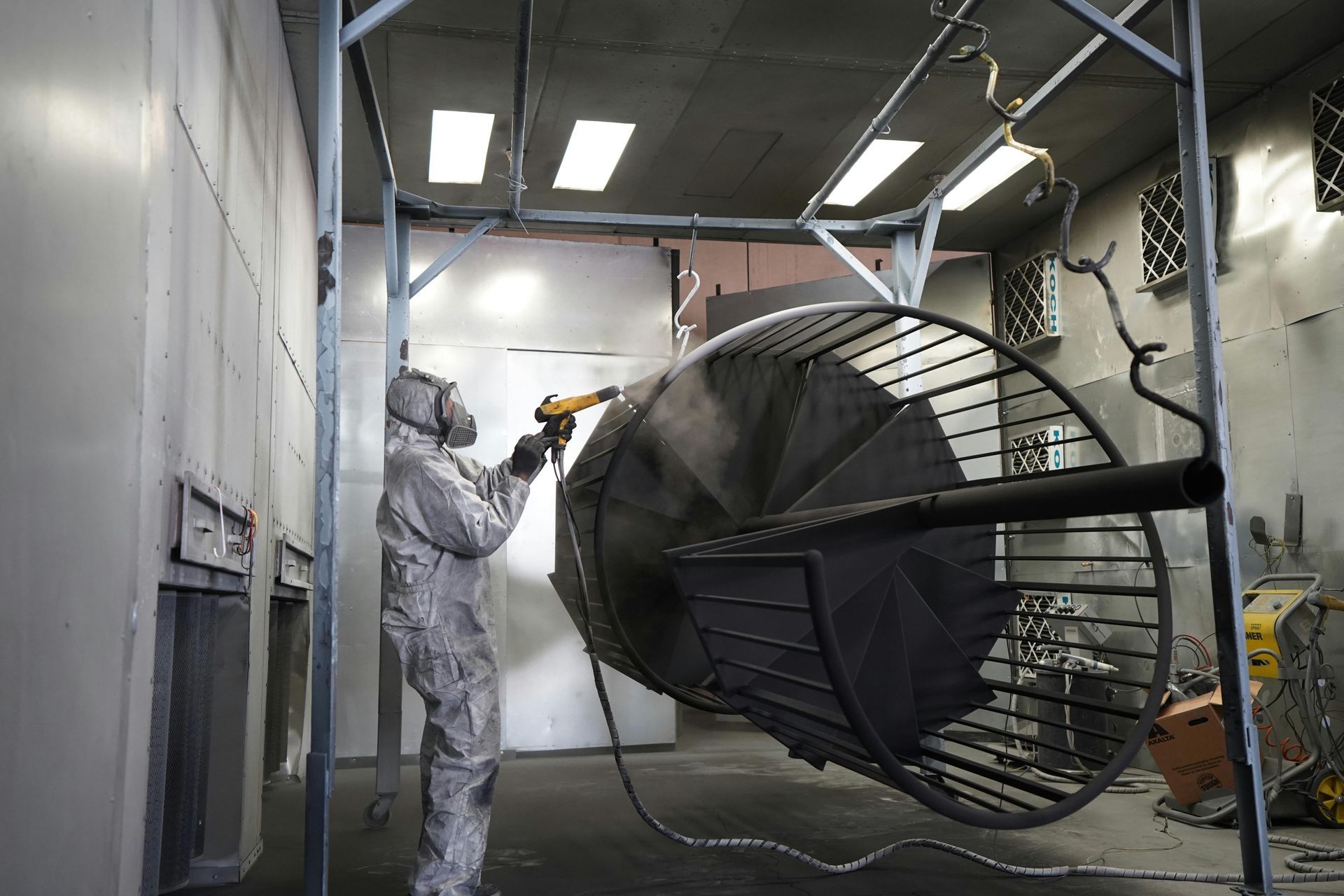
Powder coating is a metal-finishing system, not just a coat of color. After the part is cleaned and prepared, dry powder is applied with an electrostatic spray process. The grounded part attracts the charged powder, then the coating is heated until it flows and cures into a bonded film. A local process explainer describes electrostatic application and the typical 350–400°F oven range used for many jobs.
What matters most is the work before the spray booth. Oil, rust, old paint, mill scale, and residue can interfere with the finished coating. The Powder Coating Institute notes that adhesion depends heavily on substrate cleanliness, appropriate pretreatment, and proper melt and cure.
Blasting can remove corrosion and coatings while giving metal a surface profile for the finish to grip. The media and pressure should suit the part. Thick steel with scale needs a different approach from a thin aluminum panel that could distort under an aggressive blast. After bare steel is prepared, it should be handled and coated promptly to limit flash rust. Old coatings and unknown residues deserve extra caution; OSHA’s abrasive-blasting materials guidance outlines the workplace hazards associated with blasting materials.
When Powder Coating Is the Better Fit
No finish is automatically right for every job. Powder coating is well suited to many parts that benefit from a durable, uniform film and a wide selection of colors or textures. Other options can make more sense where a particular chemical exposure, coating thickness, repair method, geometry, or temperature requirement controls the decision.
| Finish Type | Potential Advantages | Common Uses | Decision Points |
|---|---|---|---|
| Powder coating | Durable film, broad color and texture range, no wet-paint drying stage | Wheels, railings, frames, equipment, fabricated parts | Requires a part that can be prepared and cured; spot repair may be less seamless than with paint |
| Liquid paint | Useful for some assemblies, detailed touch-ups, and situations with different application or cure constraints | Complex assemblies, touch-up work, selected heat-sensitive or site-applied jobs | System selection and surface preparation still drive performance |
| Galvanizing | Zinc-based corrosion protection for suitable steel applications | Structural steel, fencing, exterior steelwork | Appearance, part design, and compatibility with later coatings should be considered |
| Plating | Thin, hard, and often specialized metallic finishes | Fasteners, shafts, small components, decorative hardware | May be less practical for large parts or broad color requirements |
A local powder-coating overview provides additional examples of the process on equipment, railings, automotive parts, and decorative metalwork.
Part Features That Change the Preparation Plan
The substrate controls much of the preparation. Steel is commonly coated, but rust, scale, weld spatter, and contamination need to be addressed first. Aluminum conducts heat differently and can be more vulnerable to distortion when it is thin. Stainless steel can also be coated, although the preparation approach should be selected carefully so the desired surface condition is preserved.
Look beyond the base metal. Threaded holes, bearing seats, machined surfaces, internal cavities, seams, and tight gaps can change the scope. Masking and plugging may be needed to protect tolerances. Oil trapped in a tube or crevice can outgas during heating and leave defects in the fresh film, so disclose anything that may be inside the part.
Disassembly is a practical step, not an afterthought. Rubber, plastic, gaskets, bearings, and electronics can be damaged in a curing oven. If an assembly cannot be disassembled, send photos and details first so the shop can decide whether the part is a candidate for powder coating or whether another finish is more appropriate.
Match the Finish to Exposure and Use
Appearance affects maintenance. Glossy finishes can be easy to wipe down but may show fingerprints and scratches. Matte or textured options can hide minor surface irregularities and are often considered for handrails, tools, older metal, and working equipment. The environment matters just as much as the color. Outdoor parts, chemical exposure, abrasion, and heat should be discussed before a coating system is selected.
For high-heat or thin-film applications, powder coating may not be the only option. A Cerakote finish overview describes a ceramic-based alternative for certain specialized applications. The right finish depends on the substrate, the part’s operating conditions, and the manufacturer’s coating requirements—not a generic “best coating” label.
Batch Work: Size, Racking, and Geometry
Commercial and industrial jobs are usually decided by more than color. Part dimensions determine whether the pieces fit safely in the available equipment. Recesses and complex geometry can affect how evenly powder reaches the surface. Production volume, racking, masking, inspection points, and handling after cure all belong in the conversation before work starts.
Some projects call for multiple layers, such as a primer system followed by a topcoat. Others may be best served by a single system. The coating specification should reflect the service environment, required appearance, and the condition of the parts—not assumptions carried over from another project.
Send the Details a Shop Needs to Quote the Work
A clear request helps the shop assess the work without guessing. Send dimensions and approximate weight, identify the material, include photos of rust or old coating, and explain where the part will be used. State the quantity, desired color or finish, and any threads, machined areas, holes, or surfaces that must not be coated.
Hidden corrosion, baked-on oil, filler, previous coatings, and interior contamination can change preparation time.
Mention them early. It is better for a quote to account for the actual condition of the part than to discover a problem only after blasting or heating begins.
Clean and Inspect the Coating After Installation
Powder coating holds up well, but it still benefits from routine cleaning and inspection. Mild soap and water are usually a sensible starting point; avoid harsh solvents and aggressive abrasive pads unless the coating manufacturer or shop has confirmed they are appropriate. For outdoor metalwork, wash off grime and road film before it has time to sit on the surface.
If a chip exposes bare metal, address it before corrosion travels beneath the surrounding finish. Repairs are not always invisible, so the response depends on the part, the location of the damage, and the level of appearance required.
Share This Post!