Temperature Required for Powder Coating | The Technicalities of Powder Coating
TL;DR
- What is the temperature required for powder coating? Many conventional thermoset powders cure somewhere around 350°F to 400°F, but there is no universal temperature. The exact powder manufacturer’s cure schedule should always control the process.
- Does 10 minutes at 400°F mean 10 minutes in the oven? Usually, no. It generally means the metal part itself must reach 400°F and then remain at that temperature for the specified time.
- What is Part Metal Temperature? Part Metal Temperature, or PMT, is the actual temperature of the object being coated. It is one of the most important measurements in professional powder coating.
- Can you cure powder at a lower temperature for longer? Sometimes, but only if the powder manufacturer lists that lower-temperature cure schedule. You should not invent your own cure schedule.
- Can powder coating be overbaked? Yes. Excessive time or temperature can change color, gloss, flexibility, or other performance characteristics depending on the powder chemistry.
- Why do heavy parts take longer? Thick steel, castings, wheels, and large fabricated assemblies have more thermal mass, so they take longer to reach the required PMT than thin brackets or sheet metal.
- Can 400°F damage metal? Most ordinary steel and many aluminum components tolerate standard powder-coating cure cycles, but heat-treated, precision, bonded, or temperature-sensitive components should be evaluated individually.
The temperature required for powder coating is commonly discussed as if there is one magic number, usually 400°F. In reality, professional powder coating is more technical than that. Many conventional powders cure in roughly the 350°F to 400°F range, but the actual temperature, time, and acceptable cure window depend on the specific powder being used. If you want to understand the complete process, Full Blown Coatings explains the basics in How Powder Coating Works, along with why proper cure is so important in its guide to powder coating failures.
The biggest concept to understand is Part Metal Temperature, usually shortened to PMT.
If a powder says it needs 10 minutes at 400°F, that generally does not mean you place a cold part in a 400°F oven, start a timer for 10 minutes, and pull it out. The metal itself normally has to reach the specified temperature before the required cure time begins.
That distinction can determine whether your finish simply looks good or actually performs correctly.
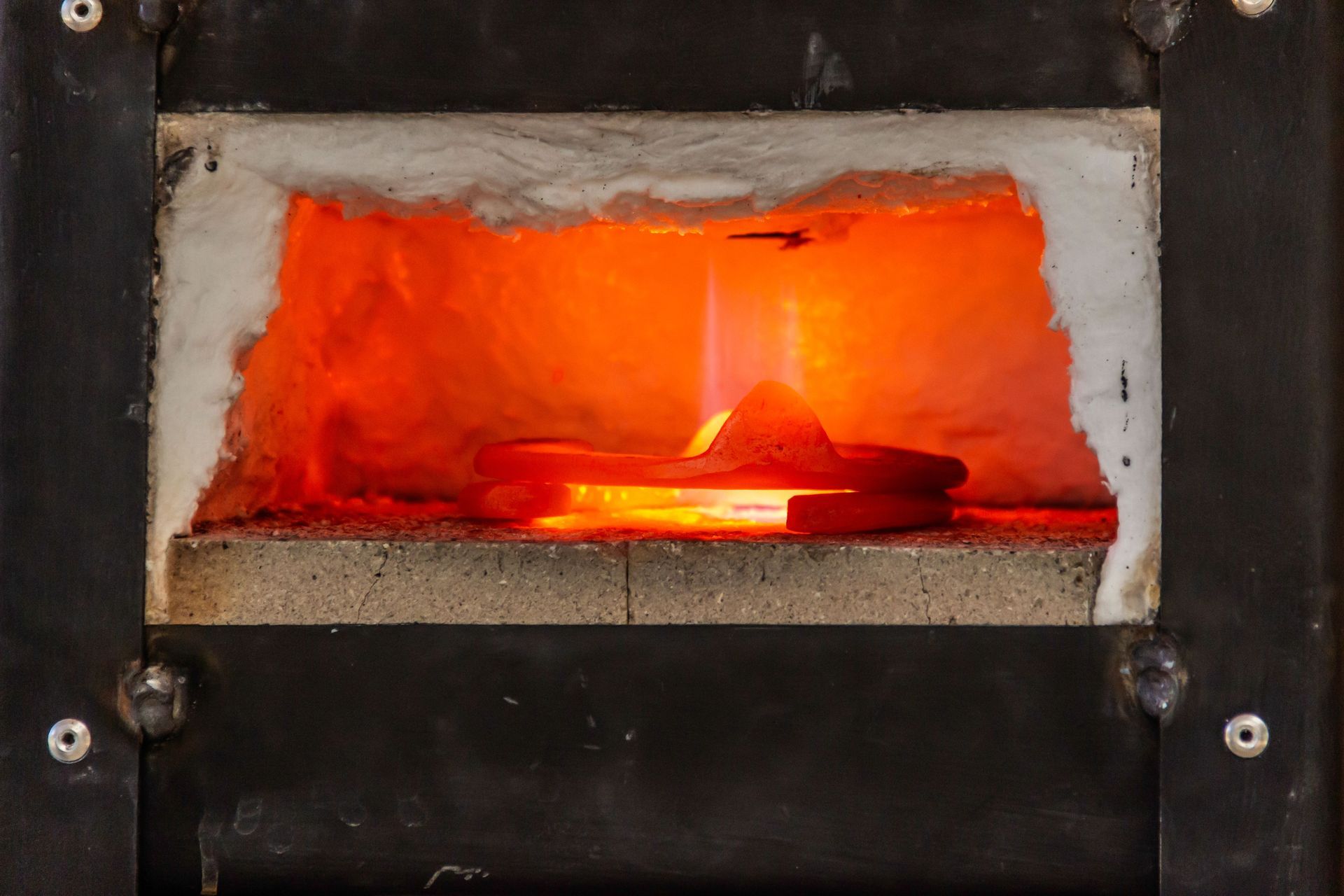
What Temperature Does Powder Coating Actually Need?
For many common thermoset powder coatings, you will see cure schedules somewhere in the general range of 350°F to 400°F. Other conventional systems may fall outside that range, while newer low-cure powders can operate considerably lower.
This is why a professional coating shop should not simply say, “Everything gets baked at 400.”
The correct answer comes from the powder manufacturer’s Technical Data Sheet, or TDS.
That document may specify something like:
10 minutes at 400°F PMT
or it may provide several approved combinations of time and temperature.
The Powder Coating Institute puts the principle clearly:
“There are two conditions that must be met to achieve proper cure of a powder coating.”
Those conditions are temperature and time.
You need both.
Oven Temperature and Part Metal Temperature Are Not the Same Thing
This is probably the most misunderstood part of powder coating.
Imagine you have a heavy steel component sitting at 70°F and place it into an oven running at 400°F.
The oven air might already be 400°F, but the steel is still approximately 70°F when it enters.
It starts absorbing heat.
After a few minutes, the steel might be 200°F. Later it might reach 300°F. Eventually, it approaches the required 400°F Part Metal Temperature.
Only then has the part reached the temperature specified by the powder manufacturer.
If that process takes 15 minutes and the powder requires another 10 minutes at PMT, your total oven cycle could be closer to 25 minutes.
That is why 10 minutes of cure time does not necessarily mean 10 minutes of total oven time.
Why Do Some Parts Heat Much Faster Than Others?
Thermal mass changes everything.
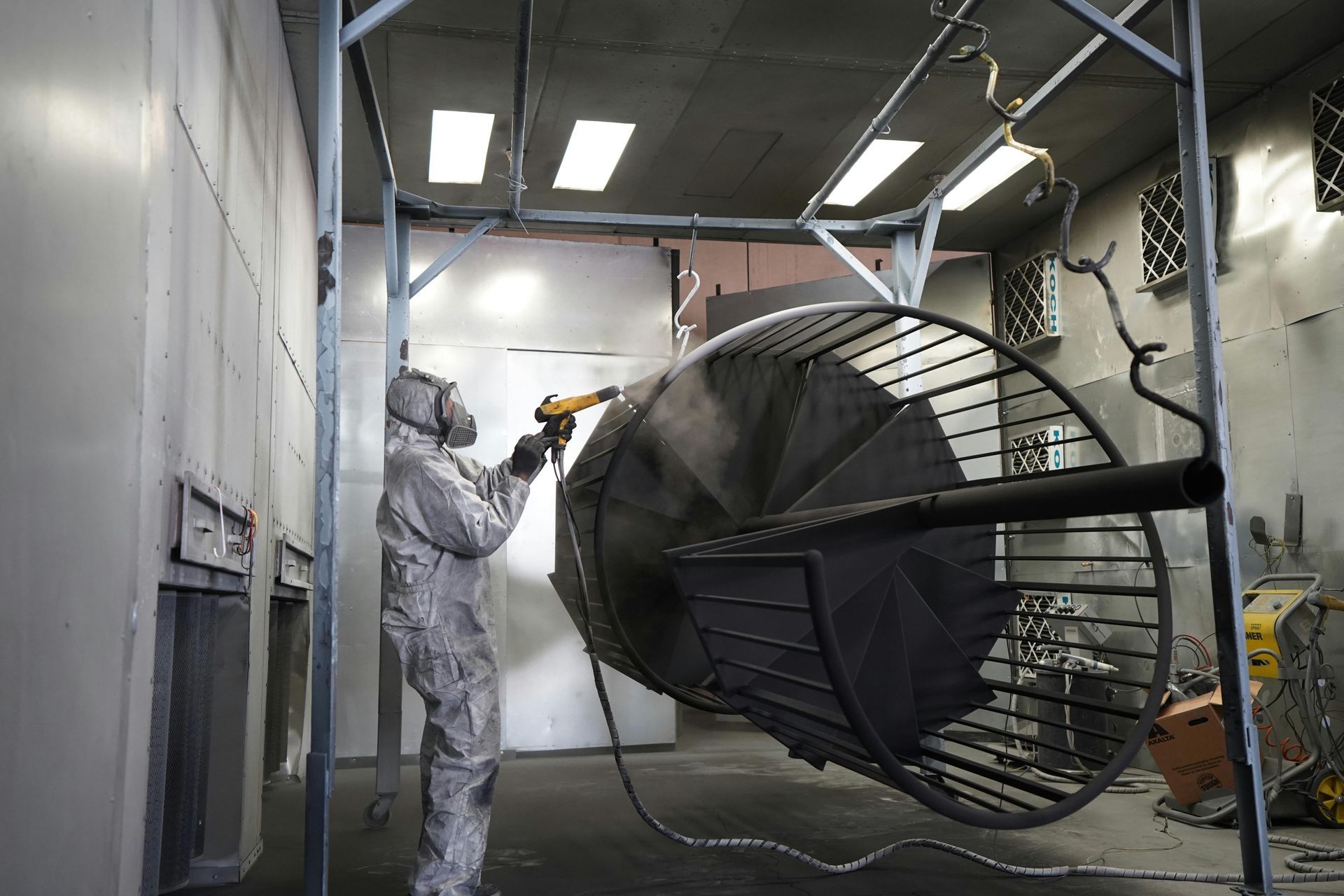
A thin steel bracket can heat quickly because there is relatively little material absorbing energy. A heavy fabricated staircase base, industrial frame, cast-iron component, or aluminum wheel may take considerably longer.
You can even have different heating rates within the same part.
Consider a fabricated railing with thin pickets welded to heavy base plates. The pickets may reach the target temperature before the mounting plates do.
If you only measure the fastest-heating section, you could incorrectly assume the entire assembly is cured.
This is one reason professional shops pay attention to the coldest or slowest-heating areas of complex parts.
At Full Blown Coatings, this becomes particularly important with large fabricated metal and automotive components. The oven may be at the correct temperature long before the heaviest section of the project reaches its required PMT.
What Actually Happens When Powder Coating Cures?
Before curing, the powder is simply a dry coating sitting electrostatically on the part.
As the temperature increases, several things begin happening.
The powder starts to melt. Individual particles begin flowing together into a continuous film. The surface levels, gloss and texture develop, and thermoset powder begins chemically cross-linking.
Cross-linking is what transforms the loose powder into the durable finish you recognize as powder coating.
Once properly cured, the coating can develop the hardness, adhesion, flexibility, chemical resistance, and impact performance intended by the manufacturer.
This is why curing is more than simply “drying” the coating.
You are using heat to drive a chemical reaction.
Can You Cure Powder at a Lower Temperature for Longer?
This question comes up frequently in DIY discussions and coating forums.
The answer is sometimes, but not automatically.
Some powder manufacturers specify multiple acceptable cure schedules. For example, a formulation might allow a higher temperature for a shorter period or a lower temperature for a longer period.
If those options appear on the manufacturer’s TDS, you have a defined cure window.
What you should not do is assume that any powder designed for 400°F can simply be baked at 300°F for an extra hour.
Coating chemistry does not necessarily work that way.
The resin and cross-linking system need enough thermal energy to complete the reaction. If the manufacturer does not approve a lower-temperature schedule, extending the time may still leave you with an undercured coating.
What Happens If Powder Coat Is Undercured?
Undercure is especially deceptive because the finish may look normal.
You might see a smooth surface, strong color, good gloss, and seemingly complete coverage.
That does not prove the coating has fully cured.
An undercured finish may have reduced hardness, weaker chemical resistance, lower abrasion resistance, poorer adhesion, or premature chipping and wear.
That is why Full Blown Coatings emphasizes that a part can look good when it leaves the shop and still fail later if cure was incorrect.
If the metal never reached the target PMT, the coating may never have received the energy needed to complete the intended chemical reaction.
Can You Overbake Powder Coat?
Yes.
More heat is not automatically better.
The Powder Coating Institute defines overbake as applying more heat through time, temperature, or both than the coating requires.
Depending on the chemistry, excessive heat can cause color changes, reduced gloss, yellowing, brittleness, or changes in performance.
Some colors are more sensitive than others. Whites, light colors, clear coats, metallic effects, and specialty powders may show visible changes sooner than forgiving dark colors.
This is another reason a professional shop should work inside the manufacturer’s cure window instead of simply leaving every part in the oven longer “to make sure.”
Does Powder Coating Cure as It Cools?
Another common question is whether a slightly undercured part will finish curing once it leaves the oven.
You should not rely on that.
The important cure reaction is driven by the specified time and temperature relationship. Although a hot part continues carrying thermal energy as it begins cooling, the process should be established around the manufacturer’s approved cure schedule rather than hoping residual heat finishes the job.
If a coating is confirmed to be undercured, some systems may permit additional heating or post-curing, but that decision should be based on the powder manufacturer’s guidance.
What About Wheels and Cast Aluminum?
Wheels are a good example of why cure temperature becomes more complicated in the real world.
A substantial cast-aluminum wheel has enough thermal mass that it may take time to reach PMT. Castings may also contain microscopic porosity that traps oils, moisture, or gases.
When the wheel heats up, those trapped materials can escape.
If they escape while the powder is flowing and curing, they can create defects such as pinholes, bubbles, craters, or rough spots.
This process is called outgassing.
For appropriate castings, a professional shop may pre-bake the bare component before applying powder. TIGER Coatings specifically discusses heating porous substrates before coating to drive out trapped gases.
That additional thermal step can help address a problem that would otherwise appear only after the new finish was already on the part.
Can Powder Coating at 400°F Damage Metal?
For ordinary mild steel and many common aluminum components, conventional powder coating temperatures are generally compatible with the substrate.
But the correct answer is not that all metal is safe at 400°F.
You should use more caution with components involving:
heat treatment, springs, precision tolerances, brazed joints, adhesives, rubber, plastics, electronics, seals, bearings, or engineered assemblies.
Heat-treated aluminum is one example where the metallurgical condition of the part may matter. If a component has safety-critical mechanical properties, the part manufacturer or qualified engineer should establish how much thermal exposure is acceptable.
This becomes especially important with automotive, aerospace, racing, and engineered industrial parts.
What Are Low-Temperature Powder Coatings?
Powder technology is expanding beyond traditional cure schedules.
The Powder Coating Institute now describes low-bake formulations capable of curing around 250°F in some applications. Specialized technologies can go even further when working with heat-sensitive materials.
Why does that matter?
Lower cure temperatures can reduce energy consumption, shorten production cycles, and expand the types of substrates that can be powder coated.
But low-temperature powder is specifically formulated to cure that way.
You cannot turn standard powder into low-bake powder by turning the oven down.
How Does a Professional Shop Know the Part Is Hot Enough?
For simple work, surface-temperature measurements may provide useful information. Infrared thermometers are convenient, but reflective surfaces, emissivity, distance, and viewing angle can affect readings.
For more controlled work, thermocouples can be attached to the part so the actual metal temperature is measured during the cure cycle.
Professional oven profiling takes that concept further.
A data logger can track temperature throughout the oven cycle and show exactly how quickly different areas heat, when they reach PMT, and how long they remain inside the required cure window.
The Powder Coating Institute recommends tools such as a Datapaq or similar profiling device when accurate cure verification is needed.
For large weldments, production parts, and demanding coating specifications, this gives far more useful information than simply reading the oven thermostat.
Why Temperature Is Only Part of Quality Powder Coating
Perfect cure cannot rescue poor surface preparation.
If rust, grease, oxidation, old coating, or contamination remains under the powder, hitting the exact PMT will not magically create strong adhesion.
That is why media blasting, cleaning, pretreatment, proper powder application, and cure control should be treated as one connected metal-finishing process.
The same is true in reverse. Excellent blasting cannot compensate for an undercured coating.
Every stage supports the next one.
Final Thoughts
The temperature required for powder coating is not simply 400°F.
For many conventional powders, temperatures in the 350°F to 400°F range are common, but the actual cure schedule must come from the specific powder manufacturer.
The most important technical concept is Part Metal Temperature.
If a coating requires 10 minutes at 400°F PMT, the part normally needs to actually reach 400°F before that required cure time begins. A thick wheel, heavy steel plate, or fabricated assembly may therefore spend considerably longer in the oven than a thin bracket using the exact same powder.
That difference is one of the reasons professional powder coating involves much more than spraying color onto metal and putting it into a hot oven.
A properly finished part needs the right surface preparation, powder chemistry, film thickness, actual metal temperature, cure time, and quality control.
When all of those pieces are correct, you are not simply getting a coating that looks cured. You are getting a coating that has gone through the thermal process required to perform the way it was designed to.
Share This Post!