wrought iron paint vs powder coat | what you need to know
TL;DR:
- Wrought iron paint is usually a liquid-applied coating system designed to protect metal and improve appearance, often with brush, roller, or spray application.
- Powder coat is usually better for durability when the part can be properly removed, blasted, coated, and cured in a professional setup.
- Paint is usually easier to apply and easier to touch up, especially for on-site repairs, fixed railings, gates, and older metal that is hard to remove.
- Powder coating is usually the better choice for new or removable metalwork when you want a more uniform, harder, longer-lasting finish.
- The real answer depends on the project. If the metal is large, highly visible, or too important to risk, powder coating usually makes more sense than trying to paint or coat it casually.
- For most staircases, gates, and railings, the biggest difference is not just paint vs powder. It is the prep, blasting, and cure behind the finish.
Wrought Iron Paint vs Powder Coat: Which Finish Makes More Sense for Your Metal Project?
If you are comparing wrought iron paint vs powder coat, you are really comparing two very different finish systems. Both can make metal look cleaner and more finished. Both can protect the surface. But they do not go on the same way, they do not age the same way, and they do not make sense for the same kinds of projects. If you want to understand the bigger process behind powder coating before choosing, it helps to look at How Powder Coating Works, Media Blasting, and Industrial and Commercial Powder Coating first. Those pages give a clearer picture of what actually separates a durable finish from one that just looks decent on day one.
A useful expert quote from Full Blown Coatings says it simply: “Powder coating isn’t just about looks, it’s about performance.” That matters in this comparison because a lot of people choose a finish based on color or convenience first, then only later realize that maintenance, prep, and durability were the real decision.
What Wrought Iron Paint Usually Means
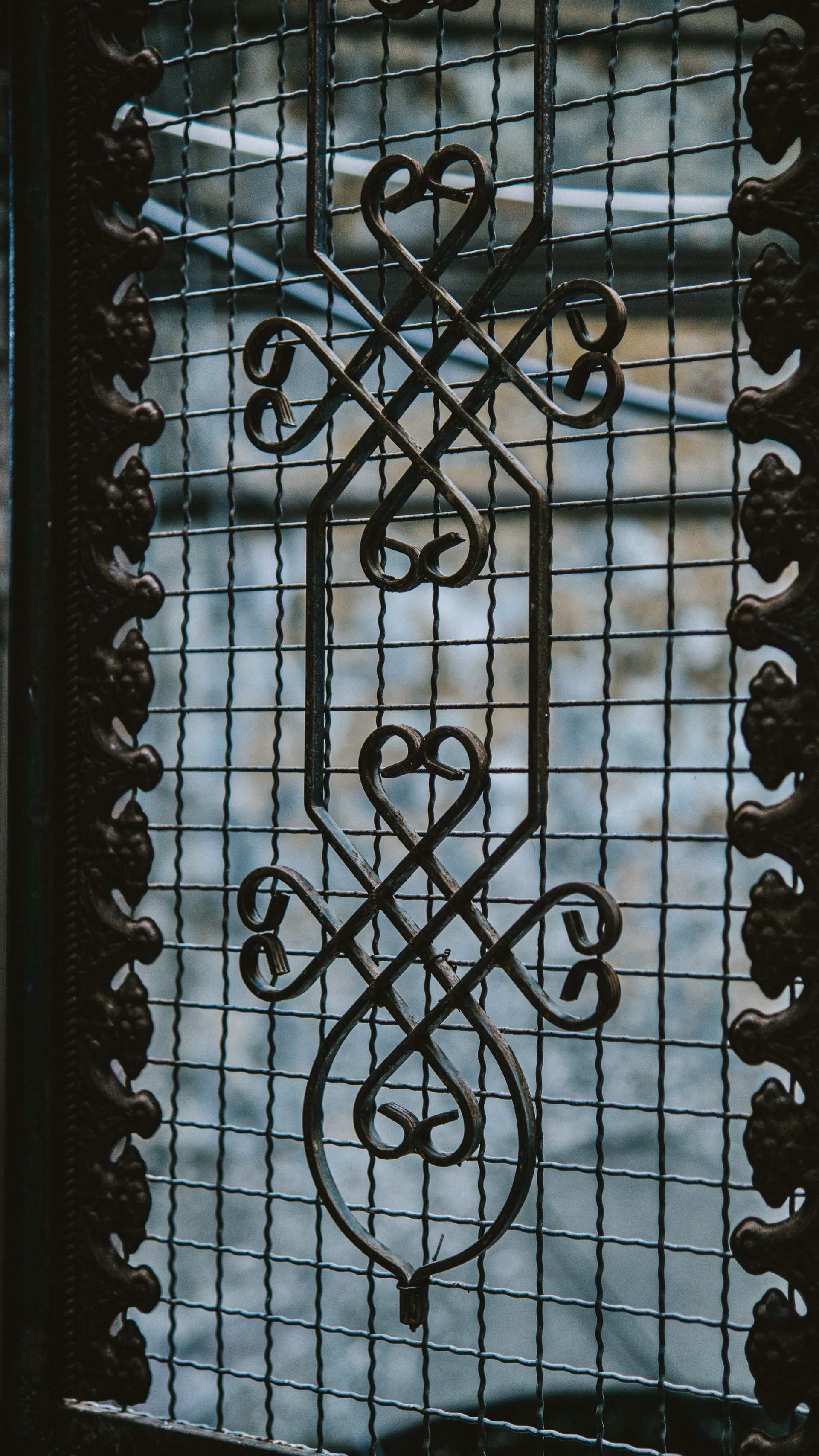
When most people say wrought iron paint, they usually mean a liquid-applied coating system designed for metal railings, gates, fences, staircases, and decorative ironwork. It might be brushed on, rolled on, or sprayed on. In many cases, it is chosen because it is familiar, easier to buy locally, easier to touch up, and easier to apply on site.
That last point matters. Paint is often the more practical option when:
- the part is already installed
- the metal cannot be removed easily
- the owner wants a repairable finish
- the project needs a faster field-applied solution
There is nothing wrong with wrought iron paint when it is chosen for the right reason. The problem is that people sometimes expect paint to perform like powder coat without giving it the prep or maintenance that would help it get there.
What Powder Coat Usually Means
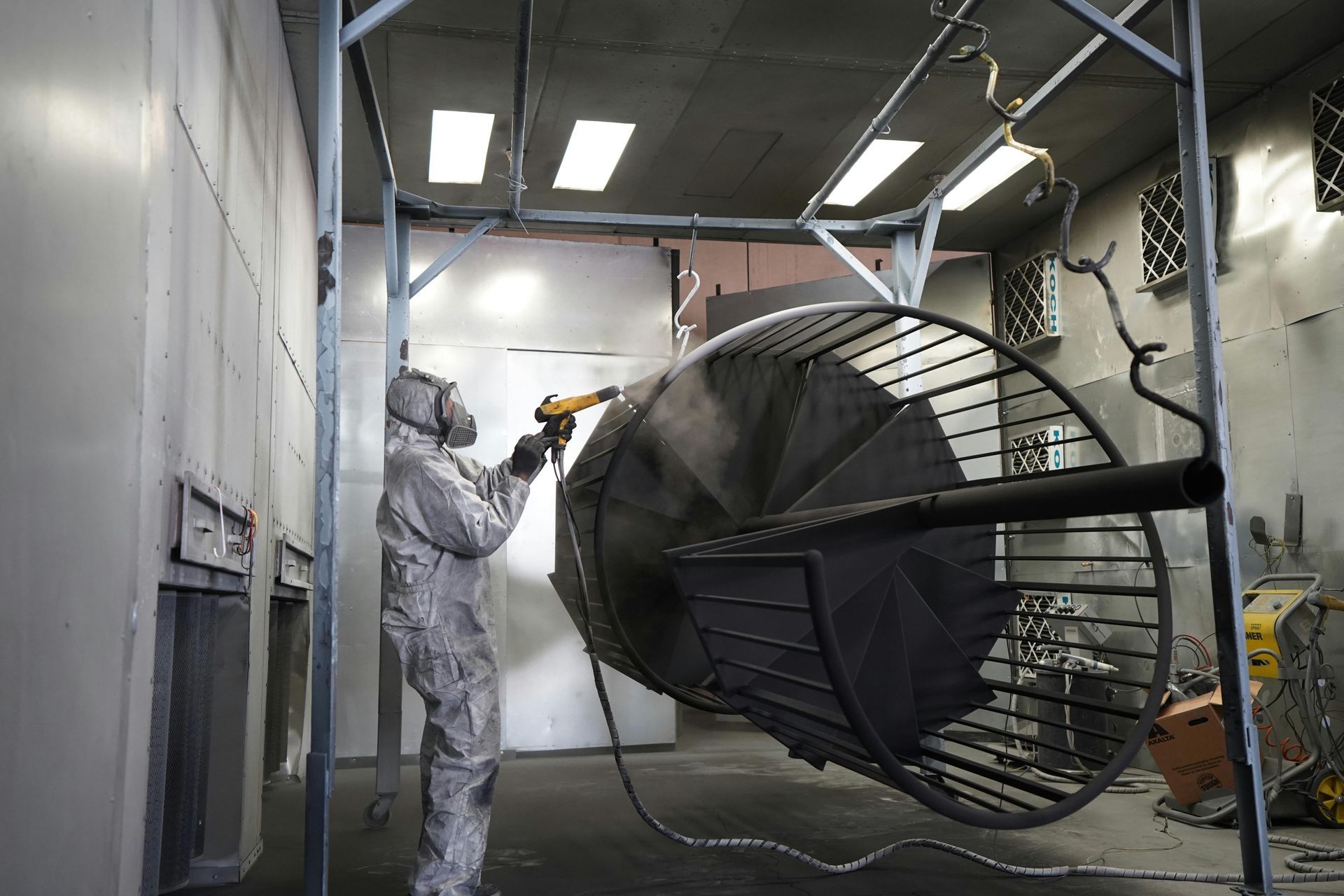
Powder coating is a different process altogether. Instead of brushing or spraying a liquid coating onto the metal and letting it dry, powder coating uses a dry powder that is electrostatically applied to a grounded metal part and then cured under heat. That cure process turns the powder into the final protective film.
That means powder coating is usually best suited for parts that can be:
- removed from the site
- cleaned thoroughly
- blasted or otherwise prepped correctly
- coated in a controlled environment
- cured in an oven large enough for the part
When all of those conditions are met, powder coating usually produces a finish that is thicker, harder, and more uniform than conventional paint.
The Biggest Difference: Process
A lot of the confusion in wrought iron paint vs powder coat comes from the fact that people judge them only by the final color. If both are black, both can look similar from a distance. But the process behind them is completely different.
Paint is often more flexible from a logistics standpoint. It can be applied on site. It can be patched later. It is often cheaper to start with.
Powder coating is more demanding from a process standpoint. It needs the right preparation, a controlled application setup, and the right cure. But if the project fits that system, the result is often stronger and more consistent.
This is why the answer is not just “powder is always better” or “paint is always easier.” The better question is whether the project is actually a good fit for powder coating.
Where Paint Usually Has the Advantage
Paint usually wins in a few specific situations.
On-site work
If the metal is already installed and difficult to remove, paint is often the more realistic option. A fixed exterior railing, for example, may not make sense to fully remove just to run through a powder coating process.
Easier touch-up
If a finish is likely to get scratched in small isolated areas and the owner wants easy maintenance, paint is usually simpler to repair. That does not make it tougher. It just makes it easier to maintain in small stages.
Lower upfront barrier
Paint usually requires less specialized equipment. You do not need a powder gun, oven, and blasting setup to get started. That matters to homeowners and contractors trying to keep a project moving.
Where Powder Coat Usually Has the Advantage
Powder coat usually wins when the project can be processed correctly from beginning to end.
Better durability
When the part is properly prepped, coated, and cured, powder coating usually gives you a tougher finish than paint. It tends to resist wear better and often holds up longer before needing real attention.
Better consistency
A professionally applied powder coat often gives a cleaner, more uniform appearance across large visible surfaces. This matters a lot on staircases, gates, and railings where the finish is part of the overall design.
Better fit for premium metalwork
If the project is high-visibility and meant to look refined, powder coating often has the edge because it helps the final piece feel more intentional and complete.
Why Prep Matters More Than Either Finish Type
This is where a lot of finish comparisons go wrong. People compare paint vs powder as if the coating itself is the whole story. It is not.
Both systems depend heavily on prep.
If the metal has rust, old coating failure, oils, scale, or contamination, neither finish will live its best life. That is one reason blasting matters so much. If you skip the real prep conversation, the comparison becomes almost meaningless.
A part that is only “sort of clean” may accept a finish, but that does not mean it is truly ready for one. This is especially important on wrought-iron-style projects because they often have:
- weld transitions
- edges
- decorative details
- high-touch surfaces
- outdoor exposure
- old finish layers from previous repainting
The more visible and important the project is, the more prep starts deciding the outcome.
A Staircase Project That Shows Why This Comparison Matters
A good example is a staircase project in Utah.
A customer had a custom staircase being built and originally planned to powder coat it themselves. At first, the idea made sense. They had watched enough videos to feel like the process looked manageable. They liked the idea of taking control of the finish. And on paper, the staircase being black seemed simple enough.
But once the fabricated sections were real and sitting in front of them, the whole project changed.
This was not a small hobby part. It was a staircase. It was highly visible. It had long sections, weld transitions, corners, and surfaces that would be seen every day. The customer realized very quickly that the finish was going to matter just as much as the fabrication.
That was the turning point.
Once they thought through the actual process, a few realities became obvious:
- the sections were too large for a home oven setup
- the prep standard was much higher than expected
- the finish would be too visible to gamble on
- if it went wrong, they would either live with it or pay to redo it
That is when they brought the staircase to Full Blown Coatings.
At that stage, the comparison between paint and powder coating became much easier to answer. Could it have been painted? Yes. Could they have attempted to coat it themselves? Also yes. But if the goal was a finish that felt like architecture instead of a compromise, powder coating with proper prep was the better answer.
Why Powder Coat Made More Sense on That Staircase
A staircase is one of the clearest examples of where powder coat often wins.
It is too visible for a weak finish.
It is too large for casual DIY coating.
It is too important to redo lightly.
And it is touched and seen too often to treat as an afterthought.
Once the staircase moved through real blasting, professional application, and proper cure, the finish stopped feeling like a coating choice and started feeling like part of the design of the home.
That is one of the biggest strengths of powder coating. On the right project, it does not just protect the metal. It makes the metal feel complete.
When Paint Still Makes More Sense
Even with all of that, paint still has a real place.
If you are dealing with:
- fixed exterior wrought iron that is hard to remove
- an older railing that needs local repairs
- a fence or gate where spot maintenance is expected
- a project where easy touch-up matters more than maximum finish toughness
then paint may still be the smarter choice.
This is especially true when the logistics of full removal, blasting, coating, and reinstall simply do not make sense.
How to Choose Between Wrought Iron Paint and Powder Coat
A few questions usually make the answer much clearer.
Can the part be removed and processed properly?
If yes, powder coating becomes much more realistic.
Is the finish going to be highly visible?
If yes, finish consistency matters more, which usually helps powder coating.
Will it need small touch-ups over time?
If yes, paint may be easier to live with.
Are you optimizing for convenience or long-term finish quality?
That question usually tells you a lot.
Is the project too important to gamble on?
If it is a centerpiece, a premium gate, or a custom staircase, that usually pushes the answer toward a more controlled powder coating process.
Final Thoughts
When you compare wrought iron paint vs powder coat, the best answer is not that one system wins every time. The better answer is that each finish has a different kind of strength.
Wrought iron paint is usually easier to apply, easier to touch up, and easier to use on installed metal.
Powder coat is usually better when you want a stronger, more uniform, more durable finish and the part can actually go through the full process the right way.
For a staircase, gate, or railing that matters, the deciding factor is usually not just the finish type. It is whether the project deserves a finish system that matches the importance of the work. On the right project, that is where powder coat pulls ahead.
Share This Post!