When Powder Coating Needs to Be Redone | How to Tell, Why It Fails
TL;DR
- Powder coating usually needs to be redone when it stops protecting the metal, not just when it stops looking perfect.
- The biggest warning signs are cracking, peeling, bubbling, rust creeping under the finish, and chips that keep spreading.
- A small isolated blemish can sometimes be repaired, but broad failure usually means the old coating has to be stripped and the part recoated correctly.
- Most redo jobs fail for the same few reasons: poor prep, weak edge coverage, age, weather, impact, or moisture working its way under a compromised finish.
- On outdoor metal like gates, fences, and railings, blasting and prep matter just as much as the new powder itself.
- A proper redo is not a patch. It is a full process that starts with removing failure, cleaning the metal, rebuilding the surface, and recoating it the right way.
What the Recoating Process Looks Like
When powder coating is doing its job, you usually do not think much about it. The metal looks clean, the finish feels solid, and the part keeps working the way it should. The question only shows up later, when the coating starts changing in ways that are hard to ignore. Maybe you notice cracking around a joint. Maybe the finish starts peeling at an edge. Maybe rust begins showing through in spots that used to look sealed. That is when the real question becomes whether you are looking at a cosmetic issue or whether the coating has reached the point where it needs to be redone.
That distinction matters because powder coating is not just about appearance. Full Blown Coatings puts it simply on its homepage: “Powder coating isn’t just about looks, it’s about performance.” The same page also describes Full Blown as a full-service sandblasting and powder coating shop, which is exactly the mindset that matters when a finish is failing. Once a coating stops performing, the metal underneath usually starts paying the price.
What It Really Means to Redo Powder Coating
Redoing powder coating is not the same thing as touching up a scratch. A real redo means taking the finish problem seriously enough to treat the coating as a whole system again. That usually includes:
- removing or stripping the failed coating
- cleaning and evaluating the substrate
- blasting the metal back to a stable surface
- applying a new finish with the right film build
- curing it correctly
That is why people who search for recoating or repair often end up needing more than a quick cosmetic fix. Once the coating is cracking or peeling, the problem is usually bigger than the visible spot. The finish has already started losing adhesion, or moisture has already started working underneath it. At that point, trying to save the surface without addressing the whole system is often just a way to delay the real repair.
If you want a better picture of how the complete finish system works, Full Blown’s How Powder Coating Works page is useful because it explains the full process from electrostatic spray to oven cure. It notes that the powder is electrostatically applied to a grounded part, then cured at roughly 350 to 400 degrees so it bonds and cross-links into a tougher finish.
The Main Signs Powder Coating Needs to Be Redone
Cracking
Cracking is one of the clearest warning signs because it usually means the coating film itself is breaking down. That can show up as hairlines, splits around bends, fractures at corners, or brittle-looking failures near welds and stress points. The reason cracking matters is not just that it looks bad. Once a crack opens, moisture and contamination can start getting below the finish.
Peeling
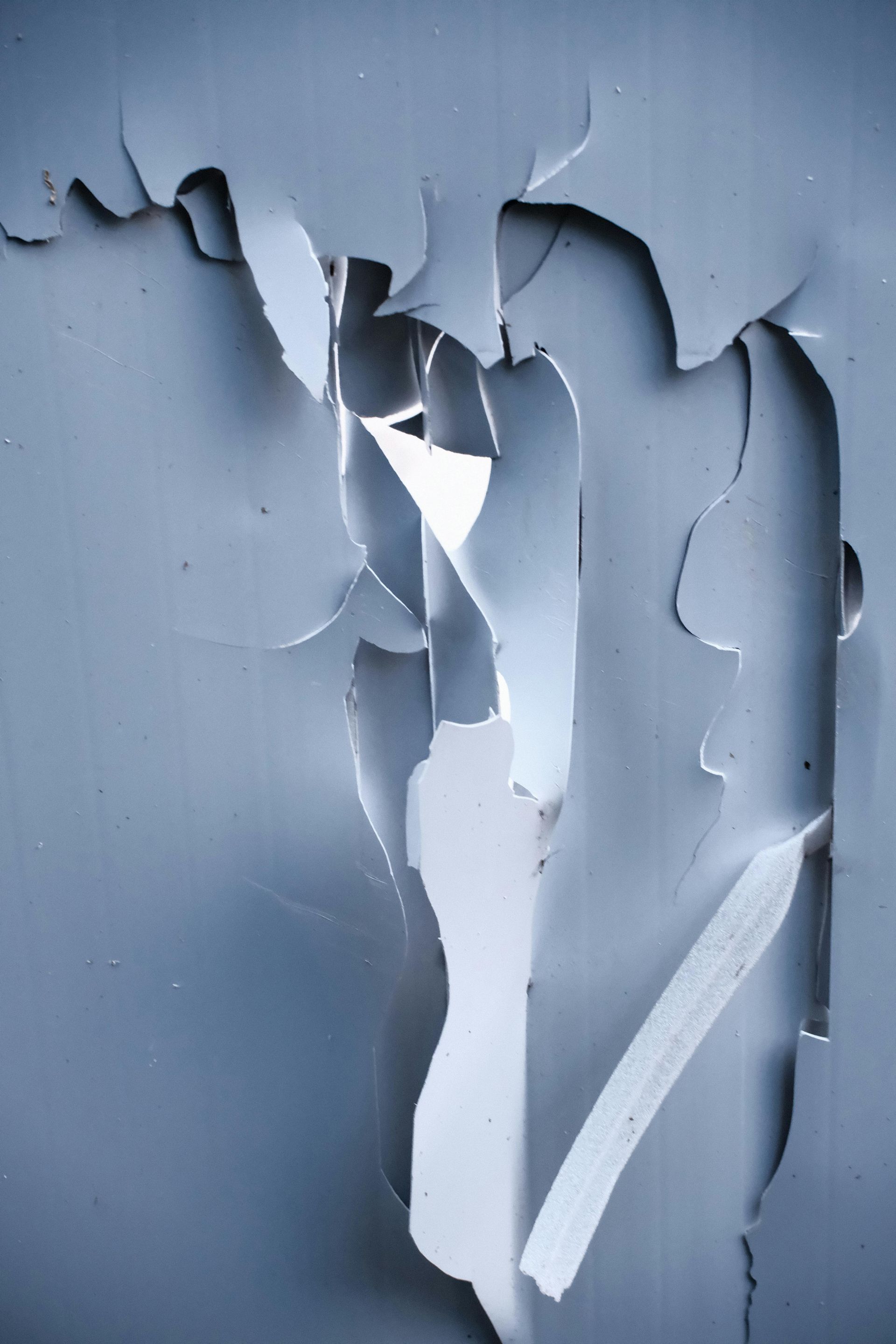
Peeling is usually even more serious. If the coating is lifting away from the metal in flakes or broader sheets, the bond has already been compromised. This is one of the strongest signs that a simple touch-up is no longer enough.
Bubbling or lifting around rust
A coating can still look mostly intact and still be failing underneath. If you see bubbling, staining, or raised areas where the metal looks like it is pushing the finish up from below, rust is often already spreading under the coating.
Repeated chips in the same areas
Not every chip means the whole job failed. A gate that gets hit by hard hardware or repeated impact may develop localized chips over time. But when the same areas keep breaking down, especially around edges, hinges, or latch zones, that usually means the coating is no longer holding together the way it should.
Surface wear that no longer looks stable
Fading alone is not always enough reason to redo the whole finish. But when fading is mixed with chalking, brittleness, roughness, or loss of cohesion, it often points to a coating that has aged past the point of reliable service.
Why Powder Coating Fails
When powder coating has to be redone, the failure usually comes from a handful of root causes.
Poor prep the first time around
This is one of the most common reasons coating fails earlier than expected. If the metal was not cleaned, blasted, or profiled correctly before the original coating went on, the finish may never have had the foundation it needed. Full Blown’s Media Blasting page makes the role of blasting very clear. It explains that different media can create different finishes, from very smooth to highly textured, and that the blasting method should fit the job.
Environmental exposure
Outdoor metal takes abuse over time. Sun, moisture, freeze-thaw movement, dust, and general weathering all work on the finish. This matters even more on gates, fences, and railings because they are exposed all year and often touched or moved regularly. Full Blown’s Powder Coating for Fences page notes that powder-coated fences are more weather resistant and durable over time, but that same use case also shows why a failing finish on exterior metal should be taken seriously.
Movement and hardware wear
A gate is one of the hardest environments for a coating to live in. Hinges move. Latches strike. Corners get touched. The finish near repeated contact points takes more punishment than the broad flat areas.
Age and finish fatigue
Even a good coating will not last forever. Over time, enough exposure and stress can wear a finish to the point where it is no longer sealing the metal the way it once did.
A Gate Project Like This Shows What Recoating Really Means
Picture a custom metal gate on a high-end home in Park City. The gate was built well and had looked great when it first went in. But years later the old powder coat had started showing real failure. Hairline cracks had developed around some of the stressed areas. The lower sections were beginning to peel. Rust was starting to creep in at edges and along a few points where the finish had already lifted.
At that stage, the issue was no longer whether the gate could be made to look a little better. The issue was whether the old finish could still be trusted.
That is the kind of project where Full Blown Coatings makes the most sense, because the company is built around both the blasting side and the coating side of the process. Its homepage lays out a process that starts with consultation and estimate, moves through project reception and scheduling, and ends with final inspection before pickup or shipping. On a gate redo, that kind of full-process thinking matters because the finish problem has to be diagnosed before it can be fixed.
What the Redo Process Actually Looks Like
Inspection first
Before anything gets recoated, the failing finish has to be evaluated. On a gate like this, that means looking at:
- where the coating is failing
- whether rust is already spreading underneath
- whether the damage is isolated or system-wide
- whether there are weak edges, worn contact points, or environmental trouble zones
Stripping the failed coating
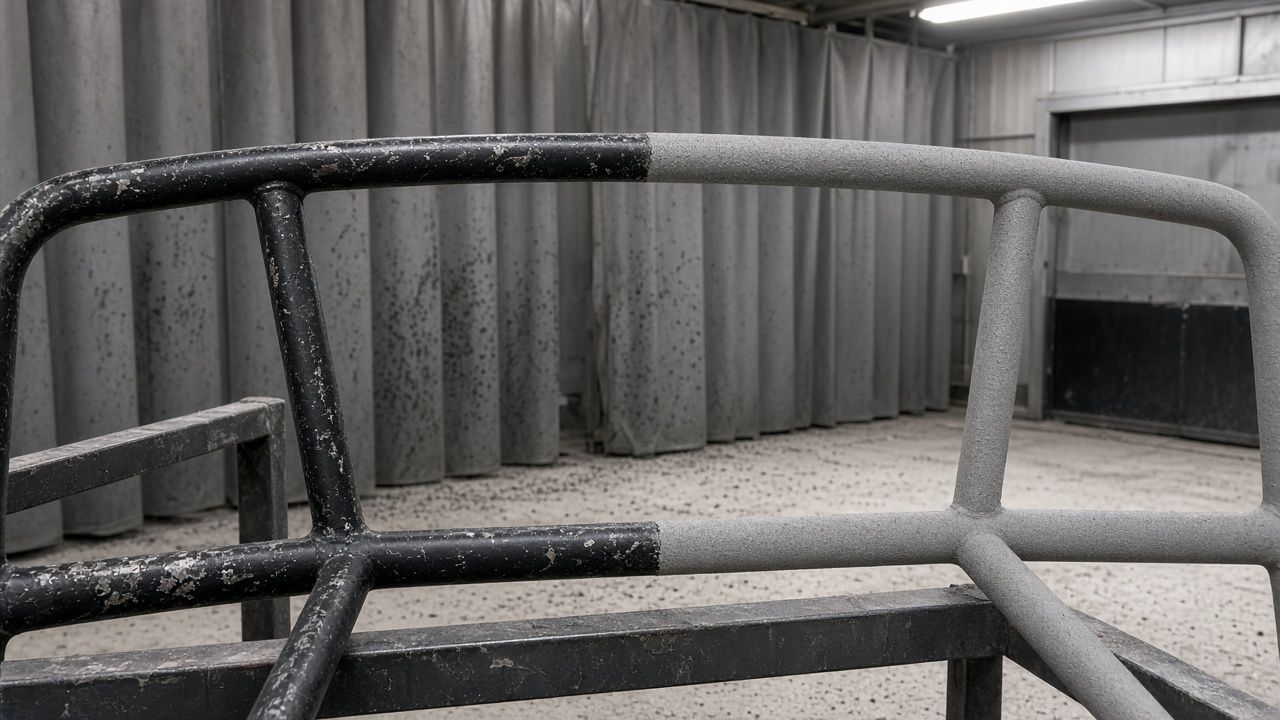
Once the finish is cracking and peeling in multiple areas, coating over it is not the answer. The old failure has to come off. Otherwise the new finish is only sitting on top of a broken layer.
Media blasting and prep
This is where the job starts becoming a real redo instead of a cosmetic patch. Full Blown’s Sand Blasting Services and Media Blasting services are especially relevant here because a redo project depends on getting back to a clean, stable substrate. The media blasting page also notes that different media can be selected for different materials and finish goals, which matters when you want to remove failure without treating every surface exactly the same way.
At Full Blown Coatings, this is usually the stage where a part starts showing what it really needs. A gate may come in looking like it only has visible peeling in a few spots, but once it is blasted properly, hidden corrosion or broader coating weakness becomes much easier to see.
Recoating with the right finish
Once the gate is clean and stable again, the new powder coat can be applied the way it should have been the first time or the way it needs to be now based on how the gate actually lives. On outdoor custom metal, color and finish choice matter, but so does choosing something that can hold up in service. Full Blown’s RAL Colors page and Custom Powder Coating page both reflect that mindset. The color page emphasizes that color, texture, and finish work together, while the custom coating page says every job demands both functionality and originality.
Cure and final inspection
After application, the gate still has to be cured and checked carefully. On something as visible and high-touch as a residential gate, the finish has to look right and hold up right.
When Repair Makes Sense and When It Does Not
A limited repair may still make sense if the damage is truly isolated and there is no rust spreading underneath the coating. A small chip or single impact mark is not automatically a full redo.
But if you are dealing with cracking, peeling, rust creep, or multiple weak areas across the same part, patching usually becomes false economy. You may spend money trying to save a finish that is already moving in the wrong direction.
What to Look for Before Hiring a Shop
If your coating is failing, the best questions are not just about color or turnaround.
Look for a shop that can explain:
- how it will strip or remove the failed finish
- what blasting method it will use
- how it handles rust under the coating
- what finish it recommends for your use case
- how it prevents the same problem from coming back
That is one reason pages like Railings, Powder Coating for Fences, and Our Gallery matter when evaluating a shop. They help show whether the company really works on visible architectural metal and exterior-use pieces, not just small anonymous parts. The railings page, for example, specifically says railings have to handle everyday wear as well as rain, sunshine, and ice, which is exactly the kind of use-case thinking a good redo project needs.
Final Thoughts
Powder coating needs to be redone when it stops behaving like a finish and starts behaving like a failure. Cracking, peeling, bubbling, rust creep, and broad adhesion loss are the big signals. Once those show up, the smart move is usually not to hide the problem. It is to strip it back, prep it properly, and rebuild the finish the right way.
If the part matters, the redo should be approached as a full restoration of the finish system. That means blasting, cleaning, recoating, and curing with the same level of seriousness you would want on the original job. And when it is done correctly, the result is not just a better-looking gate, fence, or railing. It is metal that goes back to doing its job the way it should.
Share This Post!