Rust Removal Service: How a Sandblasting Shop Handles Rust
Rusted metal comes into a blast shop in all kinds of shapes. Brackets off a truck bed, a steel frame, a piece of farm equipment, hand tools that spent too many winters in a shed, parts pulled off a project somebody refused to give up on. The owner usually asks two things before anything else: can it be saved, and what happens after the rust comes off?
That is the real job of a rust removal service. Stripping the rust is only half of it. The other half is knowing what the bare metal tells you once it is exposed, and getting it protected before it starts to turn orange again. Below is how that works at our Sandy shop, from deciding whether your part needs a shop at all to planning the drop-off.
When You Need a Rust Removal Service (and When You Don't)
Some rust is a weekend chore. A lightly rusted part with easy access can often be cleaned at home, and our
guide to cleaning rust off metal walks through which home methods work and which ones waste your time.
Professional rust removal starts to make sense when a few things show up:
- Scale and layered corrosion. When rust has built up thick enough that brushes and chemical removers cannot get you down to clean metal, you are looking at surface prep, not cleaning.
- Hard geometry. Inside corners, seams, and overlapping joints hold rust where a brush or pad cannot reach. Abrasive media can.
- Volume. One bracket is an afternoon. A bucket of them is a lot of afternoons.
- A coating is next. If the part is headed for powder coating, it has to be free of oils, dirt, paint, rust, and corrosion first. Blasting gets it there and leaves the surface ready to bond.
How a Sandblasting Shop Removes Rust
Inspect First, Blast Second
At Full Blown Coatings, every part we receive is inspected and then sand blasted or media blasted. The order matters. Inspection is how a shop learns what a part is made of, how it was built, where the corrosion is worst, and which abrasive fits. A thin panel and a thick bracket should not see the same media at the same pressure, and that call cannot be made without looking first.
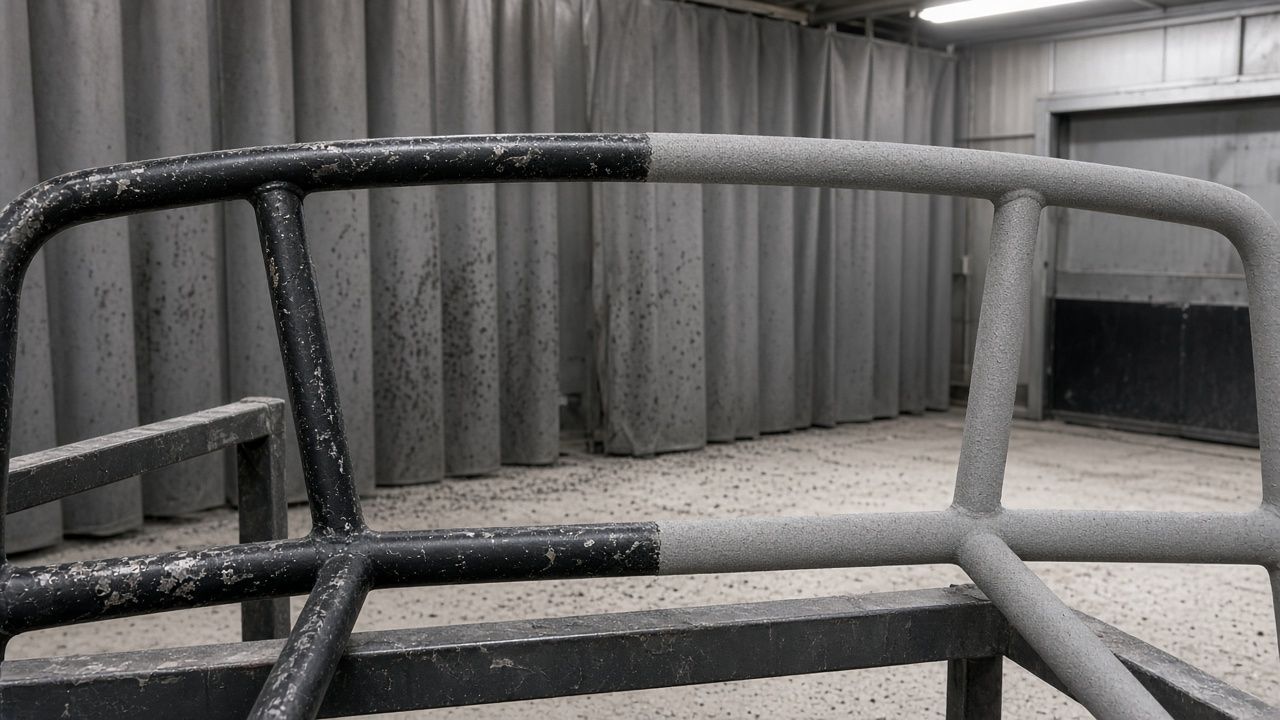
Once blasting starts, it does several jobs at once. It de-scales the surface, removes oxides and old finishes, and clears off contaminants. It also etches the metal, which is the part most people never think about. That slightly rough profile is what gives primer and powder something to grip, so rust removal done this way doubles as prep for whatever finish comes next.
What Is Left When the Rust Is Gone
Media driven at speed fractures the rust and knocks it loose along with old paint and mill scale. What is left is clean metal with an even texture. You can read more about the process on our
sandblasting services page.
Heavy sandblasting rust removal is also not a great backyard project for another reason. Abrasive blasting with sand can put respirable crystalline silica into the air, which is why
OSHA regulates silica exposure in blasting and other dusty work.
Why Media Choice Matters for Rusted Parts
Sand is not the only option. Media blasting
uses other materials, including soda, glass, walnut, green diamond, and corn cob, and the right one depends on the part sitting on the bench.
The tradeoffs are practical. Sandblasting can generate enough heat to warp thinner metal, so a thin panel may call for a different approach than a heavy plate. Media also changes the finish, anywhere from very smooth to highly textured. Bead blasting, for example, cleans without damaging the surface, which matters when the base metal needs gentle handling.
For you, the useful part is this: a good rust removal service asks about the part's construction and thickness before it picks a media. Our team helps decide the best blasting method for each piece, and if you are not sure what your part is made of, tell us that too.
What Blasting Can Reveal About Rusted Metal
Rust does not just sit on top of steel. It eats into it. Once blasting strips the scale away, pitting and thin spots often show up for the first time, and sometimes the corrosion turns out to run deeper than the surface suggested.
Our terms are clear about this. Because the condition of metal under corrosion is uncertain, Full Blown Coatings is not responsible for damage that results from blasting parts that need corrosion removed. That is not a way to dodge responsibility. If a part has rusted thin, it got that way long before it reached the blast booth, and in many cases nobody can see how bad it is until the rust is off.
What you want from a shop at that point is a straight answer. Blasting sometimes changes the plan, whether that means a different coating approach or a frank talk about whether the part is worth refinishing. It is better to know that than to put a nice finish over a part that is no longer sound.
Coating Options After Rust Removal
Freshly blasted steel does not stay clean on its own. Bare metal can start to flash rust if it sits exposed, so the smartest plan treats blasting and coating as one job rather than two errands. Parts that get stripped and then sit in a garage for weeks can start corroding again before they ever see a coating, and the blasting you paid for goes to waste.
Powder Coating Over Freshly Blasted Metal
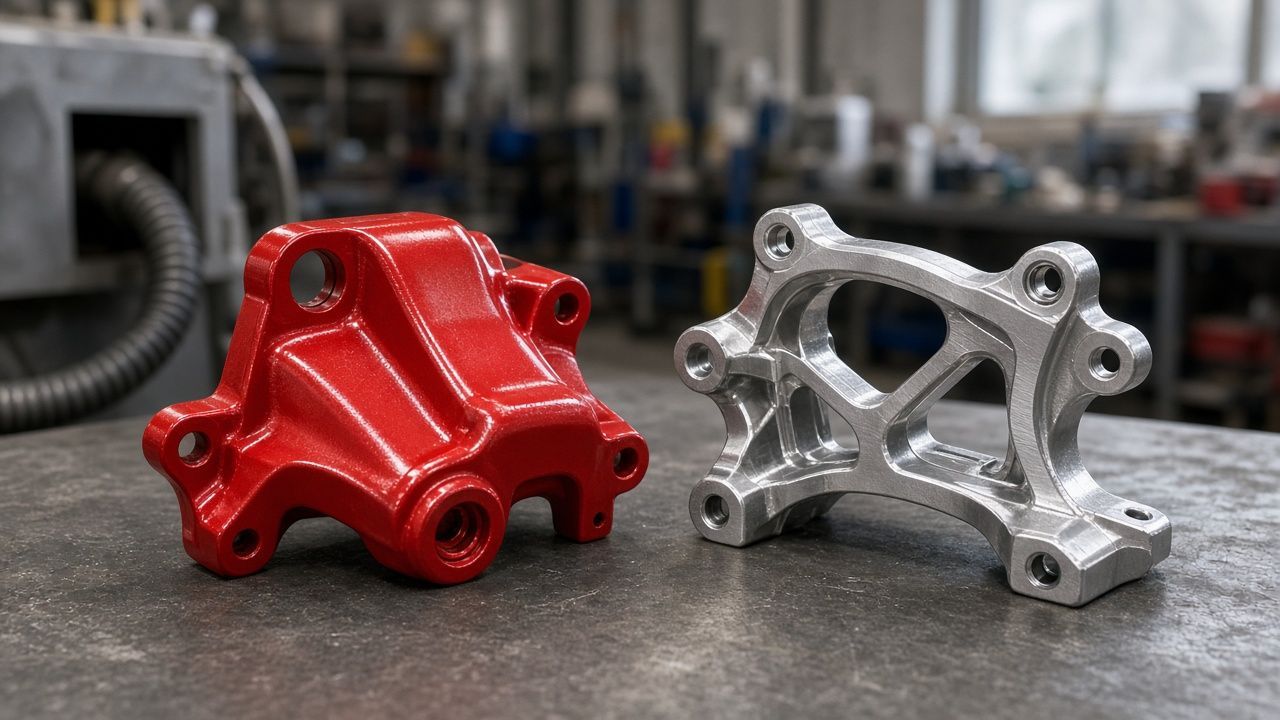
Powder coating is a natural next step after blasting because the etched profile is exactly what powder needs to bond. Clean, textured, contaminant-free metal is ready for
powder coating, and with a large curing oven, larger parts can be a fit too. Call to discuss your part.
One warranty detail is worth knowing up front. Our 12-month limited warranty on powder-coated surfaces does not apply to parts that were not sandblasted before coating. Skipping the blast also shortchanges the finish whether or not a warranty is involved. The full terms are on our
warranty page.
Why Primer Is Recommended on Outdoor Metal
Primer is recommended on all outdoor metal and all aluminum parts, and declining it voids warranty coverage. On a part that rusted once, a primer layer under the topcoat adds protection right where rust would try to come back.
Outdoor metal in Northern Utah takes a beating from freeze and thaw, strong sun, winter road salt, and sprinklers. Some of those exposures are written into the warranty exclusions: salt water, chlorine, fertilizers, and sprinkler spray can void coverage. That is worth keeping in mind when you decide where a freshly coated part will live.
How Rust Removal Pricing Works
Our
terms and conditions list the rates. Blasting runs $150 per hour with material included. There is a $120 minimum charge per order and a $40 minimum charge per color.
Because blasting is billed by the hour, the condition of the part drives the cost more than its size. A heavily scaled piece takes longer than a lightly rusted one of the same dimensions, and tight geometry takes longer than flat plate. That is why the real number comes from photos or an in-person look. If you want the bigger picture on what moves a blasting bill, see our breakdown of
sandblasting cost.
Planning Your Drop-Off
What Photos to Send
Many people searching for rust removal near me just want to know whether a shop will take their part before they load it up. Photos answer that fastest. Good estimate photos include:
- An overall shot of the whole part
- Close-ups of the worst rust and any visible pitting
- Details that show thickness and how the part is put together
- Anything attached that should not be blasted
Drop-Off, Pickup, and Delivery
Our shop is at 9479 South 500 West in Sandy, down the driveway behind Titan Cabinetry. If hauling the parts yourself is not practical, we offer
pickup and delivery within a 100-mile radius of Salt Lake City, with fees based on distance, volume, and access.
Prep Notes Before You Bring Parts In
Two things to handle before drop-off if the part is getting powder coated. Sharp edges need to be rounded beforehand, because the shop does not round them. Capped tubes need weep holes so gases can escape during curing. If a part is caked in grease, wiping off what you reasonably can helps the process along.
Get a Free Quote on Your Rusted Parts
Rust removal that holds up comes down to three things: inspecting the part, matching the media to the metal, and getting the bare surface coated before it has a chance to rust again. If you have parts ready to deal with, send photos and request a free quote through our
contact page, call 801.631.1708, or email service@fullblowncoatings.com.
Share This Post!