Soda Blasting: When Gentle Paint Stripping Fits Your Metal Part
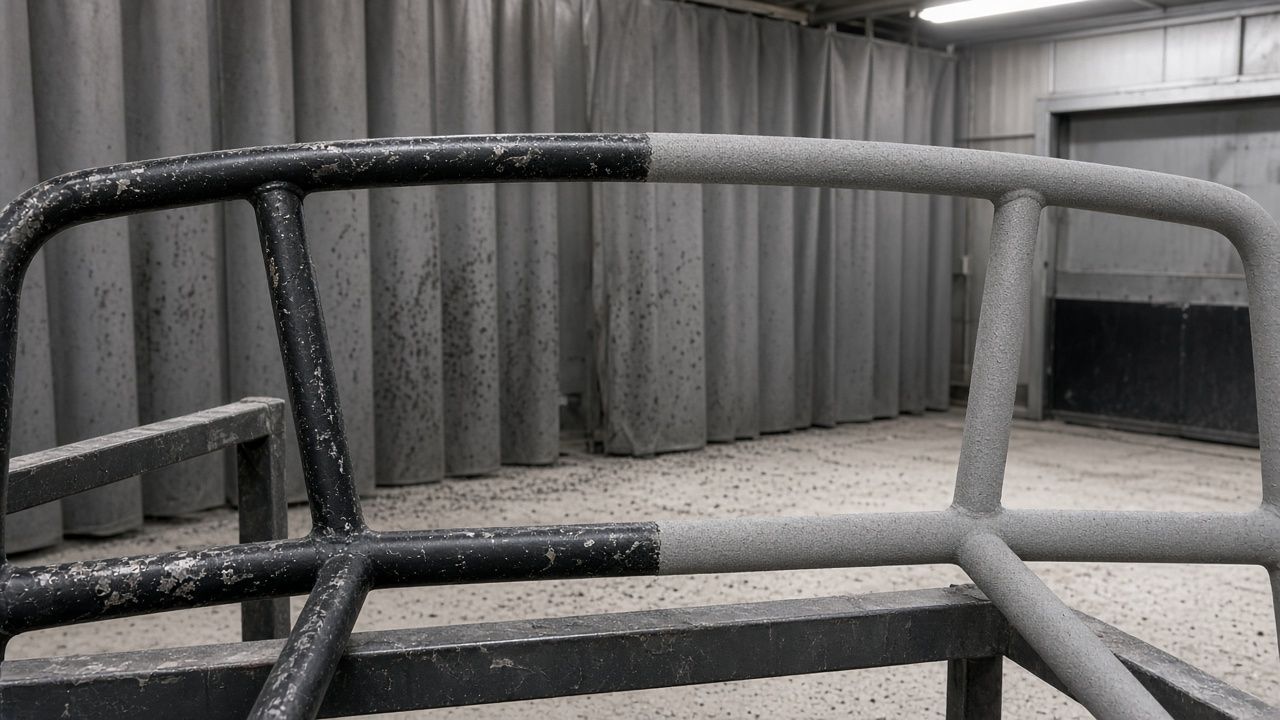
A thin hood, a fender, a fuel tank, or a delicate sheet metal bracket comes into the shop with decades of paint layered on top of it, and the first decision has nothing to do with the color that goes on later. It is which media does the stripping. Soda blasting is one of the gentlest strips we offer: it takes paint off without cutting the metal, and for the same reason it will not cut rust. On our side, we use soda blasters to strip paints without destroying the overall texture on sheet metal and thin metals, which is exactly the situation where aggressive media causes the damage people are afraid of. This post is about painted metal parts dropped off at a shop in the Salt Lake City area. If you have something else in mind, whether that is wood, brick, fiberglass, a boat, or stripping a part still attached to a vehicle, send photos and ask whether your part is a fit before you plan around soda.
What Soda Blasting Is (and What It Is Not)
Soda blasting is, at its core, exactly what it sounds like: baking soda, sodium bicarbonate, propelled at a surface with compressed air to remove paint, grease, and light contamination. The media itself is what makes it special. According to
ARMEX, a maker of soda blasting media, baking soda sits at about 2.5 on the Mohs hardness scale. That is harder than paint, grease, and most grime, but softer than the steel or aluminum underneath. When a soda particle hits the surface, its own crystal fractures on impact and takes the coating with it, while the metal beneath stays essentially untouched.
That is the one sentence answer to "what is soda blasting" if you are reading this on your phone in the garage: it is paint removal where the media destroys itself instead of your part.
It is worth clearing up a common misconception here. Soda blasting is not simply "sandblasting turned down." It is a different media with different physics and, importantly, a different result on the surface. Sandblasting and other aggressive media cut into the metal and leave behind a texture, called a profile, that coatings can grip. Soda removes coatings and leaves the metal largely as it found it. If you want the broader picture of how blasting removes oxides and old finishes and etches a surface for adhesion, our pages on
sandblasting in Salt Lake and
media blasting cover the full process.
Where Soda Blasting Shines on Metal Parts
Thin Sheet Metal, Hoods, Fenders, and Door Skins
This is the strongest fit, and it is where we put soda blasters to work. Thin steel panels warp, dent, and stretch under aggressive media, and sandblasting in particular generates heat that can distort thinner metal. Soda strips years of old paint and primer off a hood or door skin without eating into the panel or destroying the original surface texture. For anyone doing restoration work on older vehicles, that matters: you keep the panel as it was, only clean.
Aluminum, Detailed Parts, and Delicate Surfaces
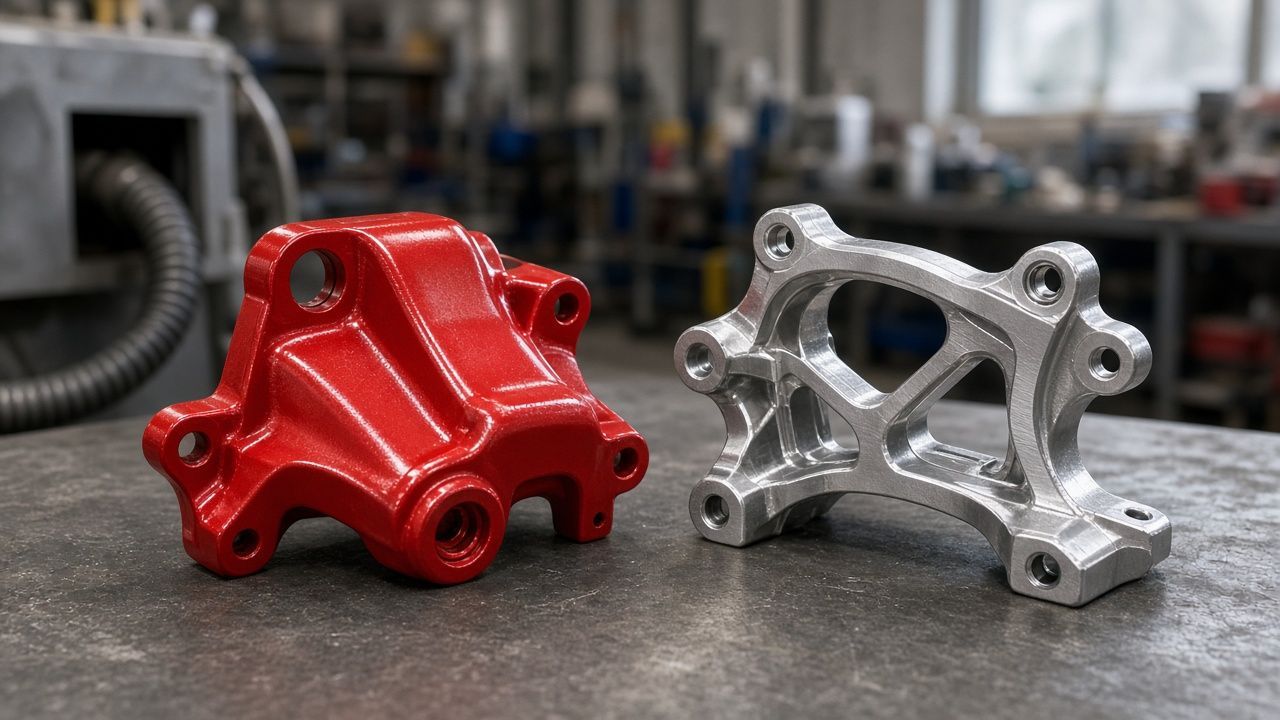
Aluminum is softer than steel and easier to damage with the wrong media, so soda is often a smart first pass on painted aluminum brackets, housings, and castings, depending on the part. The same logic applies to parts with stamped lettering, machined marks, or existing surface detail you want to preserve. Aggressive media can blur stamped numbers and soften edges over a long blast. Soda removes the coating and leaves the detail readable.
Grease and Light Contamination Alongside Paint
There is a practical bonus, and it comes straight from the media manufacturer. ARMEX notes that soda is mildly alkaline, which makes it effective on grease and oil as well as paint, so a part with both old finish and light contamination can often be addressed in one process. That is a convenience, not a magic degreasing service, but it is one less step on the right part.
The Honest Tradeoffs: What Soda Blasting Will Not Do
Here is where being straight with you saves everyone time. Because soda is softer than the metal underneath it, it leaves little to no surface profile, and plain soda is not the tool for heavy rust or mill scale. The
ARMEX Turbine formula technical data sheet makes the point: that blend adds about 10 percent hard abrasive to the soda so it can take on rust and mill scale while keeping metal removal minimal. In plain English, soda takes paint off beautifully, but if your part comes in with heavy rust or scale, that is a different media conversation.
The second tradeoff is residue. Soda leaves a fine dust behind, and that residue is water soluble, which means it rinses away. That is a feature, not a defect.
ARMEX recommends rinsing with water before recoating, for example in car restoration work, because removing the residue greatly improves how well the new coating adheres. It is a normal step, but it has to happen before anything goes on top.
This candor is also why we stock several media rather than one. If your part needs a different approach, our page on
types of sandblasting media is the natural next read.
Soda First, Then a Different Media: How Prep Chains Work
Here is the concept most DIY research misses: stripping and profiling are two different jobs. Removing old paint is one task. Creating the slightly textured surface that powder coating needs to grip is another. A part often gets soda first to remove paint cleanly, then, depending on the part and after inspection, a pass with a different media to create the profile the coating requires. We are not saying that is the sequence your part will get; the media choice follows inspection of the actual part in front of us.
What we can tell you is the process behind it. Every part that comes through for coating is inspected, then sand blasted or media blasted before anything is applied. Blasting removes oxides and old finishes and etches the surface for adhesion, and skipping it puts an otherwise good powder job at risk. If you want to see the coating side of the shop, our
powder coating page for Salt Lake City covers that end.
Two prep realities are worth knowing before you plan an outdoor part. Our published warranty terms recommend primer on all aluminum parts and all outdoor metal, and declining it voids the warranty. Parts headed outside face Utah's freeze-thaw cycles, strong sun, and winter road salt, which punish skipped steps. And if your part has sharp edges, round them before drop-off. Coatings pull thin over sharp edges, and we do not round edges for you. You can read the full published terms, including the 12-month limited warranty on powder coated surfaces for cracking, peeling, and extreme fading, on our
warranty page.
Soda Blasting vs Sandblasting vs Glass Bead and Walnut
Here is the honest version of soda blasting vs sandblasting, with two other common media alongside. Sand is the heavy hitter: it cuts rust and mill scale and leaves an aggressive profile, which is ideal on frames, chassis, and heavy-duty steel but risky on thin metal. Glass bead leaves a smooth, uniform finish and is often used where a finer result matters; our page on
glass bead blasting and its benefits for powder coating in Utah goes deeper. Walnut shell is the soft organic option, gentler than sand and used on more delicate work.
| Media | What it removes well | Profile left behind | Best fit on metal parts | Watch-outs |
|---|---|---|---|---|
| Soda | Paint, grease, light contamination | Little to no profile | Thin sheet metal, hoods, fenders, painted aluminum, detailed parts | Not for heavy rust or mill scale; residue must be rinsed before recoating |
| Sand | Heavy rust, scale, thick coatings | Aggressive profile | Frames, chassis, housings, heavy steel parts | Heat and impact can warp or ding thin metal |
| Glass bead | Light coatings and surface contamination | Smooth, uniform finish | Parts needing a refined finish or cleanup pass | Softer cut; not the choice for heavy rust or thick paint |
| Walnut shell | Paint and coatings on more delicate parts | Light to minimal profile | Softer metals and parts where a gentler organic media fits | Not for heavy rust or scale |
The practical takeaway: the right media depends on the part's metal, its thickness, the condition of the coating on it, and what goes on next. That is why we stock several media and make the call after inspection. Our
abrasive media blasting page gives the overview if you want to see how the pieces fit together.
Getting a Soda Blasting Quote and Planning Your Drop-Off
If you have been searching "soda blasting near me", here is how the process actually works so you can plan around it.
Start with photos. Text or email pictures of the part, and include what you know: the metal type and thickness if you know them, the current condition of the coating, and what finish you want next. Ask whether the part is a fit. That single step answers most questions before you load anything into a truck.
What affects the job, and therefore the price, is straightforward: the size of the part, the thickness and type of coating on it, the metal type and thickness, whether a second media pass is needed for profile, and whether primer is recommended. This is why the final price is confirmed only after the part is delivered and inspected. Our published rates are $150 per hour for blasting including material, with a $120 minimum per order. Photos get you an estimate; the firm number follows inspection.
A few drop-off logistics. We are a drop-off and pickup shop, and we do not disassemble or reassemble parts, so remove what you can before arrival and describe the part in writing, including any masking instructions, since we mask only per written instructions. If you cannot get the part to us, we offer pickup and delivery within a 100 mile radius of Salt Lake City; ask about it when you send photos. You can read the details on our
pickup and delivery page. Automotive readers will find a fuller walkthrough in our guide to
automotive sandblasting and what to know before drop-off.
Get a Free Quote on Soda Blasting for Your Metal Part
Ready to find out whether soda blasting fits your part? Ask for your free quote through our
contact page, call us at 801.631.1708, or email service@fullblowncoatings.com. Drop off at 9479 South 500 West, Sandy, UT 84070, behind Titan Cabinetry.
The ask is simple: send a few photos of the painted part, note the metal and what finish you want next, and we will tell you honestly whether soda blasting, a different media, or a soda-then-profile combination is the right call. That first decision about which media comes off is the one that protects everything that goes on after.
Share This Post!