Does Powder Coated Steel Rust? When It Holds and When It Fails
This is a subtitle for your new post

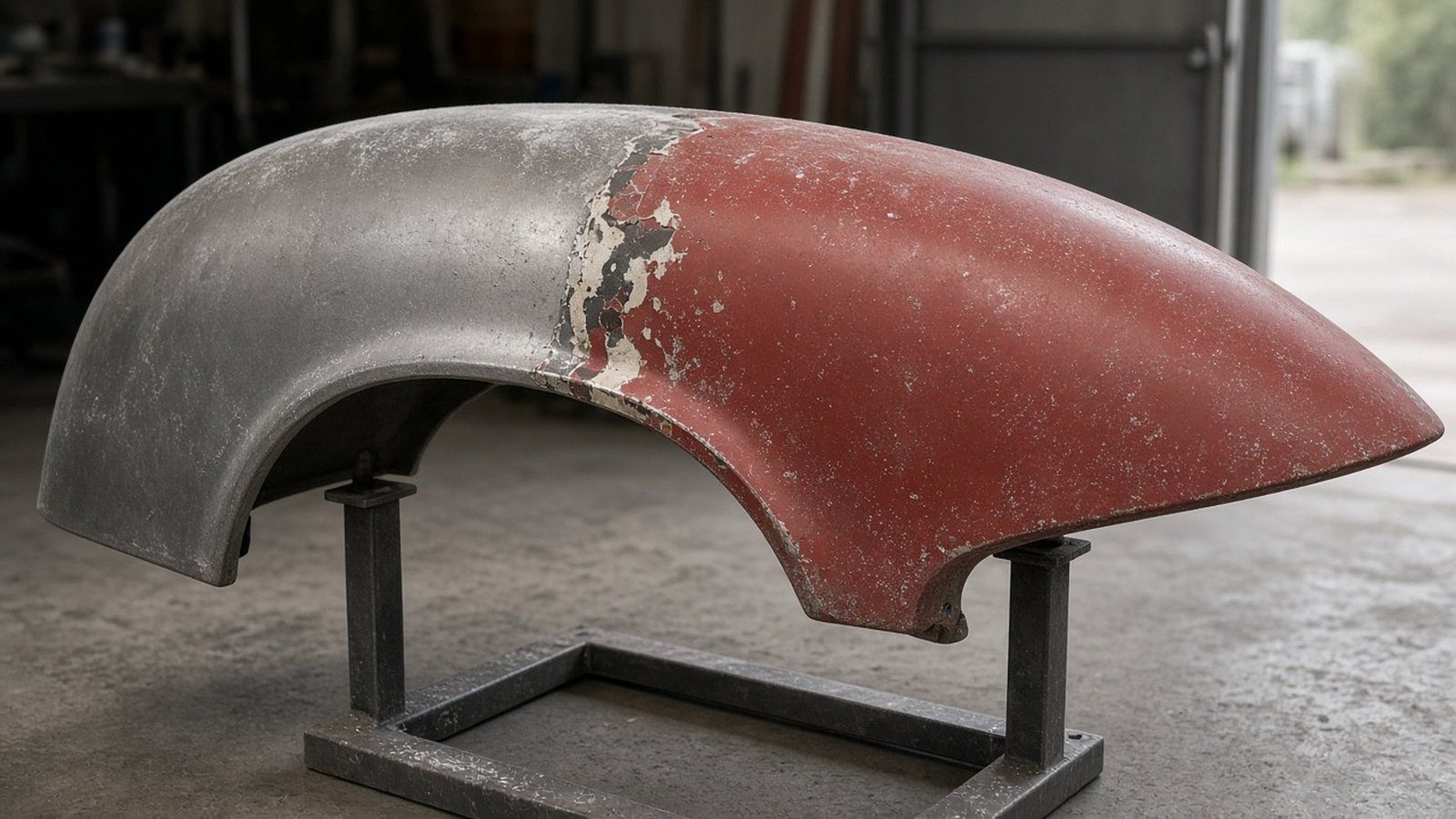
A steel bracket lands on the counter with an owner who has a fair question. The part looks great, the powder coat is smooth and evenly colored, and a thin line of orange rust is creeping out from one sharp edge. The owner points at it and asks whether the powder was supposed to stop that. We hear this a lot at the shop, and it deserves a straight answer. Does powder coated steel rust? Yes, it can. The powder film is a barrier, not a rust-proof seal, and whether it holds depends on the prep underneath it, the quality of the coverage, and what the part gets exposed to after it leaves the shop.
The Short Answer: Does Powder Coated Steel Rust?
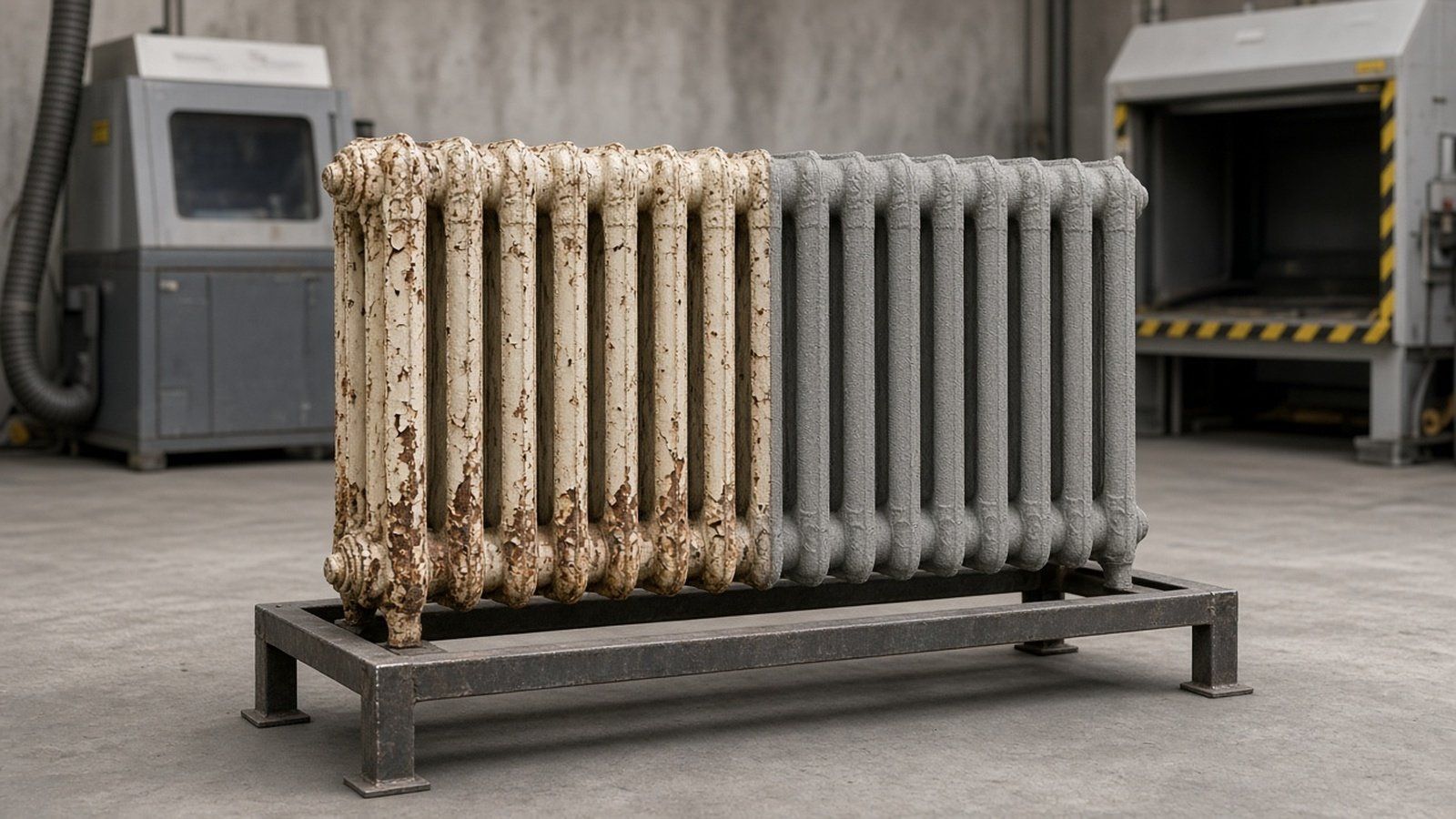
Yes, powder coated steel can still rust. The coating is a barrier film, not a sacrificial treatment and not a rust-proof conversion of the steel itself. It can last much longer than bare steel, but only while the film stays intact and moisture has no path to the metal.
Does powder coating prevent rust? It can keep rust from starting when the film is intact and the steel under it was properly prepared. It does not make steel rust-proof.
The mechanism is simple. Rust needs moisture and oxygen reaching the steel surface. A chip, a pinhole, a thin spot, or an uncovered edge gives rust a way in.
When Powder Coating Holds and Protects Steel
When people ask how well powder coating resists corrosion, they are often hoping the powder itself has some special property. In practice, the resistance comes mostly from prep and coverage quality rather than anything mysterious in the powder.
Industry guidance from ChemQuest's Joe Powder column on rust on powder-coated steel parts lands on the same points shops run into every week: cleaning and pretreatment are critical, coverage must be complete, and incomplete cure weakens the film's resistance to water and salt. The same guidance notes that pretreatment can be as straightforward as a thorough media blast or a more involved chemical process, depending on the part and its service environment. That is industry guidance, not a promise about any specific part or a Full Blown process spec.
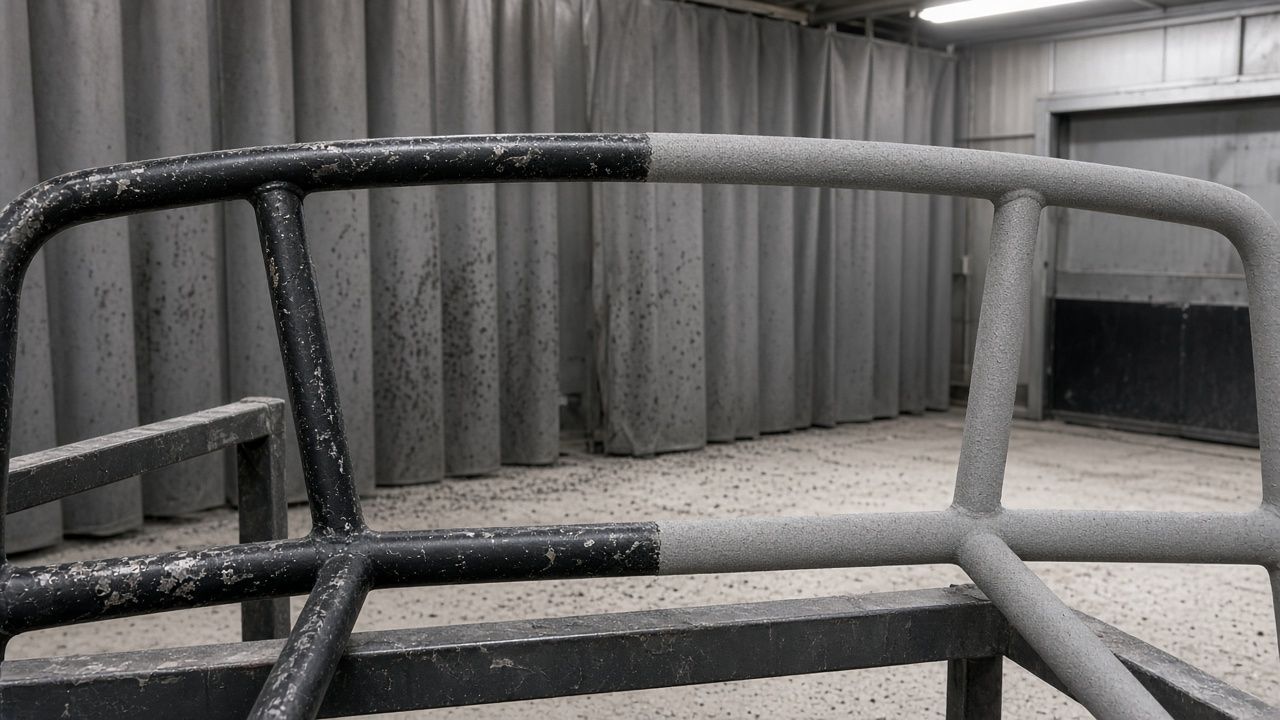
At Full Blown Coatings, we inspect every part, then sandblast or media blast it before coating. That step exists because the condition of the steel under the film is where rust resistance is won or lost. The film applied over clean, blasted steel at full coverage is what does the protecting.
Where Rust Still Starts on Powder Coated Steel
Rust rarely starts evenly across a part. It starts at specific weak points, which is exactly what that bracket on the counter showed.
Sharp Edges, Seams, and Thin Coverage
Industry guidance from Rodger Talbert at PF Online on rust on powder coated furniture points out that corrosion on outdoor steel often starts at sharper edges and overlapping seams, and that rounding those edges improves coverage. The reason is physical: powder pulls thin as it wraps a sharp corner, so the film is weakest exactly where the geometry is most demanding.
If you are planning new work, round your sharp edges before drop-off. We do not round edges at the shop, and unrounded edges are one of the most common reasons coverage ends up thin right where rust likes to start. A slightly radiused edge accepts film far better than a knife edge.
Weld seams and overlapping joints deserve the same attention. Tight overlaps and welded areas can trap moisture against the steel and resist even coverage, so they are frequent starting points for corrosion even on parts that look well coated everywhere else.
Chips, Cracks, and Impact Damage
Once the film is broken, whether by a rock off the highway, a dropped tool, or a part that flexes more than the film can follow, moisture can reach the steel. Rust then tends to spread outward under the film, which is why a small chip can eventually lift a much larger area of coating. If you want to dig into why coatings chip in the first place, we cover the common reasons powder coat chips and cracks in a separate post, and there is also a guide on how to tell when powder coating needs to be redone.
Rust Left Under the Coating
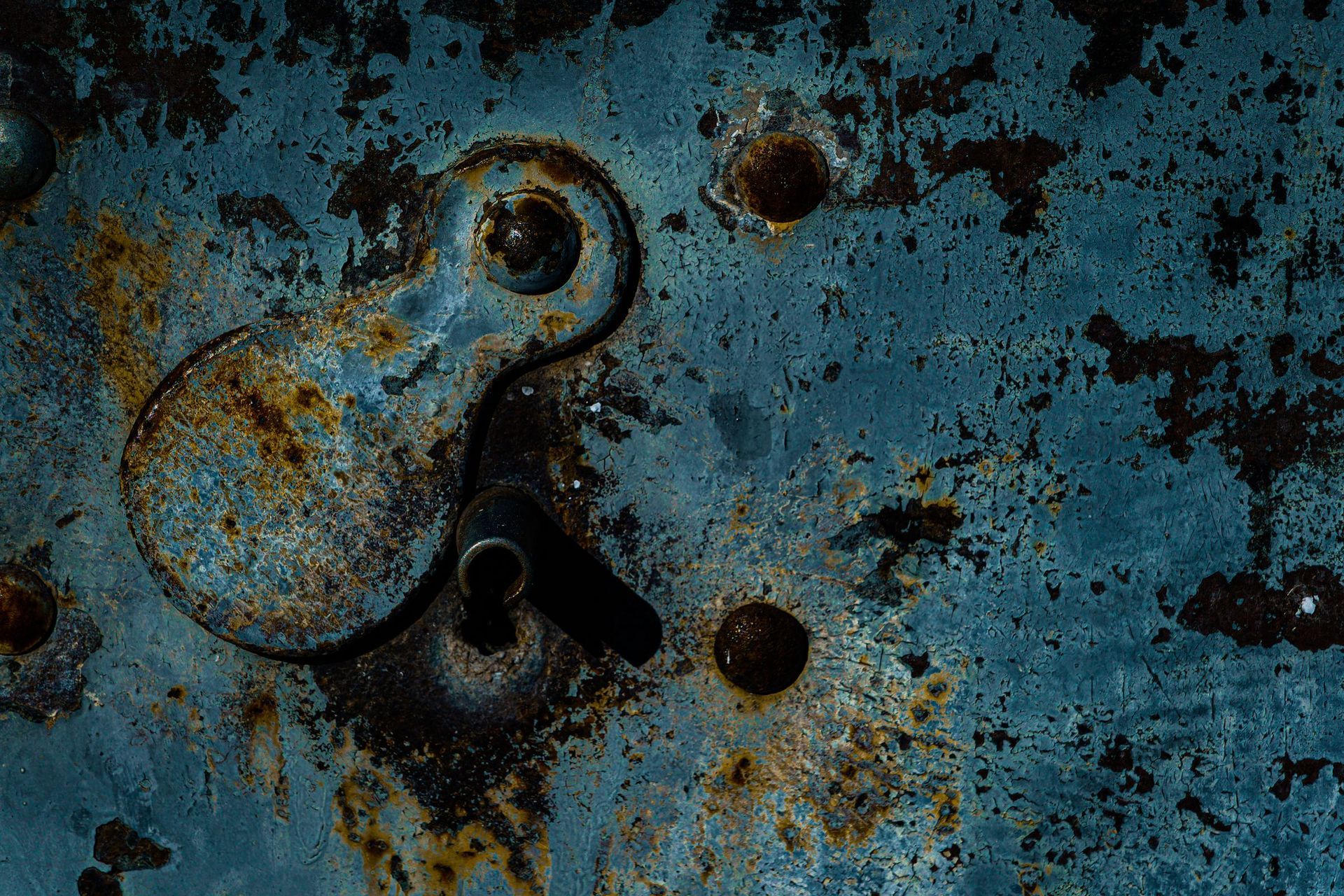
Coating over existing rust is a known way to end up with rust under powder coat. If corrosion is already on the surface when the film goes down, and moisture and oxygen are already present at the steel, the corrosion process can continue underneath, invisible until it pushes through or lifts the film. Rust needs to come off before coating. If you have a part in that situation, our rust removal service is the relevant path.
Pinholes, Holidays, and Cure Problems
In coating terminology, a holiday is a small missed spot, a pinhole, or a thin break in the film. On a finished part, holidays are easy to miss by eye, but they give moisture a direct path to the steel. The Joe Powder guidance cited earlier also flags incomplete cure as a factor that weakens the barrier's resistance to water and salt. That is one reason inspection before coating and a consistent shop process matter.
When Powder Coated Steel Rusts: A Quick Reference
Here is a quick reference for the situations that usually decide whether powder coated steel will rust.
| Situation | What usually happens | Source or note |
|---|---|---|
| Intact film on clean, prepped steel | The coating acts as a barrier while it stays intact | Industry: prep, coverage, and cure matter (Joe Powder) |
| Sharp edges, seams, or thin coverage | Rust often starts at edges and overlaps first | Customer must round sharp edges; the shop does not (PF Online / Talbert) |
| Chip, crack, or impact through the film | Moisture can reach the steel and rust can spread | See the chips and redo guides |
| Rust left under the coating | Corrosion can continue under the film | Blast first; rust-removal service |
| Salt, chlorine, fertilizer, or sprinklers | Harsh exposures can break down protection; warranty exclusions apply | Live warranty page |
Northern Utah Exposure: Freeze-Thaw, Road Salt, and Sprinklers
Around Sandy and the Salt Lake City area, three exposure factors do most of the damage to coated steel.
First, freeze-thaw cycles. Moisture that works into a chip or seam and then repeatedly freezes and thaws keeps working at the film edge, accelerating rust once the barrier is broken. A hairline gap that would be a slow problem in a mild climate becomes a faster one here.
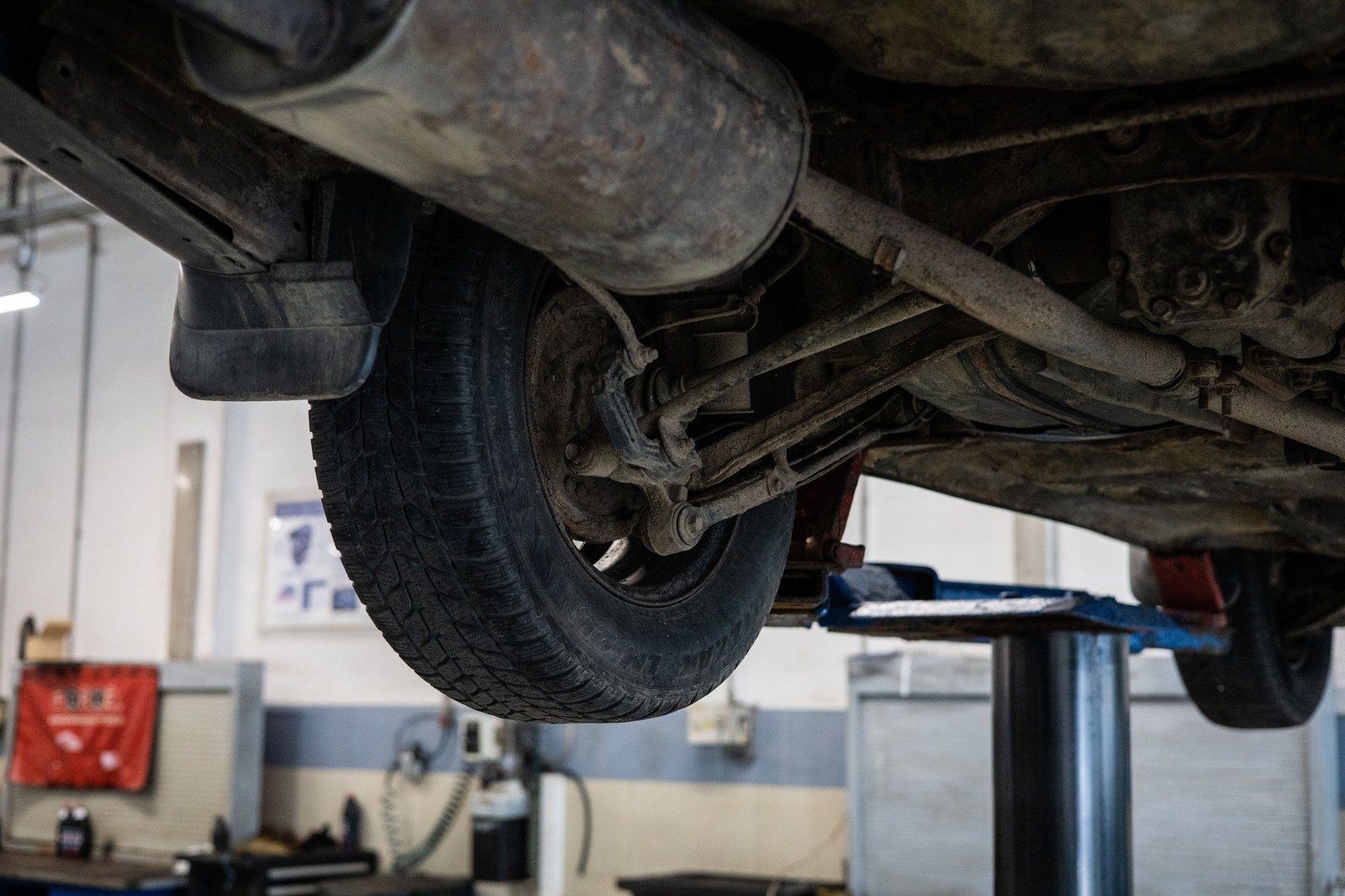
Second, road salt and winter de-icers. Cars, trailers, truck racks, hitches, and bumpers see salt spray and slush all winter. Salt is one of the fastest ways to challenge any coating barrier, and it finds every chip, pinhole, and thin edge on a part.
Third, sprinkler systems. Outdoor parts near irrigation sit damp far more often than weather alone would cause. Consistent wet-dry cycling is hard on any barrier film. Sprinkler systems are also a warranty exclusion, along with salt water, chlorine, fertilizers, and pesticides.
Talbert's guidance also notes that a single coat over blast-only steel is not very robust for outdoor service, and that industry advice often includes a corrosion-resistant primer under the topcoat. Our shop practice is to recommend primer on all aluminum parts and on all outdoor metal. We do not publish a specific primer chemistry.
What the Full Blown Warranty Covers and Excludes
Our warranty, as stated on the live warranty page, is a 12 month limited warranty from the invoice date covering cracking, peeling, and extreme fading, with published exclusions.
The exclusions most relevant to this article are salt water, chlorine, fertilizers, pesticides, and sprinkler systems. In addition, declining primer on aluminum or outdoor metal can void coverage. We would rather you know that up front than discover it after a sprinkler head has been spraying a gate every night for a summer.
Rust Already Showing? What to Do Next
If you are looking at rust on a coated part right now, the most useful thing you can do is stop guessing at the cause and get eyes on it. Where the rust is starting usually tells you which failure path you are on: an edge points to thin coverage, a chip points to impact damage, a seam points to trapped moisture, and rust appearing broadly under the film points to prep or a broken barrier.
If rust is under the film or the coating is failing broadly, the part generally needs stripping or blasting and recoating rather than touch-up. Spot-painting over active under-film rust rarely ends well, because you are sealing the problem in, not removing it. For home cleanup approaches, see our article on how to clean rust off metal, and what does not work. The redo guide earlier in this article can help you decide whether the part needs to come back through the shop.
Planning New Steel Work: Prep That Affects Rust Resistance
If you are deciding how to finish new steel parts, a few decisions before drop-off have more impact on future rust resistance than almost anything that happens afterward.
Round sharp edges before you bring parts in, for the coverage reason already covered above. This is still the most common prep gap we see on new fabrication.
Plan primer for any outdoor metal and any aluminum.
If you are fabricating, prefer open corners and drained profiles over tight overlaps where moisture can sit. Geometry that sheds water and accepts even film is geometry that resists rust.
Get rust or old coating off first. If you want more background on why the blast step matters, see why you need to sandblast before powder coating a project.
If hauling parts to the shop is the obstacle, pickup and delivery is available within about 100 miles of Salt Lake City.
Get a Straight Answer on Your Steel
If you have a part with rust creeping from an edge, like the bracket that opened this article, bring it by or send photos. The shop is at 9479 South 500 West, Sandy, UT 84070, behind Titan Cabinetry. You can request a free quote, call 801.631.1708, or email service@fullblowncoatings.com through the
contact page. A few clear shots of the part and the rust location are usually enough for us to tell you what you are looking at before you load anything into a truck.
Share This Post!