Powder Coating Technology Is Advancing: What the Industry News Means
TLDR:
- Powder coating technology is advancing toward lower curing temperatures, faster production, better corrosion protection, more sustainable raw materials, and more consistent finishes.
- New low-temperature powders can reduce energy use and make powder coating possible on some heat-sensitive materials that were previously difficult to coat.
- Recycled plastics and plant-based materials are increasingly being used to manufacture powder coating resins.
- Hyper-durable powders are expanding the use of powder coating on demanding architectural and industrial projects.
- Better edge coverage and corrosion-resistant primers are helping address common failure points on fabricated steel.
- Digital spray equipment and advanced testing tools are giving professional coating shops more control over film thickness, texture, transfer efficiency, and finish consistency.
- These advances improve what powder coating can do, but they do not eliminate the need for proper media blasting, cleaning, pretreatment, application, and cure control.
Powder coating technology is changing in ways that could improve the durability, sustainability, appearance, and cost efficiency of the finishes you use every day. An industry report from the American Coatings Association highlighted major advances in lower-temperature curing, recycled and plant-based materials, corrosion resistance, architectural durability, antimicrobial finishes, application equipment, and testing technology.
Although the original report was published in June 2021, many of the developments it identified have continued gaining momentum. By 2026, manufacturers are still introducing high-edge-coverage powders, sustainability measurement tools, recycled-content coatings, and lower-temperature systems.
For you, the important news is not simply that new powders exist. It is that powder coating is becoming more adaptable, measurable, and capable of handling demanding projects that previously required more energy, more process steps, or a completely different coating system.
Lower-Temperature Powder Coating Could Change What Can Be Coated
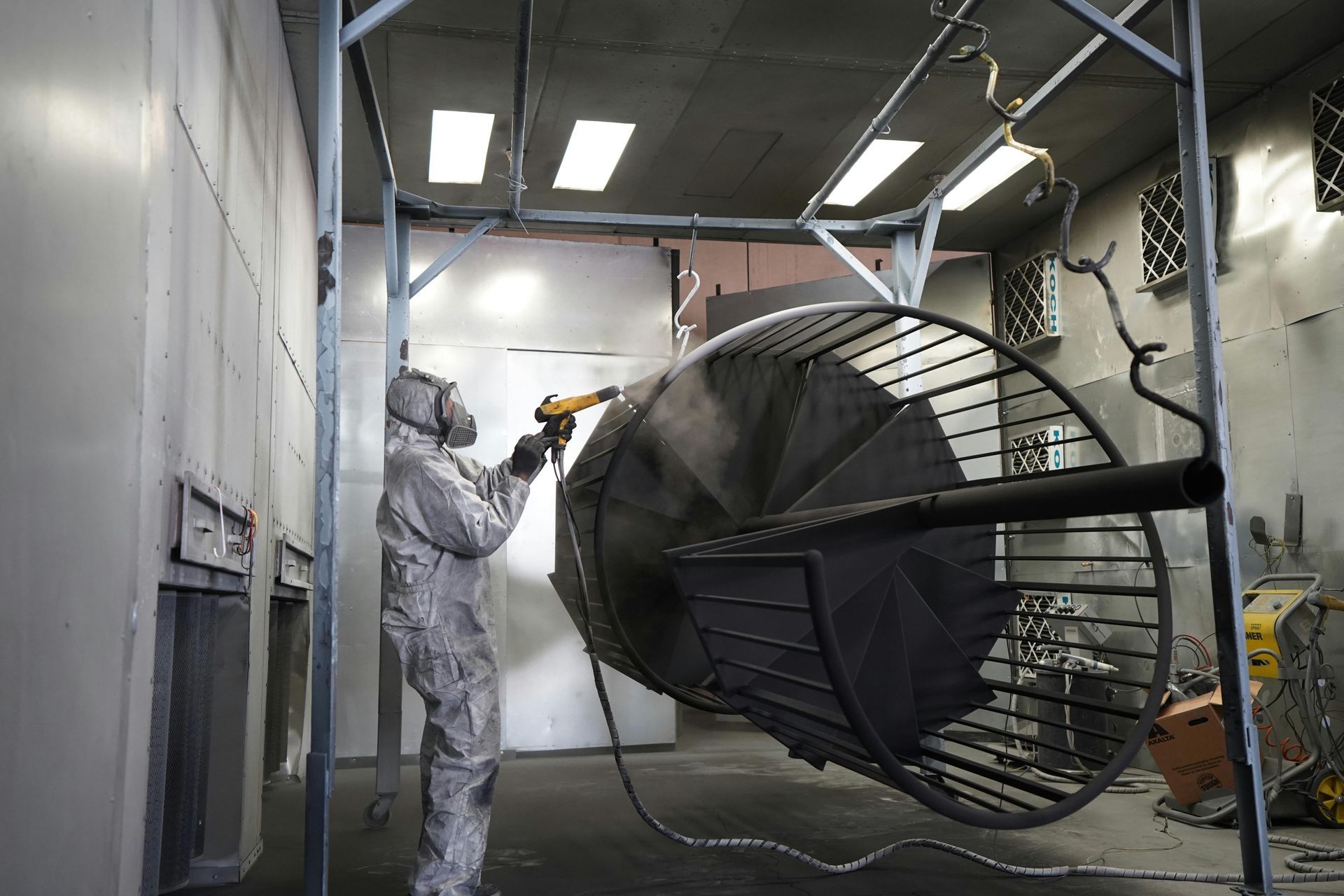
Traditional powder coating typically requires a relatively high curing temperature. The powder is applied electrostatically, and the part is placed in an oven until the metal reaches the temperature needed to melt, flow, and chemically cure the coating.
That system works well for steel, aluminum, and other heat-tolerant metals. It becomes more challenging when you are dealing with temperature-sensitive materials or assemblies containing components that cannot tolerate a conventional oven cycle.
Lower-temperature powder technology is designed to reduce those limitations.
The American Coatings Association report discussed powder systems capable of curing at substantially lower temperatures than traditional formulations. More recent research has continued pushing cure temperatures downward, with experimental chemistries targeting temperatures below 120°C.
Why Lower Cure Temperatures Matter
A lower cure temperature can reduce the amount of energy required to heat the oven and the part. That can lower operating costs, reduce the environmental footprint of the coating process, and shorten production cycles.
It may also expand powder coating into materials such as engineered wood, medium-density fiberboard, plastics, composites, and other substrates that would be damaged by traditional cure schedules.
For metal projects, lower-temperature systems can help when parts contain heavy sections, mixed construction, sensitive inserts, or other features that make heat management difficult.
However, lower cure does not mean no cure control. The coating shop still has to follow the powder manufacturer’s technical specifications. The temperature of the part itself must be considered, not only the temperature displayed on the oven controls.
Recycled and Plant-Based Powders Are Becoming More Practical
Powder coating has long been promoted as an alternative to many liquid coating systems because it does not rely on conventional solvent evaporation and overspray may be recoverable in suitable systems.
The next sustainability shift is happening inside the powder itself.
Manufacturers have developed polyester resins that incorporate recycled polyethylene terephthalate, commonly known as PET. This is the plastic frequently used in beverage bottles and other packaging.
Earlier powder systems incorporated pre-consumer plastic waste from manufacturing operations. Newer developments have expanded the use of post-consumer recycled material, which creates a potential destination for plastic that has already entered the consumer waste stream.
The industry has also explored powder coating resins made with plant-derived sugars, soybean oil, and castor beans. Some of these formulations combine renewable raw materials with lower-temperature curing, addressing both material sourcing and manufacturing energy.
Sustainability Also Means Longer Service Life
Recycled content is only one part of the sustainability discussion.
A coating that protects a railing, machine frame, architectural panel, or piece of industrial equipment for a longer period can reduce the need for stripping, repainting, repair, replacement, transportation, and disposal.
That means durability itself can be considered an environmental benefit.
A finish that lasts longer reduces the amount of material and labor needed over the service life of the coated product. This is especially important on commercial buildings, public infrastructure, industrial equipment, and other assets that are difficult or expensive to remove and refinish.
Hyper-Durable Powders Are Expanding Architectural Applications
One of the most significant developments discussed in the industry report involved powder coatings designed to meet demanding architectural durability standards.
Architectural powder coatings are exposed to ultraviolet radiation, moisture, temperature changes, pollution, cleaning chemicals, and years of weathering. Standard decorative powder may not provide the long-term color and gloss retention required for large commercial buildings.
Super-durable and hyper-durable powder systems are formulated to handle more demanding exposure.
Some systems are designed to meet standards such as AAMA 2604 and AAMA 2605. These specifications evaluate factors such as adhesion, impact resistance, chemical resistance, humidity performance, salt spray resistance, color change, gloss retention, and long-term weather exposure.
For you, this means powder coating is no longer limited to ordinary indoor furniture, automotive parts, or basic fabricated metal. Properly specified systems can be used on major architectural projects where long-term appearance and weather resistance are essential.
These products may be appropriate for aluminum extrusions, exterior panels, window systems, railings, stadium components, commercial entrances, and other architectural metal.
The key phrase is properly specified. The color alone does not tell you how durable a powder will be. The resin chemistry, pretreatment, substrate, cure, pigment package, and exposure rating all matter.
Better Corrosion Resistance Is Addressing Weak Points
Corrosion protection remains one of the most important areas of powder coating development.
Powder coating can form a durable protective film, but the finished system is only as strong as its weakest point. Sharp edges, laser-cut profiles, weld areas, seams, and poorly prepared surfaces can be more vulnerable than broad flat sections.
Powder tends to pull away from very sharp edges during flow and cure, leaving less film build in exactly the places where corrosion may begin.
Manufacturers have been developing primers, direct-to-metal powders, hydrophobic additives, high-edge-coverage systems, and multi-layer coating technologies to improve protection in these areas.
In March 2026, the industry saw the introduction of another high-edge-coverage powder designed to increase film build on sharp laser-cut steel edges without requiring a separate primer.
That type of development matters for fabricated steel used in outdoor furniture, agricultural equipment, machinery, railings, gates, structural components, and commercial installations.
It does not remove the need to prepare the edge correctly. Deburring, radius control, weld cleanup, blasting, and pretreatment can still have a major effect on coating performance.
Powder-on-Powder Systems Could Reduce Production Steps
Traditional high-performance powder systems may use a primer followed by a topcoat, with separate handling or cure stages.
Powder-on-powder and dry-on-dry technology aims to simplify that workflow. A primer and topcoat may be applied before a final combined cure, depending on the coating system.
Reducing oven cycles can lower energy consumption, improve throughput, and reduce the time a project spends moving between coating stages.
This could be especially valuable for corrosion-resistant industrial systems where you need both a protective primer and an attractive weather-resistant topcoat.
The coating manufacturer must approve the complete system. You cannot assume that any primer and any topcoat can be combined into a single cure process.
Metallic and Textured Finishes Are Becoming More Controllable
Metallic powders, chrome-inspired finishes, hammered effects, ultra-matte surfaces, stone-like textures, and wood-look patterns have expanded the design possibilities of powder coating.
These finishes are not only aesthetic. Texture can hide substrate irregularities, improve grip, reduce visible fingerprints, or support a particular functional need.
Metallic powders create additional challenges because the orientation and distribution of the effect pigments can change the appearance. Differences in gun settings, reclaim ratios, film thickness, grounding, and part geometry may cause visible variation.
New bonding methods are being developed to attach metallic particles more consistently to the base powder. Better bonding can improve application stability and reduce separation between the pigment and powder during spraying or recovery.
This gives shops a better chance of producing repeatable metallic color across wheels, railings, furniture, displays, fabricated assemblies, and production runs.
Digital Equipment Is Improving Application Consistency
Modern powder coating guns are becoming more software-driven.
Application systems can store recipes for specific parts, powders, shapes, and finish requirements. Operators may be able to control electrostatic settings, powder output, airflow, and other parameters through digital interfaces.
Some systems are designed to improve penetration into recessed areas, reduce orange peel, limit excess charge buildup, and increase first-pass transfer efficiency.
As one industry professional quoted in the American Coatings Association report explained, “Customers need something or need a powder to do something that they currently can’t.”
That demand is driving both powder formulation and equipment development.
For you, better process control can mean more consistent film thickness, fewer thin areas, less wasted powder, improved finish quality, and better repeatability when several parts need to match.
Technology still does not replace an experienced applicator. Complex corners, deep recesses, welded assemblies, and difficult part geometries still require judgment and technique.
New Testing Tools Are Making Texture Measurable
Color and gloss have long been measured with specialized instruments. Texture has traditionally been more subjective.
One inspector might describe a finish as fine texture, while another might call it medium or coarse. Visual inspection alone makes it difficult to compare production batches or resolve appearance disagreements.
New instruments are capable of measuring color, gloss, and the three-dimensional topography of a textured coating.
That allows manufacturers and coating shops to define surface appearance more consistently. It may also help quality-control teams detect changes in powder formulation, film thickness, cure, or application conditions.
For production customers, measurable texture could improve consistency across large orders and repeat projects.
Antimicrobial and Functional Powders Are Creating New Possibilities
The industry report also discussed antimicrobial powders that use silver-ion technology to reduce bacterial growth on coated surfaces.
Potential applications include healthcare facilities, public transportation, hospitality, food service, schools, consumer products, and high-touch public equipment.
Functional powder coatings can also include easy-clean, anti-graffiti, conductive, antistatic, high-temperature, chemical-resistant, self-healing, or corrosion-control properties.
These technologies need to be evaluated carefully. An antimicrobial coating is not a substitute for cleaning, disinfection, or infection-control procedures. Performance claims should be supported by testing, approved use conditions, and clear manufacturer documentation.
The broader point is that powder coating is becoming more than a decorative color layer. It can be engineered to support a specific performance requirement.
What These Advances Mean for Your Project
New technology gives you more options, but it also makes product selection more important.
You may now be able to choose a powder based on exterior durability, recycled content, cure temperature, edge coverage, corrosion resistance, texture, chemical exposure, UV performance, or another specialized requirement.
That does not mean you should automatically choose the newest or most advanced powder available.
The right system depends on your substrate, environment, expected service life, appearance standards, budget, and how the part will actually be used.
A coating designed for an architectural extrusion may not be right for an automotive wheel. A low-temperature powder may solve one production challenge but provide no meaningful advantage on a basic steel bracket. An antimicrobial powder may add cost without providing useful value on a low-touch component.
Preparation Still Determines the Result
No powder technology can fully compensate for poor surface preparation.
Oil, rust, scale, unstable old coating, oxidation, welding contamination, and inadequate pretreatment can undermine even an advanced powder system.
Media blasting, cleaning, repair, masking, grounding, film-thickness control, and correct curing remain central to the process.
That is why the most important development may not be one particular resin, additive, or spray gun. It is the growing ability to combine better materials with better measurement and tighter process control.
Final Thoughts
The powder coating industry is moving toward lower energy use, recycled and renewable materials, longer-lasting finishes, improved corrosion resistance, better edge coverage, smarter spray equipment, and more measurable quality control.
These developments give you access to finishes that are more specialized and capable than standard powder coatings of the past.
The practical benefit is not simply a larger color chart. It is the ability to select a coating system based on how your part needs to perform.
As powder coating technology continues to improve, the best results will still come from matching the right powder to the right substrate, preparing the surface correctly, and controlling every stage from blasting through final cure.
Share This Post!