Sandblasting and Grit Blasting: How It Works and Why It Matters
- TLDR:Sandblasting Near Me is really a search for the right Media Blasting process, not just the closest shop. The best result depends on the substrate, the finish goal, and the type of blasting media used.
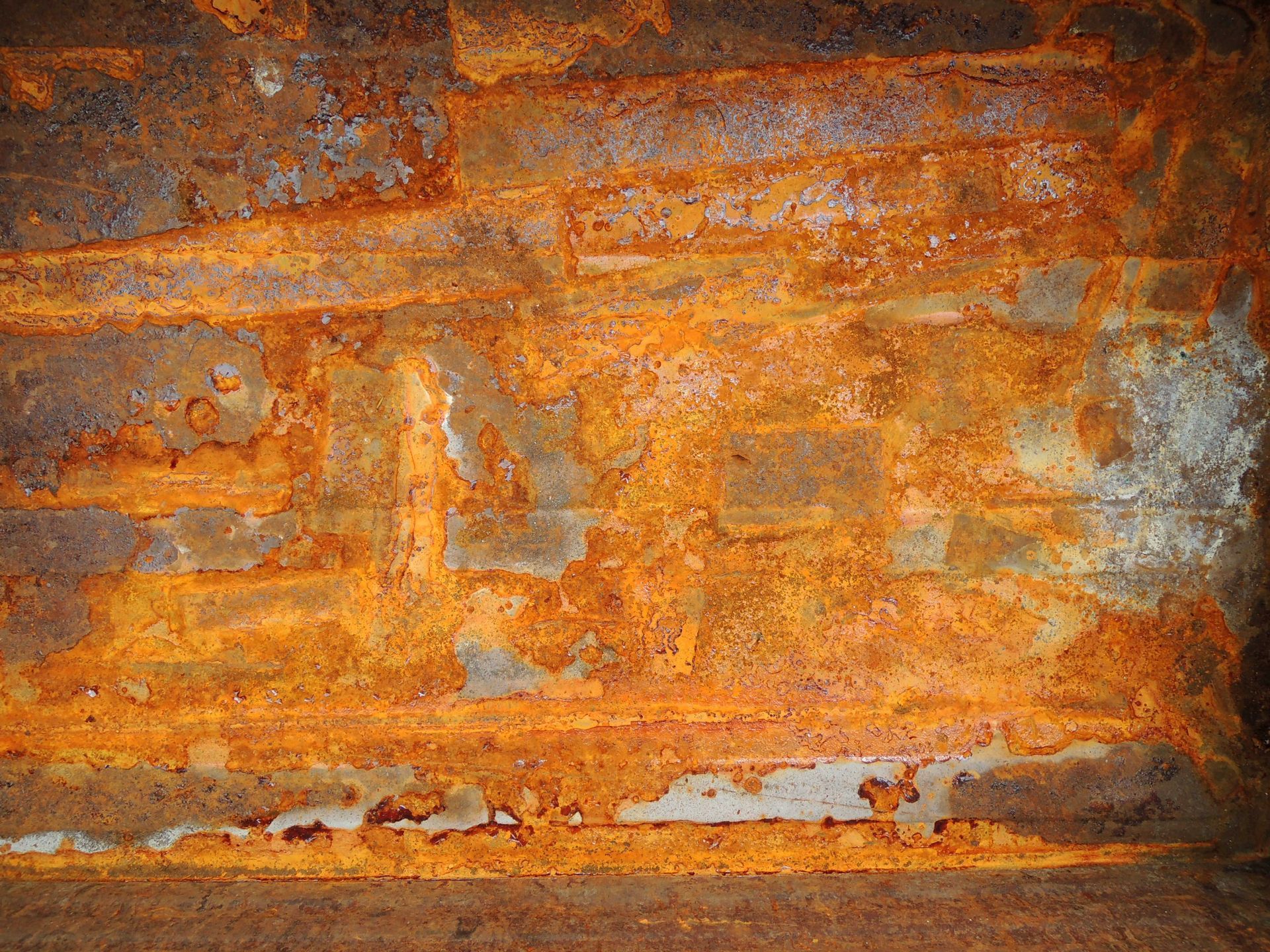
- Media blasting can do several different jobs: remove rust, strip old coatings, clean contamination, create an anchor profile for powder coating, or leave a refined cosmetic finish. Those are not all the same process.
- Rounded media like glass bead are better when you want gentle cleaning or a satin finish and do not want much surface profile. Angular media like aluminum oxide blast media and steel grit are better when you need stronger cutting action and coating adhesion.
- Surface prep matters as much as the coating. TIGER states, “Cutting corners in pretreatment can lead to downstream production disasters such as peeling, corrosion and scrap.”
- For powder coating, the right surface profile is critical. BlastOne notes that too much profile can hurt thin-film coatings, while too little profile can cause delamination of higher-build coatings.
- A more helpful question than “Do you sandblast?” is “What sand blast media do you recommend for my part, and are you cleaning it, stripping it, profiling it, or all three?” That conclusion is an application of the source guidance.
Sandblasting and Grit Blasting: How It Works and Why It Matters
When people search Sandblasting Near Me, they are usually not just looking for the nearest shop with a blast pot. They are looking for the right Media Blasting solution for a real surface problem. That might mean removing rust from steel, stripping old paint, prepping a part for powder coating, cleaning stainless without ruining the finish, or choosing the right blasting media so the job is done once and done right. The challenge is that media blasting is not one single process. The best surface treatment depends on the substrate, the coating goal, and the kind of abrasive blasting media being used.
The older Full Blown Coatings article explains the basics well: abrasive blasting uses high-velocity media to clean, smooth, or profile a surface, and it matters before painting, powder coating, or plating. That foundation is correct. What most buyers still need, though, is a deeper explanation of what actually changes from one blasting job to the next and why one type of sand blast media may be perfect for a steel frame but wrong for an aluminum part.
What Media Blasting Actually Is
It is more than “shooting sand at metal”
At its core, blasting is a controlled impact process. Abrasive particles are accelerated at high speed and strike the surface hard enough to remove contamination, fracture rust, strip coatings, or texture the substrate. The Full Blown Coatings post correctly describes this as a mechanical abrasion process that can clean and create a uniform profile.
But that broad definition hides something important: blasting can have very different goals.
A blasting job may be intended to:
- remove old paint or failed powder coating
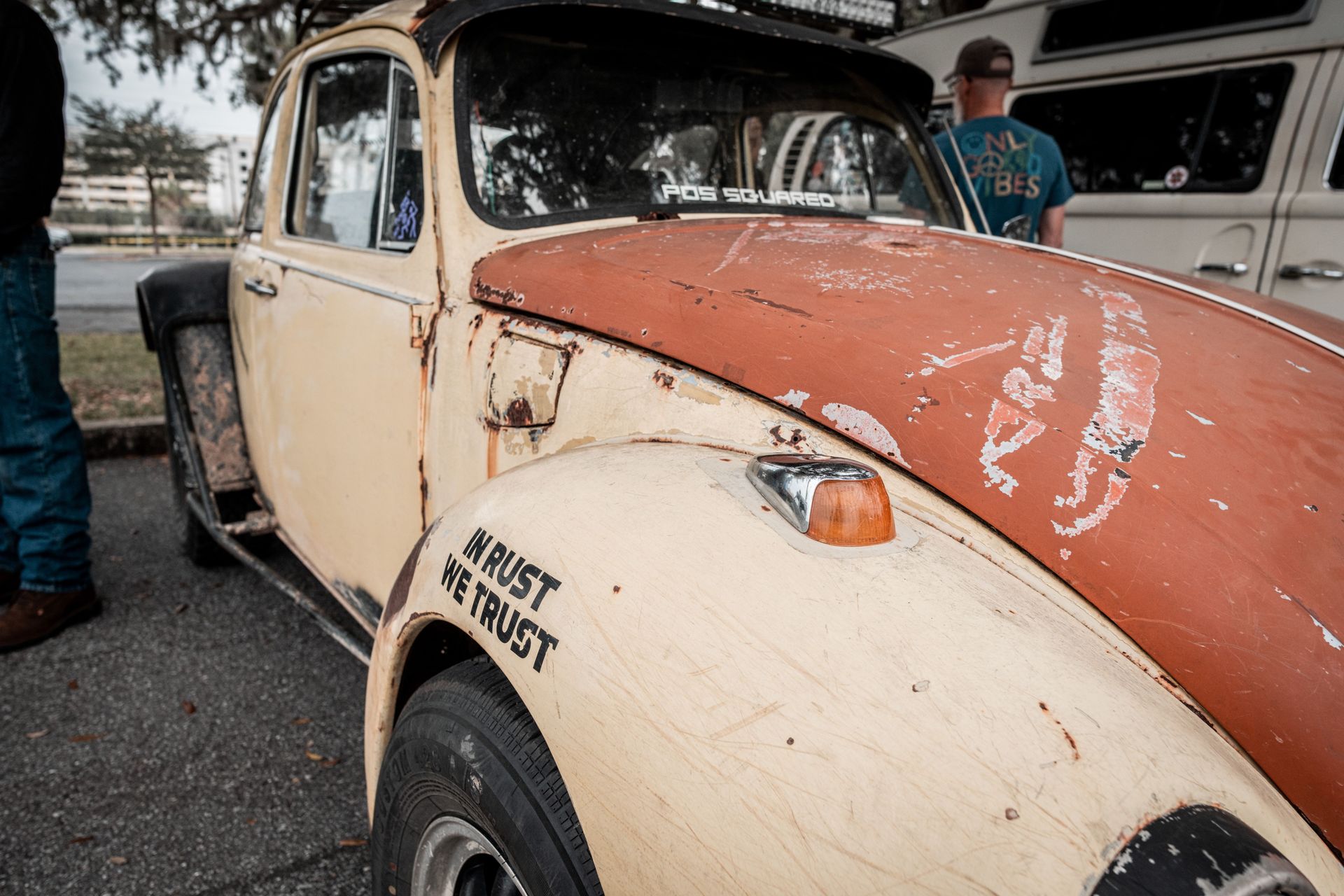
- strip rust and mill scale
- clean oxidation and surface contamination
- create a profile for powder coating adhesion
- smooth rough areas
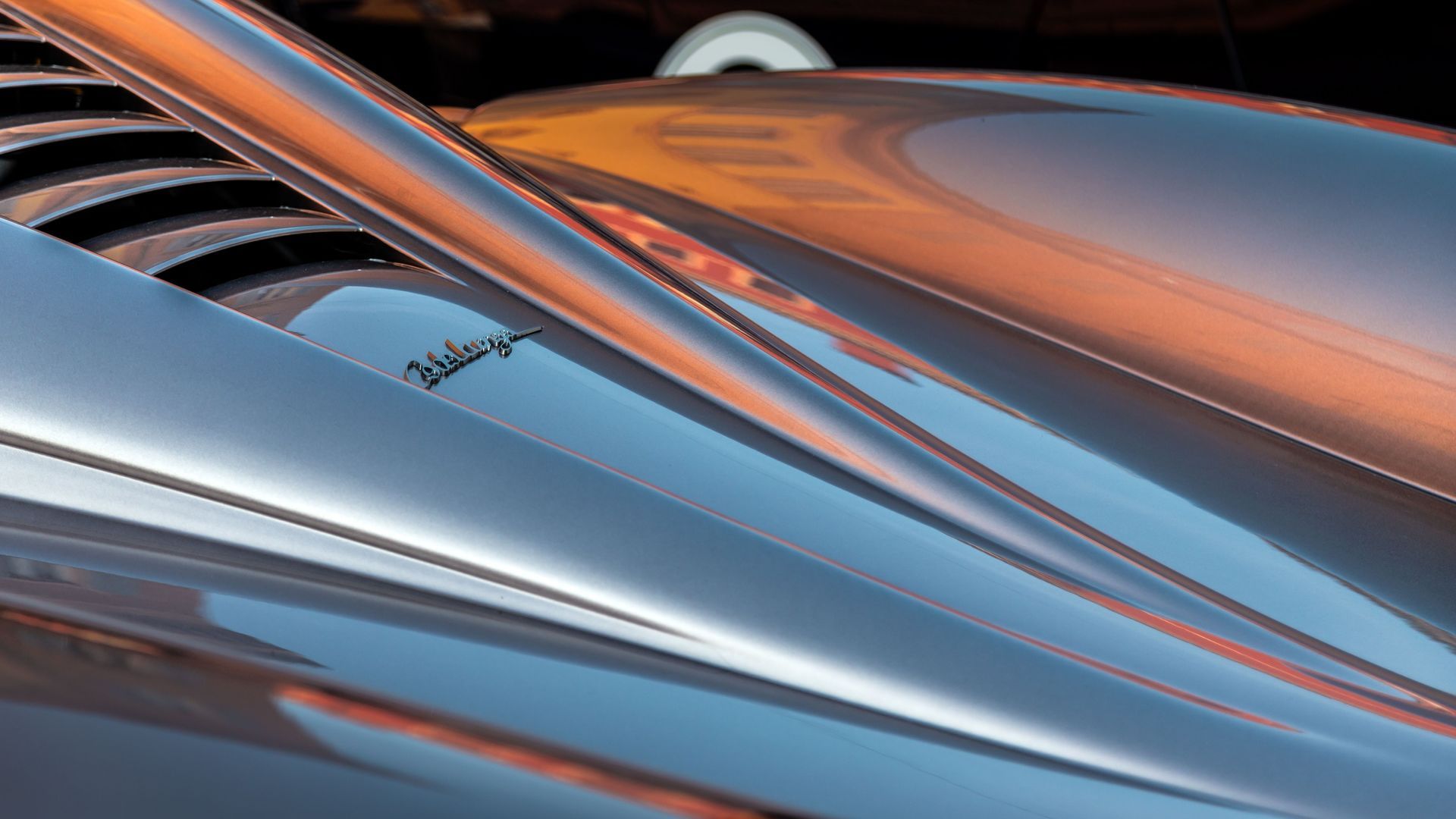
- leave a bright satin cosmetic finish
- prep a surface for plating, painting, or other finishing systems
Those are very different outcomes, and they should not all be approached the same way.
Sandblasting vs media blasting vs abrasive blasting
Most customers still say “sandblasting,” and that is fine conversationally. Professionally, media blasting or abrasive blasting is usually more accurate because shops may use crushed glass, glass bead, steel grit, steel shot, garnet, or aluminum oxide blast media instead of actual sand. The current FBC article already makes this distinction by noting that grit blasting often refers to harder, more angular materials like aluminum oxide, crushed glass, or steel grit.
That matters because media choice changes the result more than most customers realize.
Why Surface Treatment Matters Before Powder Coating
A powder coated part only performs as well as the surface underneath it. This is one of the most important truths in metal finishing. TIGER puts it bluntly: “Cutting corners in pretreatment can lead to downstream production disasters such as peeling, corrosion and scrap.” It also notes that any foreign substance between the powder coating and the substrate can interfere with adhesion.
This is where a lot of lower-quality prep work fails. A part may look clean to the eye, but still not be correctly prepared for coating. Sometimes the issue is remaining contamination. Sometimes it is the wrong surface profile. Sometimes it is both.
At Full Blown Coatings, this is one of the biggest misconceptions customers bring in. They may assume that because a part has been wire-wheeled, hand-sanded, or “cleaned up,” it is ready for coating. In many cases it is not. Good blasting is not just about making the metal look cleaner. It is about giving the next finish the surface it actually needs.
How the Sandblasting Process Works
The basic process
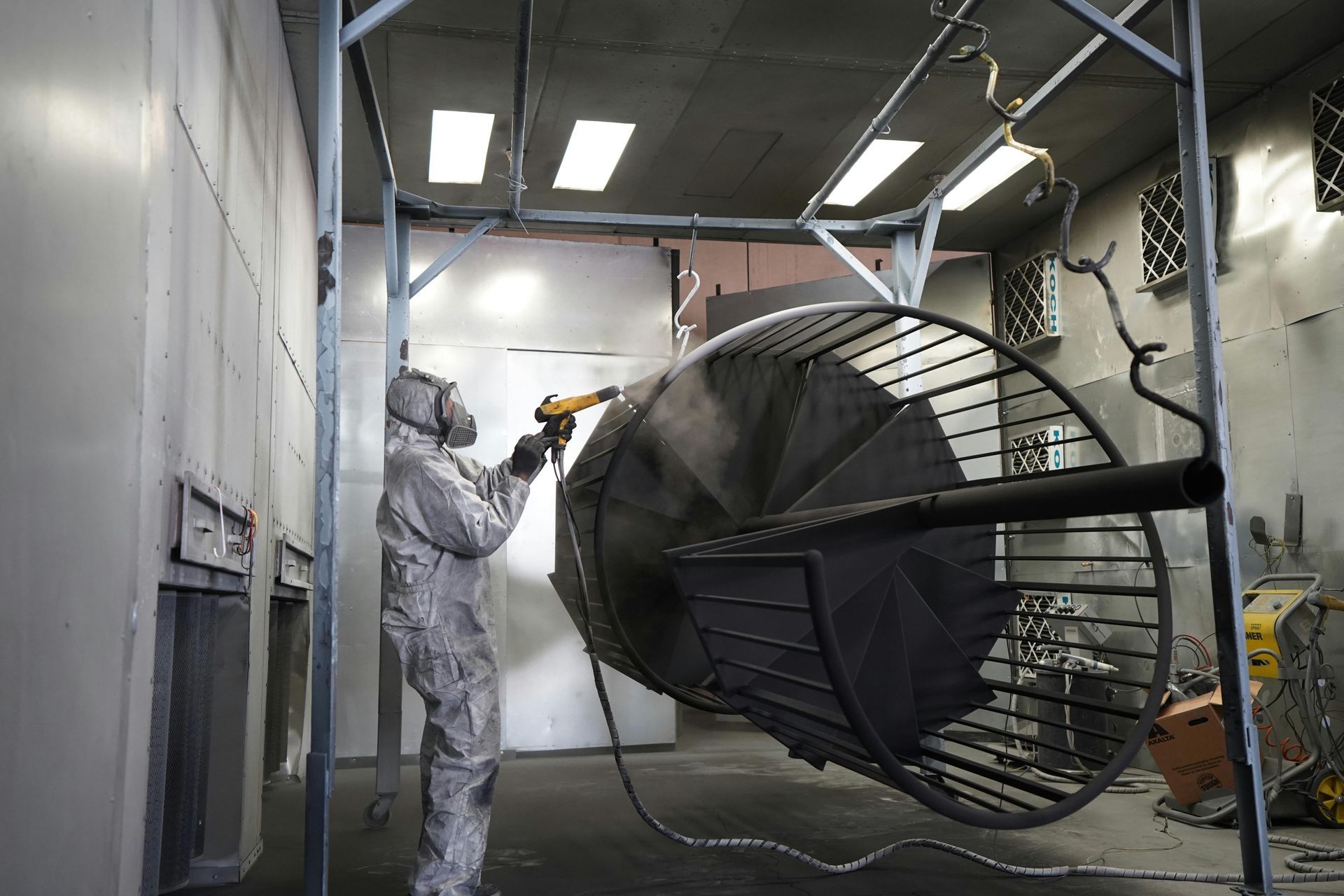
A professional blasting setup usually includes:
- a blasting pot or delivery system
- a capable air compressor
- moisture control
- a blast hose and nozzle
- selected blasting media
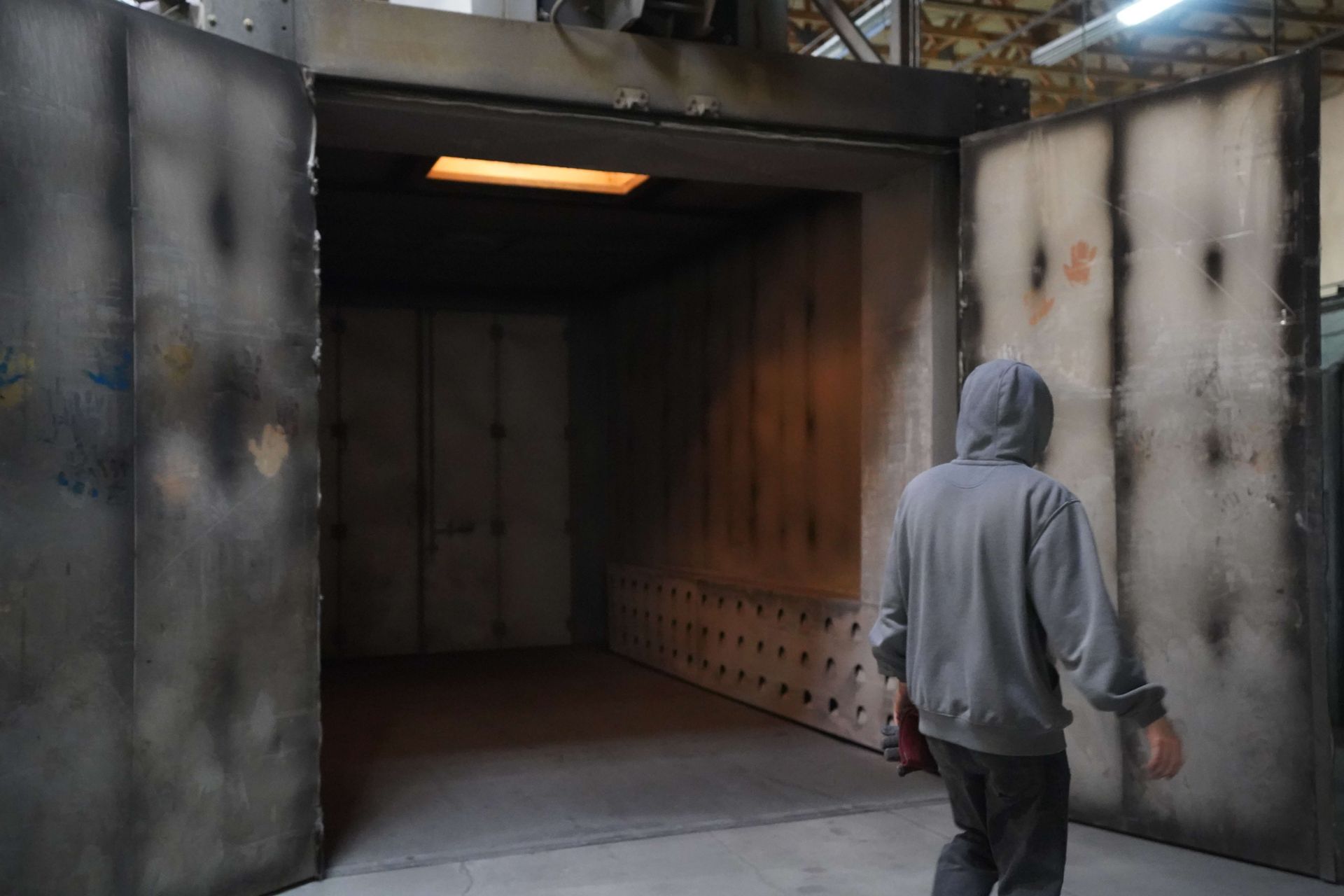
- containment or recovery equipment
- PPE and dust-control systems
they are the right starting point.
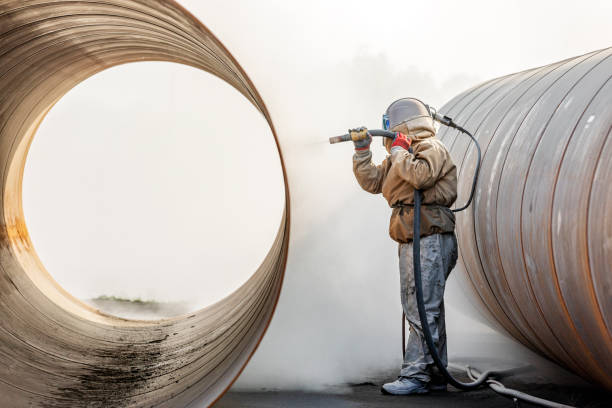
Here is what actually happens in a real job:
- The part is inspected for substrate type, rust, coatings, and contamination.
- The operator chooses the right abrasive and setup.
- Sensitive areas may be masked.
- Air pressure, nozzle, and blasting distance are set based on the target result.
- The abrasive impacts the surface and either cuts, fractures, scrubs, or peens it.
- The part is rechecked for cleanliness, profile, and readiness for the next step.
Why pressure is not the whole story
A lot of people fixate on PSI. Which is a useful general frame. But blasting performance is not just about pressure. Air volume, nozzle size, stand-off distance, angle, dwell time, and abrasive shape all change the result too.
That is why two shops can use the “same PSI” and still get very different outcomes.
What Makes One Blasting Job More Aggressive Than Another
Media hardness
Harder abrasives generally cut faster and more aggressively. That makes them useful for rust, mill scale, coating removal, and strong surface prep.
Media shape
This is one of the biggest variables. Rounded media tend to clean and peen more gently. Angular media cut, scratch, and profile more aggressively. BlastOne’s guide distinguishes between cleaning procedures that leave the substrate largely untouched and surface-preparation procedures intended to both clean and prepare the surface to receive a coating.
Media size
Larger particles can remove heavier contamination faster, while finer particles can leave a more refined result. BlastOne also notes that abrasive particle size affects blasting speed and that oversized or undersized media can reduce productivity depending on coating thickness and removal goals.
Understanding Blasting Media
Glass bead blasting media
BlastOne describes glass bead as a manufactured abrasive with a spherical shape that prevents aggressive impingement. It calls it a low-impact media used for cleaning applications and surface treatments where substrate profiling is undesirable, and lists a profile range of about 0.25 to 1.0 mil.
In practical terms, glass bead is a good fit when you want:
- gentle cleaning
- deburring
- satin finishing
- cosmetic work on stainless or aluminum
- less aggressive surface treatment
It is usually not the best fit for:
- heavy rust
- thick coatings
- severe mill scale
- situations where a stronger anchor profile is needed before powder coating
Aluminum oxide blast media
BlastOne describes aluminum oxide blast media as a manufactured abrasive designed for sharpness and hardness, and says it leaves a very pronounced profile. It notes it is often used for surface preparation before plating, metal spraying, or ceramic coating, and that it can be used on steel, aluminum, and other non-ferrous alloys.
That makes aluminum oxide a strong choice when you need:
- aggressive cutting
- strong coating removal
- pronounced profile
- serious prep before a performance coating
- more consistency and recyclability than some disposable media
If the job is heavy-duty prep, aluminum oxide blast media is often one of the best answers.
Steel grit and similar angular media
BlastOne lists steel grit as a recycled abrasive commonly used in blast rooms and large recycling units, with a profile range of roughly 2.0 to 5.0 mil.
This is useful for industrial steel prep where you need real bite, real productivity, and a meaningful anchor profile.
What Surface Profile Means
Profile is the microscopic roughness left behind after blasting. It is not visible in the same way paint color is, but it matters enormously.
BlastOne states that all coatings have a recommended profile and warns that too much profile can shorten the life of thin-film coatings, while too little profile can cause delamination in higher-build coatings.
That means blasting is not about maximum aggression. It is about the right aggression.
For example:
- a cosmetic aluminum part may need cleaning with minimal profile
- a steel railing headed for powder coating may need a stronger anchor pattern
- a specialty finishing system may require a very specific prep window
This is where professional blasting separates itself from DIY work. The right media and process are chosen to match the next coating, not just to blast “as hard as possible.”
How to Choose the Right Sand Blast Media
A smart selection starts with three questions.
What is the goal?
Are you trying to:
- remove rust
- strip old coating
- clean contamination
- profile for powder coating
- improve appearance
What is the substrate?
Steel, stainless, aluminum, concrete, and cast parts all respond differently.
What finish comes next?
That changes everything. A part going to powder coating has different prep needs than one being left raw or polished cosmetically.
At Full Blown Coatings, this is usually where the most helpful conversations happen. A customer may ask for “sandblasting,” but what they really need might be one of three very different things: aggressive stripping, controlled prep for coating, or gentle cosmetic refinement. Once that gets clarified, the media choice usually becomes much easier.
Common Buyer Mistakes
The biggest mistakes are predictable:
- choosing the nearest shop instead of the right process
- assuming all blasting media are interchangeable
- overblasting thin or sensitive parts
- asking for aggressive profile when the finish does not need it
- under-prepping parts headed to powder coating
- focusing only on price instead of finish performance
The best media blasting near me service is not just the one that can blast. It is the one that can explain why a certain blasting media is right for your part.
Final Thoughts
The original Full Blown Coatings article is right that abrasive blasting is one of the most effective ways to clean, strip, and prepare a surface. The deeper truth is that blasting is not one single operation. It is a family of processes shaped by media type, surface condition, substrate, air setup, and finish goals.
So when you search Sandblasting Near Me, think beyond location. Ask what Media Blasting process fits your part. Ask what blasting media is being used. Ask whether the shop is cleaning, profiling, stripping, or finishing. And ask whether the blasting plan matches the coating or finish that comes next.
That is how you turn blasting from a rough prep step into a real surface-treatment strategy.
Share This Post!