5 Differences Between Powder Coating and Paint
 When customers are doing initial cost-comparison shopping, it can be difficult to know what the real difference is between powder coating and paint. After all, while powder coatings have been around for a while, it’s only recently started being a part of the common vernacular. Industrial items from playground equipment to fire extinguishers are usually powder-coated, but it rarely occurs to us to use the same option when we’re working on our own projects. Here are 5 of the primary differences between paint and powder coatings:
Powder Coatings Have No Solvent
The primary difference between powder coatings and paint is that powder coatings have no solvent. A solvent is used to hold the paint in its liquid form. As the paint dries, it transforms into a solid. However, powder coatings are applied in their solid, powdered form. Because of this, powder coatings are free from the VOC’s that are included in most paints, which are usually harmful to the environment and create an acrid smell. Powder coatings are more eco-friendly, as you can read about here.
Flexibility
Because powder coating doesn’t have any solvents, it’s much more flexible than paint. We all know that dried paint tends to crack and chip, a result of its inability to adjust to expansion and contraction that happens with most items, especially those subject to extreme temperatures. Powder coatings, on the other hand, hold well on surfaces that expand and contract slightly. In fact, powder coatings are flexible enough to effectively cover materials like springs, without cracking or chipping.
Evenness of Application
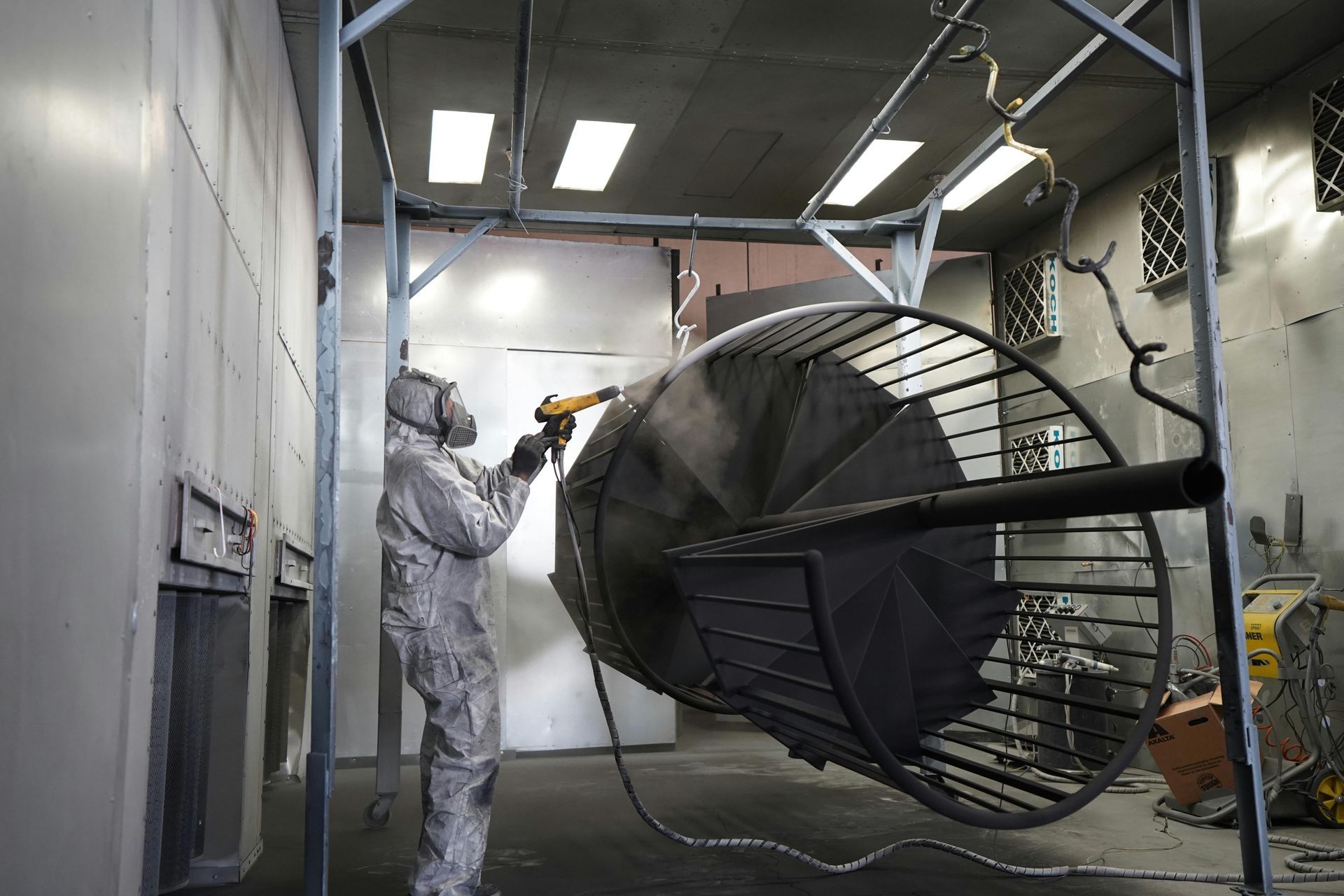
Powder coatings are used by charging the particles and allowing them to cling to the grounded metal that they’re meant to coat. Because of this, powder coating very naturally achieves a nice, even coat, even over a large or complicated surface. In professional, industrial painting scenarios, paint is sometimes charged to create more of a bond as well. However, it’s on a much smaller level than powder coating. Because of paint’s texture, it can be hard to achieve a thick protective layer without any errors like drips, bubbles, or rippling.
Paint Color Matches Easier
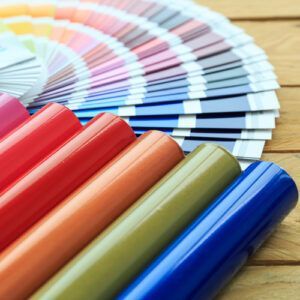
By now, you’re probably thinking “why does anyone even bother to use paint anymore?” Well, there is one drawback to powder coatings. Because the powder is not soluble, it’s hard to mix colors. Whereas with paint, you can simply mix red and yellow together in order to make orange, powder coating particles, small as they are, can’t be mixed into a perfect blend. Instead, you’d get something of a red-and-yellow speckle pattern, which would look orange from farther away. Because of this difficulty, there just aren’t quite as many pigments available for powder coatings. Therefore, if you’re going for the perfect “not white, but eggshell” color, you might not be able to get it with powder coatings. That being said, as powder coatings become more and more popular, manufacturers are making a wider variety of pigments available.
Cost and Long-Term Value
Lastly, one of the major differences between powder coatings and paint is cost. Paint can range from very inexpensive (and cheap) to high-quality and high-performance. However, even the highest quality paint can’t compare to powder coatings in long-term performance. Therefore, while powder coating is usually more expensive than painting, it quickly pays for itself in the long run, when conventional paint chips and fades, and powder coatings’ bright pigments and smooth surface endure.
The post 5 Differences Between Powder Coating and Paint appeared first on Full Blown Coatings.
Share This Post!