Metal Finishing Near Me: What It Is and the Tools Professionals Use

Admin • May 2, 2025

Metal Finishing Near Me: What It Is and the Tools Professionals Use

If you’ve been looking up "metal finishing near me" and wondering what exactly it involves, you’re in the right place. At Full Blown Coatings, we specialize in metal finishing, powder coating, and sand blasting for customers across Salt Lake, Utah, Davis, Weber, and Cache Counties. Whether you're restoring a vintage car part, prepping industrial machinery, or giving your outdoor furniture a facelift, metal finishing plays a crucial role in protecting and enhancing metal surfaces.

What Is Metal Finishing?


Metal finishing refers to a broad range of processes applied to the surface of a metal object to improve its appearance, durability, and resistance to environmental damage. These finishes can include anything from powder coating and sand blasting to polishing and chemical treatments.


At Full Blown Coatings, metal finishing is the backbone of our service lineup. It’s not just about making metal look good—it’s about making sure it holds up under pressure, resists corrosion, and performs well in real-world conditions.


Why Is Metal Finishing Important?


Metal surfaces are often exposed to harsh environments, moisture, heat, and chemicals that can quickly wear them down. Here’s what proper metal finishing helps with:


  • Prevents rust and corrosion


  • Improves wear resistance and durability


  • Enhances appearance with a professional finish


  • Improves paint or powder coat adhesion


  • Extends the life of metal products


We once had a client from Layton bring in a series of steel brackets for a custom-built fence. The original finish had worn down, causing premature rust. After our team sand blasted the brackets and added a high-grade powder coat finish, they were not only visually stunning—they’ve held up to several winters without a spot of rust.


Types of Metal Finishing Techniques


Depending on the material and purpose of the metal item, we may recommend different finishing techniques.


Powder Coating


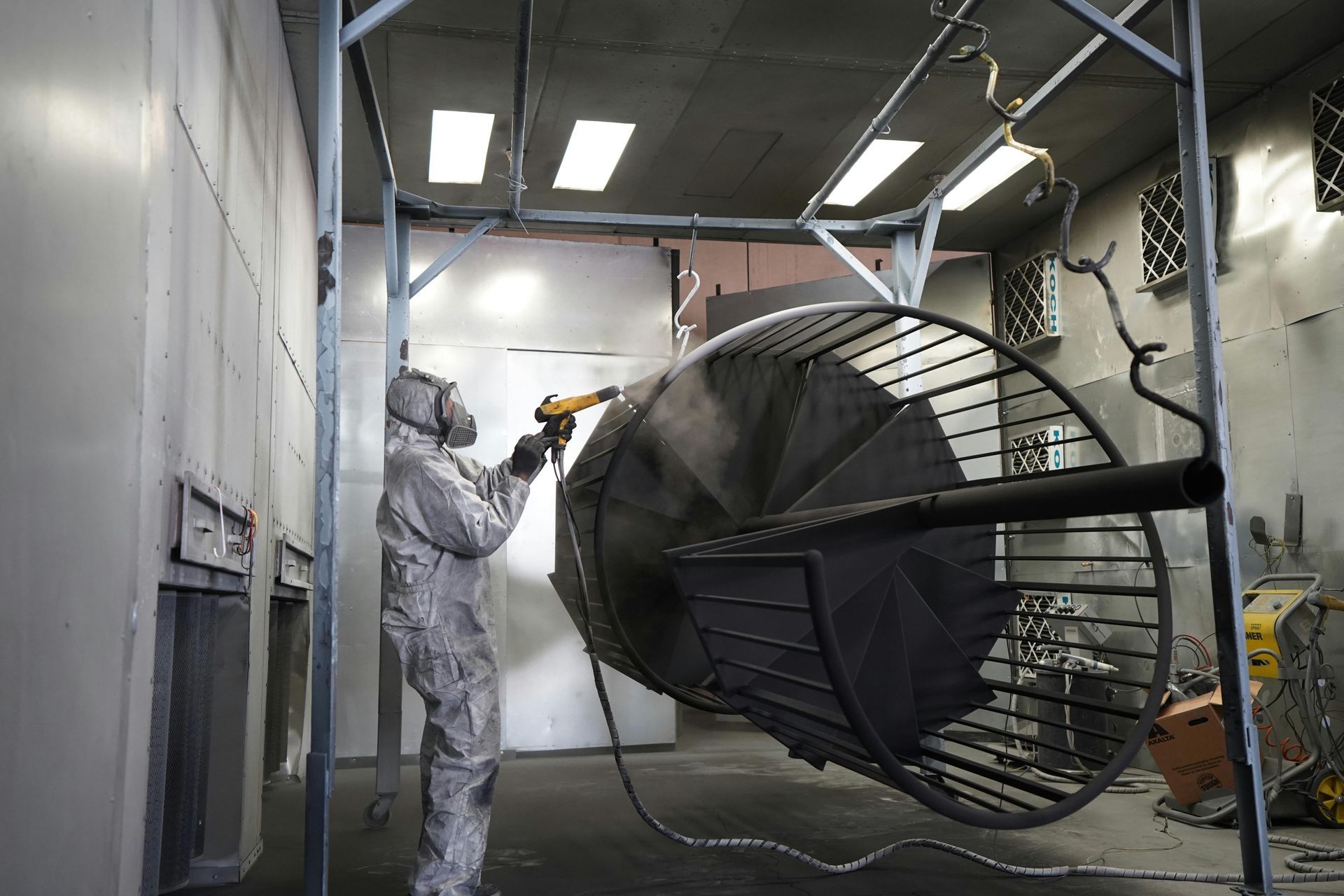
Powder coating is one of the most popular finishing options. It involves spraying electrostatically charged powder onto the metal and curing it in an oven. The result is a durable, even, and attractive finish resistant to chipping, scratching, and fading.


Sand Blasting


Also known as abrasive blasting, this technique uses high-pressure air and media (like sand or glass beads) to clean the surface. It removes old coatings, rust, and contaminants and creates a texture that improves powder coat adhesion.


Polishing and Buffing


Used mainly for aesthetic finishes or delicate items, polishing smooths the metal surface to a shine. Buffing wheels and compounds bring out the luster in stainless steel and aluminum.


Chemical Finishing


Processes like anodizing or electroplating involve chemical treatments to alter the surface properties of metals. While we specialize more in mechanical and thermal finishes, we can refer trusted partners when these processes are needed.


Tools Used in Metal Finishing


Air Compressors and Blast Cabinets


These are essential for sand blasting. The compressor powers the high-pressure stream of media, while blast cabinets contain smaller jobs and minimize mess.


Powder Coating Gun


The powder coating gun sprays charged powder particles onto the metal. A key factor in achieving a smooth and even coat is using the right gun settings for the project size and shape.


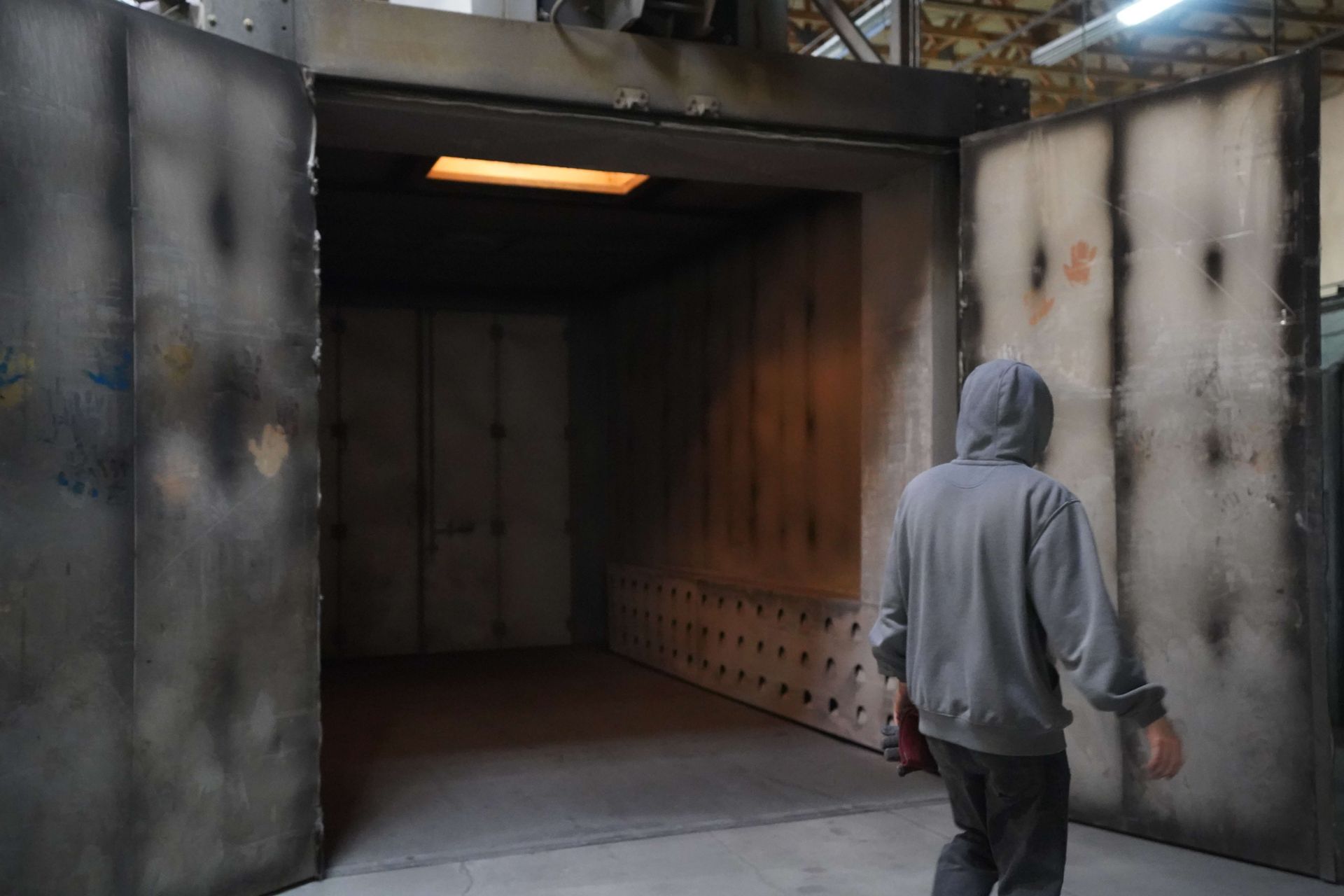
Powder Coating Oven


After the powder is applied, the item is placed in a curing oven where it’s baked to create a hard, bonded finish. Our industrial ovens at Full Blown Coatings handle everything from bike frames to large machinery parts.


Buffers and Grinders


Polishing tools like angle grinders, belt sanders, and rotary polishers help refine metal surfaces and add shine.


Coating Thickness Gauges


Once the finish is applied, we use precision instruments to check the thickness and consistency of the coating. It ensures durability and prevents premature wear.


Common Applications for Metal Finishing


Metal finishing is used across a wide range of industries and projects:


  • Automotive parts: wheels, bumpers, brackets, engine components


  • Construction materials: beams, handrails, staircases


  • Commercial equipment: signage, display fixtures, metal furniture


  • Home and garden: patio furniture, gates, fences, décor


A great example comes from a commercial project we completed in Logan. A property management company needed custom-painted metal signs for several apartment complexes. After blasting and powder coating each sign, the result was a clean, bold finish that has stood up to Utah’s unpredictable weather.


Why Hire Professionals for Metal Finishing?


There’s a big difference between DIY finishes and professional results. Here’s why Full Blown Coatings is trusted across northern Utah:


  • Specialized Equipment: Our tools and ovens are built for quality and consistency.


  • Knowledgeable Staff: We know the best approach for different metals and finishes.


  • Time-Saving: We turn around jobs quickly without sacrificing quality.


  • Safety and Compliance: We use safe handling procedures and environmentally responsible materials.


FAQs About Metal Finishing Near Me


Is metal finishing only for new parts?Not at all. It’s ideal for restoring old or weathered items to like-new condition.


Can I choose the color and finish type?Yes, we offer a wide range of colors and finishes from matte and satin to high gloss and textures.


How long does the process take?It depends on the size and complexity of the job. Simple parts may be completed within 1–2 days, while large custom projects take a bit longer.


Is metal finishing safe for aluminum?Yes. We adjust our media, pressure, and techniques to ensure delicate metals like aluminum aren’t damaged.


Conclusion


Whether you're working with automotive parts, outdoor décor, or commercial equipment, metal finishing is the key to a longer-lasting, better-looking final product. At Full Blown Coatings, we proudly serve the communities of Salt Lake, Davis, Weber, Utah, and Cache Counties with reliable, professional metal finishing services. Our experience, tools, and attention to detail ensure your metal gets the finish it deserves.


Need a quote or have questions about your project? Contact Full Blown Coatings today—we’ll help you bring your metal back to life.


Share This Post!
Blue suspension arm and shock absorber under a vehicle in a garage, viewed from below
By Admin July 30, 2026
Explore the latest powder coating technology advances, including low-temperature curing, recycled materials, stronger corrosion protection, and smarter application.
Silver Mercedes sedan parked on a wet street at dusk with an orange bus in the background
By Admin July 23, 2026
Learn what chrome powder coat is, its best uses, how it compares to real chrome, and when clear coating polished metal may be the better choice.
Close-up of clear plastic sleeves on a brown cardboard surface with a metal rail and mounting holes
By Admin July 14, 2026
Meta Description: Learn what aluminum oxide media blasting is, its benefits and common uses, and how it removes rust and coatings before powder coating.
Close-up of a yellow alloy wheel rim with black bolts and silver metal trim
By Admin July 11, 2026
TL;DR: How long does powder coating rims take? A standard set of four rims commonly takes about three to seven business days. The powder application and oven cure are fast. Stripping, media blasting, repairs, cooling, tire service, and scheduling create most of the turnaround. Tires, valve stems, wheel weights, and center caps generally need to be removed. Bent rims, cracks, curb rash, corrosion, custom colors, and multi-stage finishes can add time. Same-day service is possible in limited cases when the shop is equipped and the wheels need little or no repair.
Close-up of a black surface with scattered white paint chips beside a white sheet of paper
By Admin July 9, 2026
TL;DR: Wrought iron paint is usually a liquid-applied coating system designed to protect metal and improve appearance, often with brush, roller, or spray application. Powder coat is usually better for durability when the part can be properly removed, blasted, coated, and cured in a professional setup. Paint is usually easier to apply and easier to touch up , especially for on-site repairs, fixed railings, gates, and older metal that is hard to remove. Powder coating is usually the better choice for new or removable metalwork when you want a more uniform, harder, longer-lasting finish. The real answer depends on the project. If the metal is large, highly visible, or too important to risk, powder coating usually makes more sense than trying to paint or coat it casually. For most staircases, gates, and railings, the biggest difference is not just paint vs powder. It is the prep, blasting, and cure behind the finish. Wrought Iron Paint vs Powder Coat: Which Finish Makes More Sense for Your Metal Project? If you are comparing wrought iron paint vs powder coat , you are really comparing two very different finish systems. Both can make metal look cleaner and more finished. Both can protect the surface. But they do not go on the same way, they do not age the same way, and they do not make sense for the same kinds of projects. If you want to understand the bigger process behind powder coating before choosing, it helps to look at How Powder Coating Works , Media Blasting , and Industrial and Commercial Powder Coating first. Those pages give a clearer picture of what actually separates a durable finish from one that just looks decent on day one. A useful expert quote from Full Blown Coatings says it simply: “Powder coating isn’t just about looks, it’s about performance.” That matters in this comparison because a lot of people choose a finish based on color or convenience first, then only later realize that maintenance, prep, and durability were the real decision. What Wrought Iron Paint Usually Means When most people say wrought iron paint , they usually mean a liquid-applied coating system designed for metal railings, gates, fences, staircases, and decorative ironwork. It might be brushed on, rolled on, or sprayed on. In many cases, it is chosen because it is familiar, easier to buy locally, easier to touch up, and easier to apply on site. That last point matters. Paint is often the more practical option when: the part is already installed the metal cannot be removed easily the owner wants a repairable finish the project needs a faster field-applied solution There is nothing wrong with wrought iron paint when it is chosen for the right reason. The problem is that people sometimes expect paint to perform like powder coat without giving it the prep or maintenance that would help it get there. What Powder Coat Usually Means Powder coating is a different process altogether. Instead of brushing or spraying a liquid coating onto the metal and letting it dry, powder coating uses a dry powder that is electrostatically applied to a grounded metal part and then cured under heat. That cure process turns the powder into the final protective film. That means powder coating is usually best suited for parts that can be: removed from the site cleaned thoroughly blasted or otherwise prepped correctly coated in a controlled environment cured in an oven large enough for the part When all of those conditions are met, powder coating usually produces a finish that is thicker, harder, and more uniform than conventional paint.
Rows of small cups filled with brightly colored powder in blue, pink, purple, yellow, and green
By Admin June 26, 2026
Learn how to powder coat at home, what equipment and prep it really takes, and why most staircases, gates, and large metal projects are better left to a professional powder coating shop.
Abstract close-up of a metallic spiral tunnel with gray and blue reflections
By Admin June 10, 2026
Learn whether the type of metal matters when powder coating and how steel, aluminum, stainless, and galvanized metal affect prep, adhesion, cost, and long-term finish performance.
Industrial interior with towering metal stairs, pipes, and catwalks in a dimly lit factory
By Admin June 2, 2026
Learn where industrial powder coating is commonly used, from equipment housings and factory piping to railings, fixtures, and commercial metalwork, and why blasting and prep matter so much.
Close-up of cracked turquoise painted surface with dark fissures and a thin border line
By Admin May 26, 2026
Learn when powder coating needs to be redone, the warning signs of cracking and peeling, what causes finish failure, and how proper blasting and recoating restore metal protection.
Modern building facade with bright multicolored vertical panels and white curved bands
By Admin May 18, 2026
Explore standard RAL colour options for Utah projects and learn which RAL colors work best for staircases, railings, gates, and custom powder coated metalwork.